Thieves glorify the country and enthusiasm. | A.D. Abdul Majid Ibrahim
 Portal
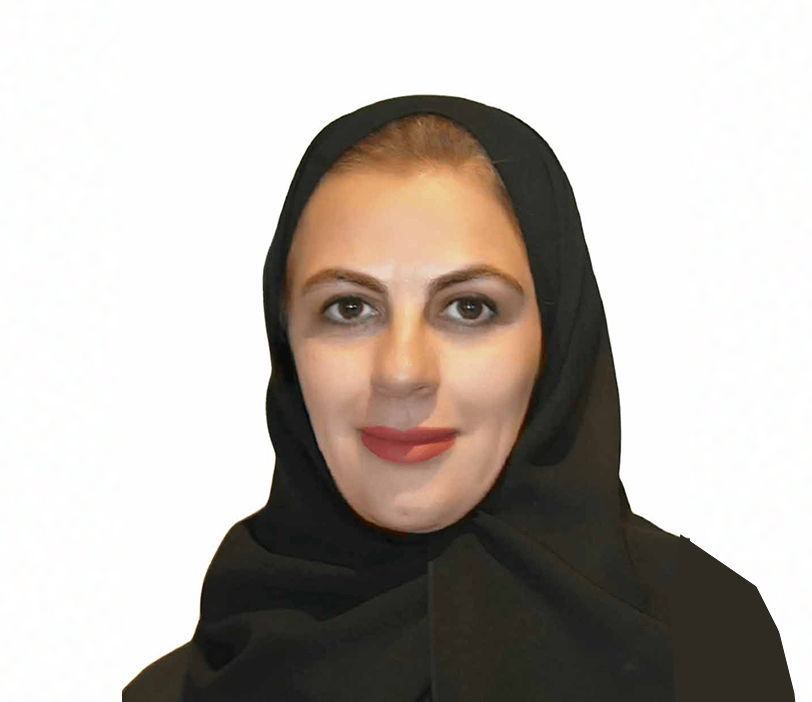
A. D. Iyad Abdul Majid Ibrahim
A poet, professor and university professor, Mohammed Bin Zayed University of Human Sciences.
The second of December is the national day of the memory of the people of the United Arab Emirates, in which we are proud and proud to commemorate the fifty-third anniversary, as well as the effects, sacrifices and efforts of the founding fathers, who have laid down the foundations of the Union of State, remembering the noble values that have been built on tolerance, love, cooperation and coexistence with different cultures and religions, and the approach that the State has pursued since its inception, and the day when the United Arab Emirates has become the country ' s most generous nation ' s nation ' s most generous nation ' s nation ' s nation ' s noble nation ' s ideal of creativity.
The celebration of the National Day is a year of foundation and formation by the Union of the United Arab Emirates, a culmination of the development and civilization of a bus with real achievements in various areas. The vision of the future that has been envisioned by the major institutions under the leadership of the Magfour is Sheikh Zayed bin Sultan Al Nahyan. «God bless him.» It provided a model for development and building: modern and more sophisticated directions of the State, the will of the people to reach the smart State and space, and the drafting of a new map of creativity and innovation in the world are the great proof of determination and renewed determination in order to achieve hope and emancipation.
In December, the nation and people of this good land summon the land of tolerance, coexistence and human brotherhood, with praise, honour and gratitude, which brings together the path of renaissance, reverence and civilization, and live this great occasion, underscoring their loyalty to the Principalities and their rational leadership, which spare no effort in achieving further achievements for the home, citizens and residents of their land.
The national day is a day when the people of the United Arab Emirates embodie national cohesion among their children. The people renew the monopoly of the past in all its images, values and heritage. This is confirmed by Sheikh Mohammed Bin Rashid Al-Maktum by saying: " The spirit of the Federation applies throughout our homeland and the lives of our citizens. Our fathers ' legacy is alive as long as they live. "([1])Sheikh Zayed, Rahmah Allah, emphasized the preservation of the heritage, saying: "We must preserve our ancient heritage, because it is the origin and roots, and we must stick to our deep assets and roots."([2])It's an invitation to move forward on this approach, to inherit a bio-energy mine without giving.([3])To celebrate it is a national and moral duty, because of the great achievements of the people of the United Arab Emirates, this day is a sacred day in which we salute this occasion; it is the only way to achieve security and stability for our people, to protect our abilities and to provide better life for our citizens.([4]).
It is an eternal love story written by the founding fathers and grandparents, because the celebration of Homeland Day is a renewal of resolve and determination, a reflection of the national spirit through the strong will, and the poets embedded in national meanings, values and beautiful dream in the future, above all those poets, His Highness Sheikh Mohammed Bin Rashed Al McTum. ([5]):
We're hunters, we're hot, we're hot, we're talking, we're working, we're working, we're working.
Let's shoot in a science and work in every day for us to find out and choose.
For every good we're gonna try not to die if we don't in our past for a little bit.
We've seen the day, the days, the impact you've never changed.
The poem within the framework of the irrational hair, which is linked to a system of values, and the poet's experience tends to the romantic rhetoric of the love of the nation and the spirit of emotion, where it sees in the Emirates the beauty of its existence and the sorrow of its existence.
The beauty of repetitiveness is in the word "we" in the previous patriots, as it reveals the great effort that has brought them to the place they have reached, through the centuries of hard work, which has been accomplished, has provided production, paints the image of the emperor ' s sons of beauty, and the work they are doing, and the glorious image is to say:
The poet launched his throat to crack the sky of his beloved Emirate, the country whose children were placed at the forefront of time, saying it by doing so, shortened considerable time, occupied the throne of civilization, so that it became an exemplary bat, with its civilization and its devotion.
The obscene colour used by the poet to reveal the very nature of the relationship, the bonds of the poet ' s patriotism. The United Arab Emirates painted an irrational blonde, with a similarity to the poem, the grind and the words followed by the act, the achievements and the envelope, through the visual image that culminated in the shades of the image, and the moral value of this nation.
The great position of the Principals in the heart of the poet emerged through the beginning of his poem, which was not intended to mention the name of the State, but began to mention it directly. This is evidence of the state ' s silence in the poetry, an expression of the love it represents in his heart, the position it occupies itself, and its loyalty, in which happy life, security and security.
The poet is an imbecile, with some of his fathers coming to his precious homeland, talking to the people of the United Arab Emirates, and God is unsatisfactory.([6]):
It's an ancestor's circuit, we keep her in mind, and we say the people were in it.
Ended up or satisfied with a nickel after the apartments and the people were blessed.
And God, we don't satisfy her of a stumbling, and we drink without that cloth.
She told us what Zayed said. This Arab country was raised by poison.
The poet expresses the depth of the love of this gifted country, which is authorized by the precious and precious, and this patriarchal people do not consent to harm this country.
The poets continue to love the home, expressing their pride and pride, living in such goodness, development, safety and progress, feeding the line toward Ali. There is no way in them.
Emirate, you're in the heart. Extreme love and you're a shadow.
Half a century and a Neff could die in development and good for you.
One step after one step at a height and prosperity until access.
You're a model for every country where the land is colonized by beauty.
People's raise is safe without it. It's impossible.
In a serious and determined rise to space to cancel the hope.
Emirate, you're a beautiful dream, made by promises and minds.
The United Arab Emirates remains in the hearts of its sons and residents on its territory, and today it is at the forefront of modern nations and is a landmark on the progress of States with its wise policy of good leadership, which has made it a model for all the countries of the world, and the rise, the sky and the march continue to take a day to move forward with this pioneering national unity experience. Until their sons are so determined and capable that the dream of leadership that is proud of the nation ' s children is realized, creatively, and shaved in the sky of pride. The UAE is thus the focus that reveals a poet ' s intrigue between the beauty of the earth, the rise of the people, the rise towards heavens, because it is its deepest, and the language of the poem is transparent, in which the poet approaches the great transformations of the invader of the senses.
If the vocal hair had taken a large part, the poets would sing in love with the homeland and the valley of the Union. The prosthetic hair was also celebrated on the day of the United Arab Emirates and his poets would be highly respected and appreciated on this national occasion.(8):
Dammadek, my country in the Union, Dar Zayed Rafik, has built it.
Her glory, Dym, to the day of the regeneration, is as strong as mountains.
In her wealth of science, the mayor has dignity and honour.
So we see the nature of the poetic awareness of the beauty of the language and the fraternity of the kind of poetry, which is proud of the poet and is proud of his country and of the patriotism that has affected the building of the modern State and the renaissance that has taken place in various spheres of life.
The images of the poem are moving with skill, and their images flow spiritually and emotionally in front of the reader to embrace this enthusiasm, glory and science, the symbol of hope, survival and glue.
And he shines home in the eyes of the poet Salim, the Khalid sword, he says,(9):
Loving love is what's just a tale or a words that move in a style.
The love of tune is beginning and obscuring with its hearts.
For you, we've been in the name of finding him and your name has to honor the condolences.
The country is not just a word that the tongue speaks, and the stones open, but the home is love, loyalty and sacrifice.([7])And home is safety and sanctuary, which is decency and dignity, goodness and tenderness, which is the invisible sense that inspires us to relate to, and the sense of belonging to,([8])The authoritative picture came to show the beauty of the nation, and the country wrote its name in the letters of decency and dignity, where the image that painted that high place of the country in the hearts of its loved ones, the recurrence of the love of the home, the articulation of the craftsmanship, from the point of view of the character of the beauty of the casting in an atmosphere similar to what it is, and with the repetival of the image, as it is, and with a musical replication.
The future holds a great deal for the Principalities, because their renewed vision, greater ambition in the challenge, their human mission is good for humanity, stability and prosperity, the promotion of development, the maximization of partnerships and cooperation among the nations of the world that participate on their fiftieth national day, and they are witnessing their achievements and engaging with them in their task of overseeing challenges and sustainable solutions and unifying efforts for a better future for generations to come.
Thus, the poets of the country in all its dimensions, with its land, name, children, heritage and all its values, with its past, present and future. The precious home can only be proud and proud. The poets of the United Arab Emirates have found this axis in their poems and have been linked to the emotional situation that has been able to extend a space of uniformity between meaning and meaning.
[1] The Maktum Muhammad bin Rashid, Forty-ninth National Day, Manar al-Islam, General Authority for Islamic Affairs and Stop, 1998, No. 1, p. 16.
[2] Tinji Salim Zayed, U.S. People ' s Heritage, 5th, 2018th Sharjah Institute of Heritage, Sharjah-United Arab Emirates, p. 9.
[3] Fedian Mezzani, Republished, Use of Heritage in Hair Mahmoud Ghneim, 2022. Unpublished Master ' s Message, University of Mohammad Khayed Baskar, Algiers, p. 9.
[4] The Nahyan Sheikh Zayed, Forty-ninth National Day, Manar al-Islam, General Authority for Islamic Affairs and Stop, 1998, No. 1, p. 47.
[5] The Maktum Muhammad Bin Rashid, Pillah Majdal of the United Arab Emirates, National Day of the Principalities, Prospect of Dubai, 2014, No. 54, p. 6.
[6] Karim, Diwan Karim Mutttah, Part Two, Episode for Culture and Heritage, Hair Academy, Abboubai, 2011, p. 19.
7 Gulf newspaper Saturday, 16 November 2023
8 Futry Sahbani Selyan, national values in the anthesia of the Emirates to the poet, Med al-Ataba (Semiological study), former reference, p. 7.
(9) Salary of a struggle, Sharjah Emirate: date and civilization, 2023, Al-Renim publishing and distribution House, Amman-Jordan, p. 65-66.