حجم صورة كفر الصور مال الموقع 12 1200x500

Smiling remorse, a loving spell of happiness. | Muhammad Mahrah

WhatsApp Image 2025 12 28 at 21 44 e1767119601855 600x600

Muhammad Mahrah

A poet and a Sudanese writer.

My relationship with a happy friend is not a poet's relationship, nor a poet’s relationship with a poet; it is at its heart a relationship between an orphan. Farbathis with his hair is irrelevant to his role and value in the dispersion of the modern hair text and his escape from his traditional orbits, but because this poet is exactly back to him whenever I remember my father's body lying down a wooden table. «Smile regret.» Which makes it «A beautiful poem that forgets us or makes us forgive an ancient hate.»And between the brackets,Gaston Bashler.


All the hair I read after that was to absorb that scene, and to understand what happened to me at that confusing and complex moment, poetry wasn't impossible after my father was gone, it was more possible than ever, especially if it was a poet like a happy morning, from which I learned at my poetic beginnings how to turn the sorrow in the toilet hand into words, and I promise my youth to attend my father.


I write about a delightfulness to celebrate the warmth of loss and the warmth of the thin soup, with the hair that inspires in the original sense abhorrent pyramids of fermental imagination:

«I'm going to the woods with the robbers.

And with their surprise.

Cut my dreams and throw them in the fire.

The robbers say:

The Yabbs is cut.»I'm sorry.

My friend asked me more than ten years ago about the feasibility of poetry; then I was in a position to formulate a proper response, and I found that clavicle and flare would give up any answer that would dissipate his suspicion and doubt, so the hair would not go beyond being a childish adult on the chest of the language. «Lightning.»And...«dust.»And...«Water»And...«A passenger seat left the bus.»And...«Probably because of a cloud.»I'm sorry. I'll leave the answer to a happy deposit; it's a poet who doesn't know what to pretend and look, just writes a pure hair that he likes from an elusive imagination, a hair that takes on the severity of our experience in this world.


I realized that our poems were written to parents who didn't exist, parents who left behind, sons who grew up inside orphaned, lonely and insane:

«Why do I remember my father now?

I was a kid when I drove him to the grave.

But they were looking at me.

And it was nice to grow up in front of them.»I'm sorry.

Happiness begins in his hairy obsession with combustion and flammatory options, written with a glorious memory, founded in a tuna that invents ash alphabet and retrieves its experience at the entire cosmic barbecue party:

«When I last invited him.

That was on the beach.

Then it escalates from our house.

Smoke had burned meat.

And my father became a black skeleton.

I got up and took one last look at his coal.

I went pregnant alone.»I'm sorry.

A fragile organism that rejects the hair, which is proposed to be heroic and inflammatory, rejects a mission that borrows its faint presence in a text full of rubble; the text that does not reflect the inflammation of the soul, the inflammation of the body, turns the poem into arrogant shrine to save the crease of the hair itself, must give rise to a dynamism.

«Now I admit I invented many lies of words.

What I said and what I wrote was nothing but a lie.

Son of a bastard for a crazy imagination.

What I said and wrote was a betrayal of words.

That's what I demand for innocence.

And I'm doing the bitch with her.

I shattered the clouds.

And I darkened bird feathers and saw wood.

I shattered the tree when I said it was looking.

And the mountains if you wear them feet.

When I brought their bones back to life,

And life when I brought her back to the dead.»I'm sorry.

His scripts crave the imagination and dive deep in the feeling:

«We climb our laughs.

Because we scream so hard.»I'm sorry.

It is true poetry that leads you with determination to no-face and no-name, which exposes you from a strawberry-shaped robe, to rise naked without features:

«I got the last point.

Am I the one looking for a melt or am I?

Or am I, too much to look for his melting, I've gone like him.»I'm sorry.

The hair is a vision that ranges from childhood to death, given that poetry is only met by self-responsiveness. «Writing from scratch.»- What? By proposing the patent of the beginnings, not as some say in the minds of writing without prejudices and prejudices, a position of existence is not based on a vacuum, it raises an awareness of a comprehensive vision and a total sense of happiness, and death, as a inevitable and final fact, does not find the equilibrium of solutions, but a vibrant vocabulary with which it is open. «Missing text» Watch this existential obsession:

«I extend my hand signals to the voices that have gone far,

And bring her back to the throat.

Spray her a shirt under the wool of the Indians,

I sleep near her.

In this little place,

Where he plays soft and dead cards,

And they share roles.»I'm sorry.

The absence of a more happy hair than a picture; once he writes about the absence of the place:

«Says who stayed in the village.

That a strange dog came all night.

It's in front of their homes.»I'm sorry.

Another time comes as a lack of meaning:

«Whoever loves his kids doesn't give them his picture.

Don't give them the same.

Don't leave them a memory.

Who loves his children gives them forget.»I'm sorry.

Sadness in genuine good hair, and disappointment, is not anxious for everyone to convince the seriousness of their grief:

«I don't think the land is loaded except.

The density of the gods.

……

All this wind is nothing but

Horses.»I'm sorry.

Thank you very much, because with all that honesty, this wound, and this incendiary language that goes through the spirit, I have a certain plan for tonight, but to talk to a generous woman who gives the evening a night to hug the distant face of the moon and read your texts that give the evening brothers!

حجم صورة كفر الصور مال الموقع 13 1200x500

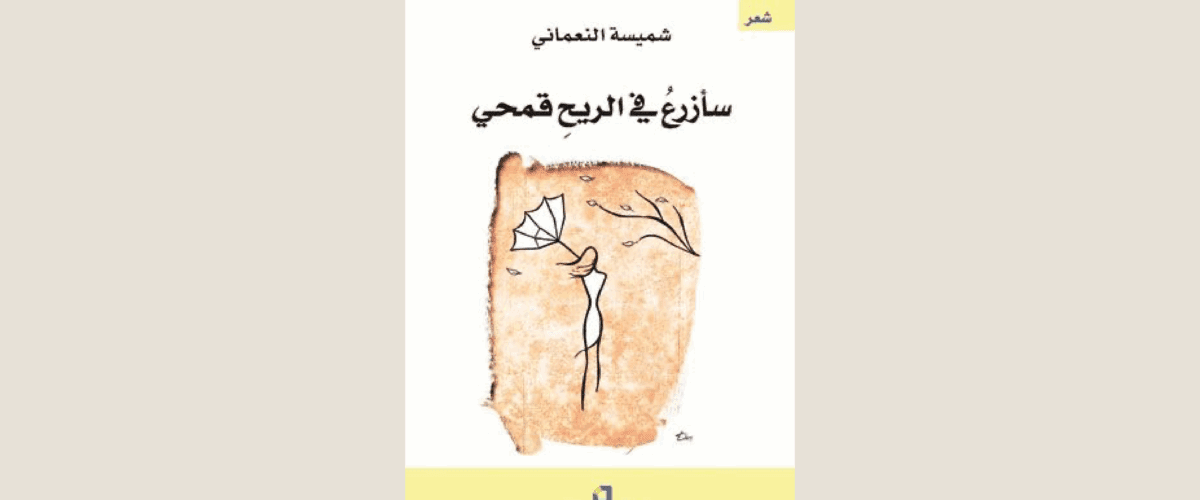
The nasal sunglasses plant the wind. | Omar El Raji

WhatsApp Image 2025 12 28 at 21 43 e1767119231532 600x600

Omar El Raji

A poet and an alien writer.

The question of modernity in the poetic text is no longer controversial, as it was in the past, since modernizing as a structural situation in the text is now beyond the shape to the deeper.

And as part of our reading of the Ammanian poet's religion, "I'll grow in the wind."which includes 20 hairdressers in which forms vary and which unite in one artistic value is the pursuit of conscious modernization.

"I'm gonna plant in the wind a lump of blind poetry, a shiny hair group that promises us with heavy rains of fresh poems and carries with it a world of intense awareness and questions, deep details of the coded poetry.

"I'm nobody." An inauguration of operational poetry makes us stand at the idea of the intentional denial of me/self, which is undoubtedly a fundamental topic of modern hair worldwide, that it is a passive exile of poetry and proof of its hair at the same time, and in the poem it is a kind of accountability of the world for its human self- position, which blurs and diminishes the cylinder of life and its coldness.

"I don't count,

I'm desperate for a root and a stretch.

I'm the sound of a wind blowing up the promise of death."

That's how it's denied the charge of being there, and that's the worm of poetry all the time, but then the link of the poetry to the state of exile and extermination to other elements represented by wind, despair and the tide and carrot movement seems to be an intentional symbolic reflection of another kind of existential formation represented by the poetry.

"I'm the tear of the grief that's shattered on the face of life coming from cheek to cheek

I'm the object that went out,

And no magic is returning the mortal in a dead body.

I'm an absent alphabet who fled to the homelands asking her the sorrow about the stretch."

In this intense poetry, a number of things can be referred to in the form of key observations that tilt the tide from what we have called from the beginning: in pursuit of a literary artifact, the first of them is the language in which the poet is wearing a symbolic rig and the reincarnation of its existential experience.

The idea of home is also part of the poetry ' s quest to modernize with an intellectual consciousness, with which poems become a bearer of meaning and of the ideology that instils the contemporary human being with his screams and anxiety about existence, life and living reality, one day and a moment of a moment, also in the direction of a philosophy in the hair that heated Eliot in Earth.

"My home, my bucket." A poem in the country that redefines the country beyond the limits of subordination and greater than the country ' s land meaning.

"My home who enlisted names and visions

It describes the light in the vest.

He distributes days at the top of the rivers.

My patriotic palms and her cousin's son.

The house of the poem and the stake.

And on his plans, the old stone valley set a light.

And people saw the night wax.

They celebrate the home to which the path was captured,

With the vision of the fire...

It's a real homeland that's high-minded symbol, and it's a densely populated home, and it's a imaginary, imaginary, imaginary, and imaginary-style-style-style-style-style character.

This modern poetry continues to pass in touch with other situations and unconscious areas of perception and triumph over its entireties, including the search for poetry in cosmic human values such as the value of love, which is not conceived as a crooked comic, but by the same poetry.

"I love you and the sea you

And you're the poem high in the talking.

I love you and magic.

And you're the boy in the arts of the place.

I love you how much the sea sounds, Spirit Day...

In the language of this section, this is a modern sleeve, which tends to link the value of love to other elements of hair, such as poems, speech and arts, and it is not about benths or hair that discusses poetry, to the extent that it is a deliberate choice of art that defines great human values with unique beauty elements.

'Cause you're a female.

"You pass a port opening...

A rhythm.

You're the water.

And you're the truth.

If it weren't for you, she wouldn't be in the wilderness.

What she had with the baggage.

What she showed up with farm songs.

"What's the silence of the belt and the rash."

There is no doubt that the issue of females is not at the threshold of creativity; it is a subject that finds its impact on intellectual and social research on a wide scale; what the poem here does is that it links female privacy with the great existential questions and the elements of beauty in nature, so that females can be made a condition of persistence, reassurance and reservoir in the universe; this vision is intersected with the notion of ceremonial ceremoniality and the mindset.

And what can be said in conclusion is that Diwan"I'll grow in the wind. It provides a picture of the new and serious poetry that triumphs for modernization and modern poem, especially that poem that creates its style and builds on cultural dimensions that are reinforced by vision and language.

The size of the photocopy.

How did the chip get out of Russia's first poet Alexander Bushkin? | A rebellion.

WhatsApp Image 2025 12 28 at 21 41 e1767118906736 600x600

A rebellion.

An Iraqi poet and writer.

It wasn't a passing moment, no false cultural taste, no instant event, in his hair life, approaching the east, it was an internal coup and a profound revolution, reshaping his vision of poetry and correcting his vision towards the world. Since he set up a coercion in the city of Mikhailovskwe, Bushkin has flew from its balcony on another world, a world led by words, once he has not seen or found it in the west: wisdom, moral dimension, human voice, which transcends space.

In those years that our friend lived in the city of Mikhailovskwe, captured on it, read the Quran and Persian poetry, which later enabled him to reconsider the meaning and role of the poet, from his spiritual life to a new, adventure-rich poetry experiment, made up of nine blocks, the most controversial experience: «Quran simulation.»I'm sorry.

This poem was not the new tone and the recipients of it, a religious tradition, and no instinctive attempt to represent Islam from within it. «I work for the Koran glory.»- What? He did not say in the glory of God, that phrase showed the distance that the Russian poet sun set between moral admiration and religious belief.

The sign is in his poem. «Quran simulation.» What appears to have been not only read the Koran, but has gone through it, as it appears to have been familiar with the Prophet, it has photographed a picture of the Arab Prophet that is approaching some of its features from historical reality. «Inside.» It is the vision of an eloquently examined reader, who saw in the text he read, a moral stream and a great poetic spirit, that is, he held enormous energy and made it a mirror of his own questions. "The deep art work is not understood from first reading, it reveals a layer after another, and the holy books of its reader are revealed with recurrence."

The East cognitive magnet not only stops when it attracts Bushkin to the Koran, but finds the reader in his hair, sometimes shows white traces of the Sofis Saadi al-Shirazi and Al-Shirazi governors, and despite the lack of conclusive evidence that he directly misreaded their texts in early-sensuals, but many of them are not very popular. «Easter flower.»I'm sorry.

In his poem. «Who kept it?»- What? The overlap between personal experience and the Eastern code may seem remarkable. The war in the poem was nothing but a backdrop, but only a mask, although there were indications of its rejection, such as: «But I'm afraid, in the midst of battle, you lose your delicate shyness in the moves...»- What? The true God is alienation, existential test, beauty as a lifesaver and salvation, and when the King of Death mentions Ezrael in the same poem: «Azrael among the swords will see your beauty.»- What? It does not point to him as a threat, but rather as a creative force that deflects beauty, retreats from his throat, as did the great plight of Jamal Ibn Yakub, Yusuf al-Nabi, in the Islamic Methology, and here lies the truth, when the Russian poet meets Bushkin in his hair with the spirit of sliding slide in the hair of the deep, the Persian Sharid, the Sofid.

But the farther and deeper impact of his career has come from the wisest, the Persian poet Saadi al-Shirazi, who found «Sasha.» It has a uniquely prosperous, morally balanced sample of beauty and meaning. The presence of Saadi in Bushkin's hair was not a quotation, meaning, meaning or language combination, if it was a complete vision; his wisdom could be echoed in more than one of his actions. «A fountain with a secret.» To a conclusion. «I'm getting rich.»So he said: «Some of them don't exist anymore, others are far away.»I'm sorry.

A poem. «Grapes.»Bushkin wrote one of his finest and sweetest poetic moments, when he compared the late spring rose to the mature grape fruit in the fall, in a quiet good trade between fast beauty and careful dictation, some Russian critics see in this poem. «Breathe from Saadi's writings.»Most of his books. «Boston and Grayton.» Bushkin has succeeded and excelled the classic Persian spirit in Russian structure, without tradition and tyranny.

Even his poem. «Arab simulation.»- What? It also comes from Saadi's origin, from a story of friendship and love, where two people die to become. «Two nuts in one crust.» Not surprisingly, he visited Shiraz's son in Baghdad, and he wrote in Arabic on a few of what he wrote. «The legacy of Baghdad.» After being occupied by Mongolia, as he wrote in Persian — often written — it was indeed the peaceful bridge between two cultures, and perhaps the smoke of burning in Baghdad reached Bushkin through the poem of Sa ' ad, or through his reading of his vertebra, he decided to call the threshold of the text an Arab simulation, in the sense of Saadi, who inherited Baghdad.

Thus, between the Koran, Sadi and Waqf, another East Bushkin poet, a well-known, morally questionable, not the mythical east, has changed the path of the officer's daughter to irreversible change. If Bushkin is at the beginning of a Western poet, the years of Mikhailovskoy have made him a cosmic poet, he sees in the east another mirror of man, poetry and fate.

After that stage, the East no longer adds to Bushkin's hair, it became part of his hair, and light in his eyes on the world.

Volume of photo cavity, location 1

I'm the last Hamad Bakhit. | A. D. Ahmed Balbula

WhatsApp Image 2025 11 29 at 19 53 20 600x600

A. D. Ahmed A urine.

Egyptian poet and academic

Give him a haircut before anyone introduces him; anything Ahmed Bakhit was betting when he went to the vertical poem with a slap on all other forms of poem?

Those who know Ahmad Bekhit are well aware that he keeps many poems for the free-haired, and he knows that he has not taken a hostile position on the Nathor poem. This poem was written at a time when the experiment had reached its purpose in the poetry of Egypt and the Arab trains of the 1970s, and the poem would have been removed from the yard completely, especially since the opening of the cultural poles in the 1900s had been found to write the free hair and the poem that had been seen as a clerical clerk.

After reading the third millennium, the awards in support of this poem have begun to follow in the Arab world. The vertical poet is born in Egypt, the legitimacy of his presence receives the progress he has made in these awards or the glowing of these platforms, and a little later until a new generation has joined this scene; it is an internal bond, and support for the restoration of a spirit of close-to-secure poemia.

During this period, Ahmad Bakhit Tagi was in his presence, and his influence was not only on the rise in Egypt, but on the Arab world from the ocean to the bay. The poets were following and preserving his poems, denying him and discouraging him. What did Ahmed Bakhit submit until this effect happened?

Ahmed Bakhit, who I know, and is known to others, dissolved the difficult equation, but in his own way, did not reproduce the experience of Mahmoud Darwish, nor do he give up to the tyranny of hope of transferring the plain-cloth of the case... instead of the popularity of poets, but he kept the poem with its full music, and he didn't slide into a rhin.

Through 20 deputies -- his full poetry work now in my hands -- Ahmed Bekhit deals with his outstanding nation ' s issues, speaks of Palestine, Iraq, Syria, Libya, Yemen and Egypt, he confines the desert, searches for water, loves humans, spells them, occasionally adjudicates them, runs their back, a full-time and safe house, searches them for a full time and space.

And my daughter, testify to your father.

Have I met and died?

They're two metres from Dini.

For the dress that I cry

Did I cut you off?

Or did I expand the house?

This denial of life may come from a firm conviction that reaches to be a key to his poetic personality, succumbing to his sense that his age is short, and if so, the presence must be as abductive as lightning, and the effect is enormous:

I'm a guest of the world and I'm about to say good-bye.

I was born with a rhythm and my journey with her.

The lust of words is to assassinate its creator.

The hidden presence that lights the world, disappears after people have been identified to light, so Ahmed Bekhit has spent his entire life - and he has now lost his six-year-olds - this intermittent appearance even in his poetry, as if in every appearance he is reborn, then dies and disappears, every appearance of life, every absence of death, every life in constant time, age of lightning, life, life of the sunset, life, life, life, life, life, and the life of his life, and his life.

A little bit. I'll call my landlord.

And light as any flask.

At the performance level, Ahmed Bakhit is not the poet of the Revolutionary Manstatics, but the poet of the brightest contracts, ignoring his fathers together, radiating every single home as a unique pearl, which preserves the lipsticks that untiringly disguise him, and that's the secret of history.

Time comes and affection comes west.

And hate is our town that we're colonizing.

I sold out all of them.

And I'm the son of the Nile Valley and my name is the flower.

It does not take historical symbols and signals in its hair; it uses them as kisses that give cooks their own distinctive flavor, the reader does not have to open the mines or engage in cultural research, and it tends to use the symbol or sign only to be used by the traded goods, who choose their time to escape the situation, a light flare that does not obey or otherwise obey the strategy.

Good afternoon novels.

They killed my brother-in-law.

Secure Arabs above horseback.

To Arabs in the songbook?!

These two houses, with their references and symbols, the Rashid, the Abu Al-Asfahani, and the songbook, were able to deliver the poetry message, completely away from the power-slash, which, if present, would have been attached to him sitting in the first grades, a licence given to every artist and the Sultan.

In addition to maximizing the symbols and signals in the structure and structure, the stereotyping of the ancestors comes not from the express opposition, but as a result of the higher models of the art that affected Ahmed Bakhit, the models of the car; the appearance of ancestors appears to be extremely flawed, providing them with a tremendous capacity to pluck the impact, we ran into a canni as a barfish, but a shade. And so on, but in any case it's not her:

You forget the dates. You forget the dates.

Even the doughnuts forget it.

You forget the seats as perfume as you forget.

Students voted in the summer.

By itself: interviews and signatures, they resort to public language in order to exhort them, to apprehend poetry from the public, to revive the language and electrification of the situation, to win over and alert the non-Egyptian public, as well as to foreign language, rhetoric and flag names:

Enough to complete the message.

And be thankful to include your cheek.

This is about Ahmed Bakhit, who I know, but about Ahmed Bakhit who I don't know; he drives a soft turn, a heartbeat, and he's got a haircut, and he's got a haircut.

If he was in his place, he might be happy, but what others say is unpleasant.

It'll come a morning without lovers.

No songs, no inspiration.

There's gonna be a morning.

To perfume, love and right.

To a kiss she didn't get.

To a date without others.

And here she turns here to:

Tomorrow morning without lovers.

No songs, no inspiration.

She'll wake up the park from her sleep.

And miss the perfume and the right.

And cry pillows. She cries napkins.

She cries and eye rose.

On a kiss you didn't get lips.

On a date without others.

Changed to the point of ruining the script, dispelling its spiritual power, as well as doing in its "the witness's knee" poem, saying, "Let me walk," and it was "I walk to walk."

I walk to walk and that's my answer.

About the chaos of these organs.

And maybe it's a whole house:

On the date of love we met.

With the whistle for the spring.

From his poem,

Poor. I'm not the stars.

You sleep a lot on my finger.

I'm not handsome, but...

Be handsome and you're with me.

The intervention of the cognitive mind at Ahmed Bakhit often removes his legendary performance, even if it is psychologically motivated as I say, and I hope that the motive is not to forget, or what makes him replace the word "Akvani" with the word "Dwani" in saying:

And if I have my beautiful vein, maybe

Mints from Akvani.

The reading of the whole poem from which this house is located cannot belong to the word "dewani" to its world, not to mention that it deviates the receipt from the kidney to the private, from the human to the person.

Another matter with the issue of revision along with the replacement and deletion of Ahmad Bakhit ' s poems in the context of talking about a self-sustaining coup, is to drop the excitement and not to mention the inspiration, and may be behind it, as I have stated that the text should remain open to all, as it has done in the projection of the paternity of Abdul Latif Abdul Halim, our professor in the House of Science.

What's poetry except a man outside?

Who cares about her?

It may be technically motivated in this poem that deals with the fall of Andalus, with the drop on the Arab reality, although Abu Hamam, who studied in Spain, can be a typical mask to talk about it, yet with the artistic motive to drop the gift, the question remains: why did Ahmed Baghett keep other names to which the poems were given, such as giving him a clothless poem?

This and the reader of this group will not fail to stop in front of the abstract of his gifts in his hometown: "South moon," which he gave to his mother, saying, "To my mother, Ratib Muhammad Ali, under which he is located: "Ahmed Ben Ratib."

And Abu Al-Tayyib went through the bully.

Alone as it should be.

If I had previously pointed out that Ahmed Bekhit did not fully implicate himself in the symbol and did not enslave him the historical signal, he was touching them with a light touch, reminding them as they were; relying on the consortium cultural inventory of his recipients, selecting the most dead and rude, as he did in his poem: "The beloved prayed to him and Muslims" when they were removed from the peace story of Joseph.

Above the shirt, blood above the conscience.

And they're still from here to here.

I say, if I mentioned earlier in the conversation about Ahmed Bakhit, who I know, Ahmad Bekhit, the gallery of Ahmed Bakhit, who filled the world and occupied people, is working to undermine it; he tries to open other areas by setting the symbol full poem, deviating his partial treatment as well as providing for his holistic treatment, a situation that is not common in his writing strategies:

For the last moment of age alone.

And you and your tribal face against me.

You gamble me to buy a decade.

Fatima and earrings here.

Ahmed Bakhit does not excite his poems with complex cultural cargo, but the last Ahmad Bakhit resistance pushes him to cultural research, philosophy and interpretation:

I learned to interpret prophecy here.

And in my first day, I saw another.

I wish in a poem: "Bye, Desert," an advanced poem on his long-distance poetry journey, in which the history of the Arab poetry is most likely, and he gave her a rich introduction, and he appalled it with unconventional mines, so that the rich side could not deviate from the poetry side of the sternal era, both of which is a reality. With regard to philosophy, three poems have been concluded throughout the size of the poetry plant, namely, Cairo, Al-Hadi and the Negos, in which he moved from the question that sometimes reached the polite blasphemy to try to respond to human suffering:

And you will knock on God's door one day.

And ask him with a false blasphemy.

Wasn't all this sadness enough?

To satisfy your tortured successor?


Believing that life is a human experience, a human being must find solutions, or at least find a way to live with dilemmas, to maintain and adapt to them:

Didn't you give me that dirt?

To tell him the noble idiot.

In these three heights, Ahmed Bakhit tries to positively meet the philosopher; to understand what happened, or what was it, in the way of the father of Al-Ala al-Amri, the writers of Al-Musrah, John Milton; and to present in the poem of Cairo a comprehensive review of Egypt and its relationship with the world, searching for answers in the midst of details, events and figures:

Field rose, poem name.

You weren't full, dreamy, drunk.

No coincidence and first step.

Last sister and long way.

Life casts life on her question.

Items

He also does in a poem: Al-Hadi, and if the treatment takes a different form in a poem: "Nucus" that refers to my father's naked al-Aladi.

I say that this soft coup is due to the fact that Ahmed Bakhit does not like to repeat himself, repeat others or repeat others; his hair is the saviour of repetition:

Hair is like living in a goat.

No children come back twice for their mother.

فعلى المستوى الإيقاعي يقود آخَرُ أحمد بخيت تمردًا على إيقاعاته المستأنسة، وقوافيه المدجنة، لكنه تمرُّد خافتٌ أمام سيادة هذه الإيقاعات وهذه القوافي، تمرد لا يصل إلى أن يحرك الكتلة الحرجة، وبتوصيف دقيق، يظل واقعًا في دائرة الاعتراض، بعيدًا عن دائرة الثورة الإيقاعية، وبخاصة حين تستحوذ بحور كبحر الكامل، والبسيط، والمتقارب، والوافر على النصيب الأعلى في الكتابة، في مقابل بحور أخرى كالطويل، والخفيف، والسريع، والمديد، والرمل، والمجتث، وأخيرًا المنسرح؛ إذ كتب عليها قصائد معدودة. والأمر ذاته يمكن أن ينسحب على قوافيه؛ إذ تتراجع نسب القوافي التي تتخذ رويًّا من حروف كالضاد، والذال، والزاي، والعين، والشين أمام حروف المعجم الأخرى، وإن كنت مع المذهب الذي يقول: البحر لا يصنع الشعر، الشعر هو الذي يصنع البحر، وكذلك القافية؛ فالشعر يبدأ من أول السطر لا من آخره، غير أنني أستطيع أن أقول مطمئنًّا: إن مراجعة هذه القصائد المتمردة عند أحمد بخيت مراجعة سريعة تُطْلِعُنا على أنها استفزَّت إمكاناته، وغيَّرت معجمه. أحمد بخيت يستطيع التمرد على أحمد بخيت، أحمد بخيت الذي كتب قصيدة كاملة على قافية من كلمة واحدة، هي تونس:

ستنجو أمةٌ من حوتِ يونُس

وأول شاطئ الأحرار تونُس

أأُخطِئُ في اسم أولادي لأني

أناديهم جميعًا باسم تونس؟

حجم صورة كفر الصور مال الموق1ع 1200x500

Noah's son... between the hope of Dingle and the knowledge of the courier. | Dr. Mahmoud Fergli

WhatsApp Image 2025 11 28 at 17 33 55 600x600

Dr. Mahmoud Fergli

Egyptian poet and critic.

The characteristic of the modern poem is that it flares on the event and its history, to survive the time-bound moment and space. In addition, it is always prone to disintegration.[1]This distinction between the incident and its irration, despite the avoidance of the event, we find that it has the capacity to consume, as soon as it is surrounded and circumvented and spread in its fabric, to prevent the appearance of elements that constitute its technical identity; and to help the reception process to induce the event outside the text of any representational manner within the text, above the event more robust and clearer, and to report any expression of any relevant substantive formulation.[2]And so we don't send word to his senses, we stop in front of the Noah son mask.Hope of Dingle and the knowledge of the courier.The heart of the event or changing the perspective of the vision is a creative necessity, so that it can be sent as a new vocal event, with the ability to influence, open to continuous deliberation, linked to life contexts and realities, and this has emerged in different historical contexts of the two experiments, so we find the divergences that reflect a deep reading of the event ' s plurality of culminations.

The ruler's vocabulary, the vocabulary, the vocabulary, and the ultrasound of the artifacts, the brushing of the sorrow, and then the brushing of the cloth, the squeezing of the sorrow, the sternity of the sternity, the stuntling of the cliff.


Good conscience.

The reversal of the world ' s modern potential and its velocity through its linguistic effectiveness, so the criticism of its importance and role in the building of the literary sex, each sex that seeks a homophobia scheme, and Jakobson refers to its close association with different races, the various functions, the inspirational hair is about the conscience of the alien, and the morality of the word.

The unscrupulous conscience of the scholar, the conscience of the speaker, played a role in the prominence of self-production, as well as its effective achievement of the inspiration of another non-famous presence, addressed to him, while the sound calibration between I am the sad poet in the poem of Hope Ding, and I am the mask and diversity of the narratives in order to achieve the desired dramatic balance.

We also note that the correlation between poets and humanistics is evident in the column of Al-Sadi, where the text of the contemporary human crisis and the fact that it occurred in the past, which calls for another endeavor, while the humanitarianism of the Budddhista unleashes the national dimension, in the context of the concept of citizenship, which is separate from the religious reference, so as to reject the position of the Nhuah ' apos; apos; idah ' s son ' apos; idah ' s religion as ab.

There's the wise guys running towards the ship.

The singers, the Messiah of the Prince-Mrabun, the judge, his kings.

The sword bearer, the temple dancer, when her borrowed hair was lifted, the importers of the cable trucks, the princess' lover in his prestigious female name came to the ends of Noah.

These cowards are fleeing to the ship.

While I was...

It was city youth.

They feed the wild water horses.[3].

The paradox plays its part in the previous section, where two opposite voices overlap through the word of the wise, which bears the view of the deserters to justify their subjugation and their reluctance, while the perspective changes at the end of the segment and the image of the son of Noah itself, when they describe their cowardly truth, and the diversity of their creators plays their role in breaking the intersection between the script and the religious platforms, where it is carefully revealed.

Speed time.

In terms of sardine time, the time frame is based on retrieval, where the time of the story is preceded by the time of the speech, and with the rise of the self voice in its dialogue, the time is ripe to the temporal present, which calls for a new endurance, the point where the narrative shift turns from the angle to the vocabulary to the vocabulary.

His club and sound threads are rising. Is on the ship, my lord.

I called them all.

And I asked him, old lady, who survived your unit, and the rest fell?

Through the dialogue in question, it is clear to the son, in asserting the uniqueness of the perspective and the singular vision, while the other party remains silent, but the combination of the elements of the description gives us a picture of this Sheikh, so hearty at the relationship level.

Will you rest?

And how do you start this universe again and you let the boy and the ripper rip?

Self-evidently emerges from and follows up on many questions, which, while counterfeited by their creation, make the poem go through the movement consistent with self-expression and its search for salvation, and as dialogue takes one direction, the consensual and adversarial referrals make the poem a dramatic dimension, with no renunciation of enchantment.

Before death, how we narrowed my eyes, and the eye of death widens.

And in your eyes, the eyes of your child, the games and the fun.

………………………………………………

All the details went through the imaginations of the house, the parents, the trees gather.[4]

The mask poem is of a controversial nature, based on the presence of me, the poet and the absence of me, the mask and vice versa, in a balanced exchange movement, with the possibility of misappropriating the voice and conscience within the poem, entailing a retreat of self-sing, which keeps itself in traditional shapes such as musical, repetitive, optical formation, and all the poems that the poetry speaks in the same way.

What we affirm here is that the mask of the courier did not dissolve his clerical pattern without the emergence of an architectural feature that detonates him with evidence and relieves his singing without ignoring it, as did the vocal dichotomy by persuasing a role in shifting from direct expression to direct expression, direct speech, express meaning a sign of tacit meaning, mask and meaning on the surface, while left behind.

However, the visual composition and the activation of the markings in the Dangal text was richer, effective and linked to the rise in the dramatic pattern of poems. The existence of certain markings, such as bows, interceptive police and white areas, added another vote within the text to comment on personalities.[5]There is no doubt that visual formation is a narrative mechanism when the poet succeeds in recruiting it, while the couriers did not activate visual space, making it particularly in the retrograde monologue to move father-dominated passion.


[1] Saeed Bunkrad, Al-Saidi and Conceptual Refrigeration, Marks of 12, Morocco 2012, p. 31: 37

[2] Hatim al-Kahr, al-Ahtiya, al-Shaqiyah and al-Qa ' idah, al-Qa ' idah, al-Qa ' idah, al-Qa ' idah, al-Qa ' idah, al-Qa ' idah, al-Sha ' al-Qa ' al-Sha ' al-Sha ' al-Atam al-At al-At al-Sha ' al-Sha ' al-Sha ' al-Sha ' al-Sha ' al-Sha ' al-Sha ' al-Sha ' al-Sha ' al-Sha ' al-Sha ' al-Sha ' al-Sha ' al-Sha ' al-Sha ' al-Ah, al-Ah, al-Ah, al-Ah, al-

[3] Hope Denzel, full work, Public Authority for the Shortages of Culture, Cairo 1998, p. 408.

[4] I know the courier, the towel, the site of the poem Dotcom.

[5] See the detail of that in the Seid al-Sarawi study, searching for the impossible pearl, the East Cairo House, 1996.

Untitled design 2 1024x500

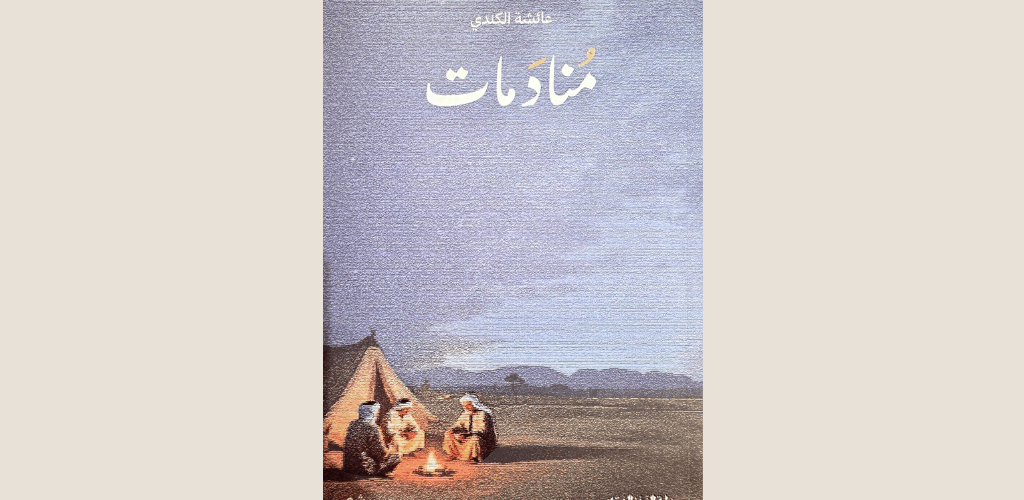
It's a hard thing to say about time and humor in the Manamat City of Canada.

WhatsApp Image 2025 10 29 at 2 01 28 PM 600x600

Ahmed Abu Diab

Egyptian writer

You make poetry. Canadian Aisha One of the high-profile young voices in the U.S. nasal hair, and one of the symbols of the poem that have been able to combine authenticity with contemporaryism, between self-examination and collective conscience, in a language of emotions, memory and whining. Manamat. It is this overwhelming presence of time as a memory, anxiety and a retrieval of the past, so that hair then becomes a way to preserve the moments of loss and reach, the details of life that are melted over time, and the self that you seek meaning in the passage of the past at present.

In the poems of religion, time is manifest not as a background to events, but as a hairy, vibrant and hungry, it does not deal with the past as an end-of-life, but as part of its internal entity, it restores time not to fill it, but rather to rebuild it in poetic images, combining the inspiration and absence of memory, the old places, the friends, and the warming.


Says a monster in a poem. His keys:

I love your dirt.

And wait for your return and open it.

Spring of the age.

Explain and give me buy it.

I had your doors slipped.

And penetrating missed his keys.


This is where the poet turns the emotional relationship into a symbol of the beautiful time that has passed, it doesn't just show the spear of love, it reflects the depth of belongings when you say, «I love your dust.»- What? Love turns into the extension of my soul to earth and memory. "Your rose and its opening." It's waiting for the inner spring, to go back to the first time of emotion, and when you say, «Was about me locking your doors, and the lock missed his keys.»She shows her consciousness of loss, like she's touching the impossibility of restoring the past.

The inspiration in the hair of the Canadian armament is an internal energy that moves the text, not only a whining to the lover or the homeland, but extends to the first self, to innocence, beginnings and simple days.

In some of its poems, we find a monster that speaks the past as if it is a close person; occasionally, she smiles at him and sometimes, but she does not renounce her emotional attachment to it, that association creates a unique hair situation, as the mourning turns into an instrument of expression of identity, and a means of preserving the diversity of customs, language and sentiment.

You say poetry in a poem. Rain and Riad.:

The time for me is my flood.

And, oh, crap.

His diet runs through me.

And he wants to go down.

The Canadian Beast highlights its deep philosophical vision of time, it doesn't look at it as a punishment for days, it's a volatile state of conscience. «It's time for me without it. It's gloomy.»- What? To point out that life without a time is dark, with it swings between hardship and satisfaction, and then comes through the sign. «His supply stream is multiplier and is dropping.» In order to make time a changing river, unpredictable, at a moment of tendering and in another receding through this water imaging, the poet reflects a profound human experience in the face of life fluctuation, where time becomes a partner in conscience, with a stretch and a carrot, joy and dissolved, but it remains the framework within which it is self-contained and secure.

The language of the Canadian Nabatian Worm enjoys its spontaneousness and honesty, but at the same time it has a strict technical awareness that makes it capable of transforming the accent into a high poetry language, using the unique heritage with caution and intelligence, preparing statues and folk symbols through religion to make it an intergenerational bridge, as if it is rebuilding past language in the present, so its poems are common ground.

In many of its texts, the same poet faces in the mirror of time, so the poem seems to be the scene of an internal dialogue between "I" and "I" present, which produces a deep awareness of loss, but at the same time it gives the poet the ability to reconcile with change, as if she realizes that the passage of time does not erase memories, but reshape them within the heart, from here comes a long life of calm that does not cause.

Canadian says in a poem.The pill.“:

I wish you couldn't get back.

I'd be near you near my neck for the neck.

And wish me the idea of your absence, I promise.

It was my intention of losing you and Sid.

Try to pull the saddle.

As a living, and you want to promise.


The poet is most oblivious and rejected to lose, expressing her inability to adapt to the distance by saying it. «I wish you couldn't get back.»- What? It's a wish in its envelope to protest against the cruelty of time, and then it connects proximity to sense and emotionalness when it says, «I wish you were near my neck for the neck.»- What? To make the love of the soul, and to meet a natural extension of her existence in the next few days, the voice of the inspiration grows until it turns into a transparent poetry. «It was my intention to lose you and Sid.»It makes the loss a metaphorous death, an alternate life, and the end of the video. «The clouds of grief are shattering. Cod lives the sun and the tide.» In the middle of the darkness, as if she sees crying as a rain that defuses memory and refreshs the sun, the poem becomes a prayer to restore a missing time, even in the dream.

It cannot be dissociated from the sense of national and human identity in the Canadian wax. When it speaks of a beautiful past or of homes that have left or from childhood, it actually paints a picture of the identity of its society in all its details: the sea, sand, social relations, old values, and voices that have been warmly filled.

In Aqfit, she says:

I stopped what I used to look at.

I touched our family.

For one of you, you always roll.

And the trouble you've got.

Get up to meet you and touch me.

And fathers in people and slopes.

She paints a wallpaper and a wallpaper of absence and impossible to go back to the past, where she says, «I didn't come back looking at me, and I touched our IVs.»It makes the loss a visual sight of the place without existence and warmth, here, the lover turns into a symbol of a long time gone, and the place to an empty memory with nothing but ransom, yet it remains in its conscience, remembering it with its hair to confirm that the past, despite its departure, still retains its moral character and human beauty. The cut end. «He's got to be on your feet, touches, stays in people and slopes.» Living in the dream and memory, awakening and touching on the loose end of the rendezvous, time becomes a closed circle of waiting and whining, not measured in days but in depth.

The poems of the Canadian Dream are not just a record of the past, but a celebration of it, a insistence that it stays alive in the eyes of the present, that it remain part of the blue hair profiles of the Emirates, whose poetic images are simplicity and humiliation, that they do not resort to ambiguity or complexity, but to the emotional truth that gives the image of its inner image, and use nature of its eternal glory, and eternal eternal eternity, and eternal glory symbols.

A monster that keeps the emotion, the warming of the accent and the honesty of the experiment, and this is a model for the nascent poet who has been able to express her own conscience in a language that preserves the spirit of the heritage and renews his presence in modern times, and perhaps that's what keeps her hair in, not just because it restores the past, but because it gives him a new life in the heart of the lung, and reminds him of the hair.

Untitled design 1 1024x500

Getting out of a beautiful bean cloak. | Nabil Abdul Karim

WhatsApp Image 2025 10 29 at 2 00 48 PM

Nabil Abdul Karim

A writer shot me.

If it's a poet, what do you say?

The two most important places of the Arab poet in El Fajira, the Jordanian poet Abdallah Abu Shamis, which is based on the stereotyping of women from their marginalized or secondary positions in Arab Muslim history, religious and literary, and calling them back to the holy circles.

Diwans are 100 and 12 pages, with 12 poems, all with single addresses, not a composite address, and in single headings a sign of the interconnection, regularity and integration of poems in a decade that is surrounded by a richness and character in all its aspects, in terms of lighting each address of its characteristic features and complementarity. In addition to its poetic image in the commune of Jamil Ben Muammar, the author of the junta has undoubtedly used historical sources that have seen things from her circuit outside a beautiful mirror, as well as recent studies that have analysed her human personality and illustrated the social environment with which the poet ' s story has been framed.

In this poem, it is self-evident to say, to express itself, to go to a beautiful place that you describe as a poet, the first poem is a form of foundational speech, which is given a price for every location.

Give me the shot.

Some holes.

I run into it.

Heavy fine.

The second poem of religion is a poem, a poem, with the same value as it is, not as beautifully painted, and as poets then take a stereotypical picture of a paralyzed woman, a flower, a flower, and a rainy gem, saying to speak to poets:

Then you'll see.

From the search.

Speakers.

Believe in me.

As am I.

Not like a price.

Not like her name.

In the name!

It's a beautiful thing to say in the third poem, the invader, the inflammatory cash arrows, and his narcissism, which has prevented her from loving her natural love, apart from her haircuts, making her a subject of his poem.

Hey.

You don't like a price.

Unless the poems glow in you...

You touch me, you shine.

And run to the wilderness.

And the fourth point, the fire tells about the love that was born distorted by its mix of hair pollution that it had decided not to be approved by the Bedouin community in the village valley; the relationship between the two lovers was governed by a bad end, and they were not labeled unscrupulous and lost:

Both of us.

He missed himself.

And he went on the road to drink...

Both of us.

If he sees his face.

Without his boyfriend.

Be careful.

The fifth poem, Sham, shows the sound of a lover, the express expression of her beloved emotions, the boldness of her bloom with her lovers, the impulse of revealing her lipsticks on his journey from the Jazz to the Sham, destroying a picture of the price of the intractor he has devoted to a beautiful, swollen image, and utterly.

You're the one who set up a nirani.

And you honored me.

Here I go.

Like a clown.

In the night of Heaven.

The sixth poem, the Frost, is made clear of the bitterness generated by paradoxes in a rich and beautiful tale, and it's a bluntly beautiful marriage, asking a beautiful, beautiful lover to express a beautiful position.

You'll be long.

After a second,

But you will.

Beautiful.

You're gonna make it.

One more.

You hug her in poems.

You'll sing.

For her and for yourself.

A song you've been playing with.

Up my lap,

He's going to bloom.

And the night of the singer...

But, you see,

How much will you sing?

That one about me?

The 7th (cell) poem reveals a valuable face, an analyzed face of excuses of indignity, and at the same time its feminine feminine delusion, a foetus of her unscrupulous lover, and the invisibility of a priceless person in this poem, which strikes a frustration against her own identity.

Hurry, hurry.

Come on.

I want you.

In my hands.

Here.

Now!

You've gone too far.

In the shadow.

It's time to go back.

For colors.

Tonight.

We're getting married.

This virgin love.

And stab the deprivation chest.

The eighth poem, Elle, is a very valuable poem after time has spared her story with beautiful, and she has lived years later, her story has been shattered from the shadow of the distant past, with doubts in the minds of those who have not been so beautiful, who have never known a price in her trap, and her daughter ' s question of the validity of the story reveals how beautiful the woman is.

Beautiful.

I grew up a lot.

He didn't stay with me.

Just a drum.

In poems.

Looks like his eye.

Skunk.

The ninth poem (the river), in which it shows its narcissistic face against a beautiful narcissism and its excessive self-esteem, meets his male selfishness with her feminization, and responds to his exodus by his jealousy:

And the love I have is equal.

I don't.

Between who came yesterday.

And who will come tomorrow.

You were their master when you were.

The servant of my great river.

But...

A price.

You never had a master.

In the ten-year-old poem, she revels on her human face, just from the masks of the traitors I wear beautifully to her, and she begs her to wear it for the image of a cruelly emotionally consumed woman, and by revealing her fragility and weakness, if her lover asks her to share the same masks with him.

Beautiful.

What are you traveling like a cloud?

Up my throat.

You fuse without your hands, my teeth.

And drift.

In the 11th poem, Jamil reveals the interconnection and separation of lovers, their coalitions and differences, in a complex, admirable, dispersed by different impressions, bound by the need for the other with a strong bond, each with each other, and their feelings towards him, with satisfaction, but the longest sense of despair was that the relationship was ruined.

He was crying like a child.

And laugh...

As water pleases.

And he gets shot.

And I was.

Storm like him.

We fell fine.

Fight.

Fight.

The conclusion of the poems (the widow), a beautifully disrespectful one, the end of the human story, the beginning of the literary story, but the second she inherits herself with beautiful, closes her heart, declares herself (the widow of love), and the human and literary tale is all the same:

Is that love?

Dude.

We threatened.

Predictable.

He didn't stay from us.

Only a trail.

And as soon as we wave.

Affect.

In this religion, and in its previous years, with the artifacts of artisanal artifacts, it is not possible to do so in this place.

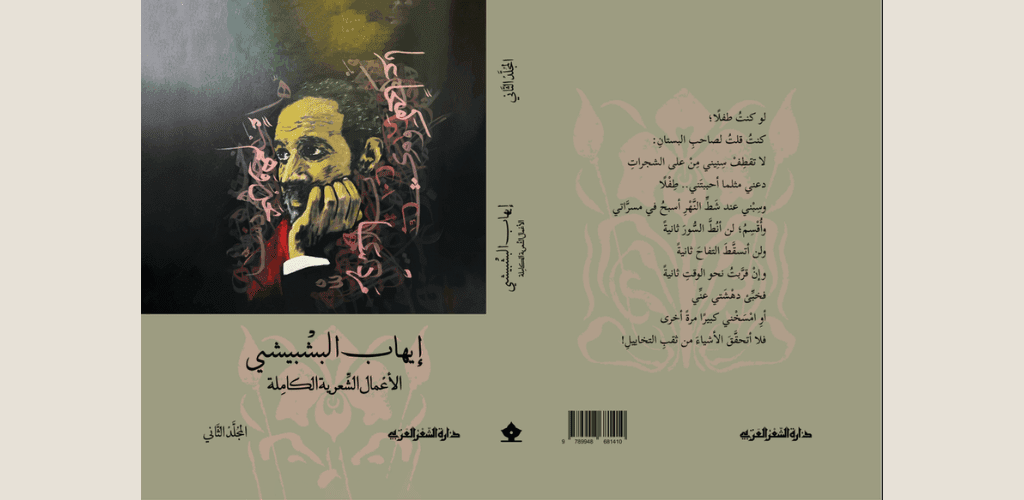
Untitled design 1024x500

Ihab albusheshi, 40 years with hair. | A.D. Ahmad Darwish

Darh!

A. Ed Ahmed Darwish


The experience of poetic schizophrenia extends for more than 40 years, and I knew it almost 30 years ago, followed his hair and evolution during these 30 years, and wrote several studies on his hair stream, the first of which was an introduction to his poetry group, which was labelled as a fourth of his cheerleading season.

This work, consisting of eight poetry groups, is almost a landmark in the process of renewal of the modern Arab poem, through its attraction to creative communication with the heritage, in exchange for another tendency to renovate the modern Arab poem in recent decades, and it is adopted by way of application or look at the flock with this heritage, and it may be in the interest of the Arab poems themselves to struggle.

The most important of these eighty-year-olds, a generation that enjoys a great deal of vigilance, independence and sorrow; especially because of the 70s who have lost their creativity as a result of the political and civilized circumstance, the unbridled attempt to extricate the morality of the national project and emigration of the world, and their experiences are only hybrid to bear.

This has necessitated the great harmony and consistency of the poem with its diverse audience, so they first had to provide a text close to the public without having to give up their own great beauty criteria, and, secondly, they had to open up the musical horizon with the home and activism, which some claimed to close, through the seizure of the rink.

These efforts have come to fruition, as we can now clearly hear the sound of this poem purely pure, both from these poets and from the next three generations, and this is not evidenced by the many contests and awards broadcast by screens and communicators with their programmes and series.

It was not only on the head of these poets, but it was before what we could call the juice of the poem, that is, presenting a contemporary poem in all its components. At the grass-roots level, we will adopt the idea of getting closer to the grasslands, using words and rhetoric on the public tongues, which are commonly exemplary.

This may leak from the delta to the builder. Our Shabish poet pays particular attention to artistic construction, intensification, logical interdependence and vertical growth of the poem, as illustrated by, for example, in its Diwan, entitled " Agreed " , in which our poet quoted the poem in the form of ancient and ancient heritage and narrative.

How does it go in and out of the hair?

It's the most spectacular question, which controls major poems, such as the House of Spirit, the Shahad, the Time, the Hair Worm, and the Lost of the Hair, and the Leap of the Worms, but it's a question that comes up in a hairy way, and dialogues with and around it, in a poetic way, and it's a blurry.

At the same level, its unique language on the part of its vast wings is shaped by the inspiration with its images and vocabulary, the lively transmission of what it was thought to be prone to ribism or penetration and, on the other hand, extends these wings to the language of daily reality in a stunning and consensual boldness, and the enlargement of the wings here confirms that those who are trying to solve their hordesclusions.

One of the fathers says the poem:

A language you know.

Every building has reached.

Referring to the relationship between the poet and his language, and to the same language as her lovers, after she realized that their souls had gone out with love and gloomy, she sought their secrets, on a journey that did not come to the discreet, nor to the delinquents, but when they received the wave that she knew, they realized that every one of them would be caught in the rain.

The poet envisions his ancient and modern culture to his hair, and demonstrates that the moment of creativity, if it reaches an appropriate temperature, in which all the elements employed by the poet can be embedded in his poems, confirming that there is no hair element of his nature, not necessarily a hairy element, but that there is a gift, a moment and a structure with which the poet is not permanent.

From every dream.

I was yelling at my right, another piece.

I'm riding her with him and praying...

Until tomorrow, his feet are Sun.

And his flaming hands covered the light of the Tower.

And this "many" conflict leaves its exact effects on the structure of the stereotypical poem, which, like the "Spiritual House" can be read from some corners as "simult" to a poet. The poet ' s poem can also be read as a poet ' s non-village, as is the term " how long " . In all cases, it is clear that the hidden correlation between the time stretch and the retrieval of consciousness, the detailed picture and the touch of the transplant feather and the unintentional dimensions of the situation is unreal.

In the inauguration of "Certificate", the poet blends into the concept of time, place, appearance and beyond.

We were on the suspended time purple in two galaxies.

Some hunt in the opposite horizon, some leisure ounces.

And some fill the cup of his energy.

And it's blown by possible stains.

This blender leads the recipient to an inspiration in the image of the one who took it and took it to waste it, but this "realistic" image is what turns into radiation approaching Sofit Tourism, to ease the sense of a poetic escape from the one-dimensional impossibility, the approach to the formulation of a cliffying and abnormality.

And when it comes to the sorrow of the sorrow, it doesn't seem like the sorrow of the sorrow, but when it comes to questioning how many, twenty, thirty or less.

The fact that the light poet controls on the secrets of the hairy rhythm appears to be interesting and admirable at a time when most of the rhythms are ignorable, and it appears to be difficult to achieve in the absence of these same disciplines, and we are gathered here by using a silo of different hairs, whether they are of the same activation as the whole and the closest.

But it is more admirable that this commitment is made without restricting the poet ' s movement to resort to many good techniques in building his poems, such as dialogue, combining time and consciousness, exploiting many technical means to build a multidimensional image, sometimes resorting to a detailed image of the individual, and then combining the opposite.

Volume of photo cavity, location 1200 x 500

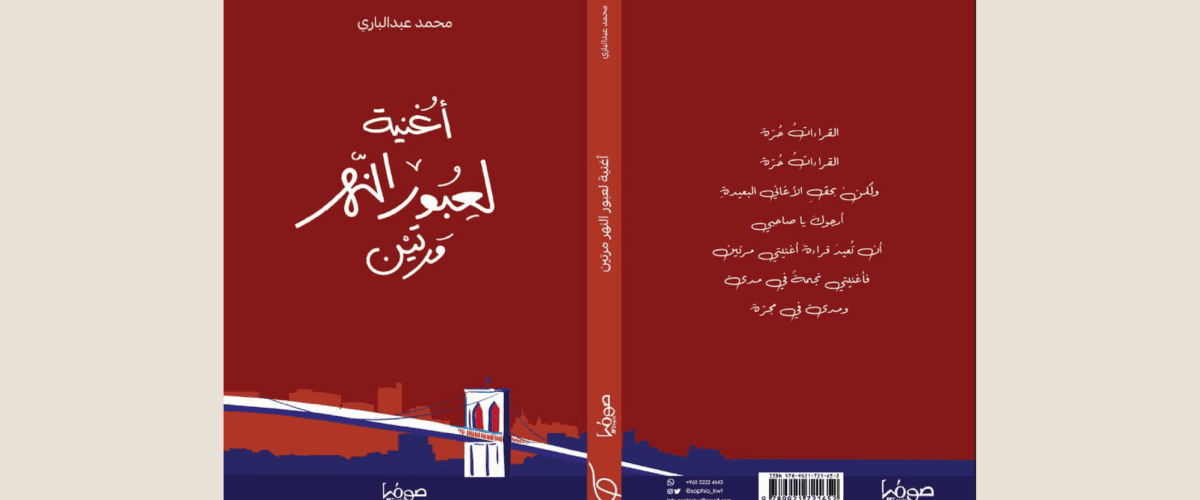
Muhammad Abd al-Bari. A poet in New York! | Trust Yonis.

WhatsApp Image 2025 09 30 at 16 27 33 e1759236081442

Trust Yonis.

A poet and a Sudanese critic.

It's New York, the brightest girl in the art of temptation, the call for reckless progress, the modern world order of its high-rises and its streets, which reach the horizon, as Abdul Bari says, when it's still a theme for a hot hair dialogue from the early 20th century to the hour.

This article tries to meditate in New York in one of these experiments, in the light of the above-mentioned great poetry experiment. A song to cross the river twice For the Sudanese poet, Mohamed Abd al-Bari, the lengthy poem he wrote during his stay in New York, and because the city, as we have said, inspired a great group of poets, this poem must be approached as a dialogue and a clash with previous writings, especially the writing of an African poet, as in the experience of Lopold Singer, the Greater Senegalese poet, Yusuf, or the Arab poet, and Muslimsah, as well as the Greenhouse.

The poet Muhammad Abd al-Bari opened his long-distance poem by leaving and searching, as if the whole poem was a discovery of the other side of the poet, considering that the other one is the mirror. New York is the mirror here where the poet rediscovers himself and writes his own.

Yay, New York.

Leaving with the scholar may end with you!

It's the bay on your south.

Opens the blue gate for me.

I'm begging no faces.

From the new horizon to the new horizon.

The spirit is Christmas.

And I'm making the lightning work progress towards the city of the world.

And my Wright intervened in the leak of flags coming under the glory of God.

This town.

My taste in the hot mix of you.

To try the meaning unit.

And I've got the white fireworks orbit in you.

To spare the ashes!

This is where the poet enters as part of a nation's panorama, flags, colours and souls, into the city of the world, United Nations Headquarters, the globalization of trade and the huge economy, but it makes its entry under the flags of the glory of God, in the city of the world and the dark metal tower in his dnoyote and material, but it quickly meets his African predecessor, Sengur, saying: To New York,He's the nigger inside a city that he sees needs, needs to embrace his element and warm blood to complement the humanitarian model that he was unable to represent the Western civilization that produced. But Abd al-Bari is inextricably demanding, saying:

In my brave city.

Free me from my first legacy faces.

If it's new, drink masks.

*******

I want the Goa'uld to remove the sophie curtain from my body.

And in the mirror of my hope, which cannot be stared twice:

I want you to blow the nail out of my veins.

Thus, as many of those who wrote about New York, with their giant robotic face and extreme events, the text of Abdel Bari moves between the spelling and the advent, between the desire and the nun. The poet wants her to take away from it, the sofie to drown in her world of the world, to blow up, and to wear it with new faces, even if it is a new one. Infantry as my fear/invitational signs as my face, I see them in front of me lying / yellow brunch, like the odds of dying I see them through the place.

It's New York, the gallery gate, it's going to the cages from the body and the Earth.

  • Harlem.

Like New York was an example of shocking globalization, and the attendant meanings of the collapse of cultural privacy, even before these features and terminology were reflected in our modern reality, and as Luka was blessed nine decades ago and his famous New York poet, whose title was replaced to speak of the experience of Abdul Bari, she also opened the window of Harlem ' s fingers in front of his eyes.

I saw Harlem with voices and ritual colors.
And the scandal.
In the evening tea hour, at the delivery worker's house, I saw the night festival starting to break the day..
And I declare the night to be believed in the day..
It's a good hour. God sends home life on the streets.
******

Harlem, Harlem!!
A green corn rising from the top.
She wasted by Dan's bare feet,
Rads crooked like a silk, and stained like a high spear.
Nellover ballet,

And the wonderful imaginary masks,
Mango's fruit of love is falling out of low houses.

Singor saw in Harlem the potential of the idea of a life-stricken and people-like event, a world that half-blacked black niggers and washed away the history of servitude, and he decided that black night was more secure than day and that it was a holy moment in which God blessed life on the streets.


  • Laurca.

Stop Lorka calling:

Oh, Harlem.

There's no misery equivalent to your two-time eyes!

However, in his clandestine courtesy, Lorca was singing repeatedly and ironically together, and in the hope that he was engaged with disability in a composite image of magic and psychological impact, he was singing to the Zaneji Renaissance Harlem, the emancipation and the opportunity of the white conscience to embrace and respect the blacks.

Harlem.

Impossible gold.

I'm like the Crescent praying.

And I hold only the heavens.

So you don't tend!

As usual, he brought her back to the Arab-Islam al-Hamalah al-Samat, from the very beginning he entered the city under Majdallah, who did not forget that he was representing another horizon.

I'm in town lying history.

He lies in the Atlantic, absence of Mediterranean water.

Traces lie in museums.

So he says: ...and lie in Jesus his blue eyes!

Jesus coming from the east, who turned in church photos into European with blue eyes, did not get far from Muhammad Abdul Bari in his trial, the city, who was formerly poets, but was eager to remember the roots, in his return and in his journey back from the city of the lowest city, as he called it to the city of Mobile in the Sudan, where: In the half of Grampa's tower business, I came to the human savage of the people who came in/the earth, the water felt at the crossroads my idea of transparency... To the Riyadh dialogue, where he was young and older, it was like he was dragging New York from making it to his eastern world to read on the poet's biography, his old research and his life in the face of the world.


Image

A view of the poetry scene in the Sultanate of Oman | A. D. Ahmed Al-Shajir

WhatsApp Image 2025 09 30 at 15 59 00 e1759234356669

A.D. Ahmed Al-Jib

Cash and Egyptian academics

The poem of modernity in the Sultanate of Oman is a remarkable position, with the richest bamboo poets in the Arab poetry arena inside and outside Amman, with their masculine poems, which dig a special place among other poetry types.

I believe that Amman ' s poem is more profound and self-sustaining, on the one hand, and on the other, it has not been widely observed in romance, but it has been all about self-inflictedness in its various forms, and thus it represents a special self-help situation, a sense of self-help and knowledge in the movement of Arab modernity, and the notion that this colour is infinite.

  • Poetry:

The modern Omani poet relies on religious heritage, which is based on a series of cultural advances that have contributed to its formation, and we therefore note that the modern Omani poem has relied on the multiplication of religious heritage, so we note the tale in the use of the Koranian text, which is reflected in the inspiration of the Prophet Yousssus story of peace in the poet of Hassan Al-Muruchi.

    And what was his brother's name?،
How Dad spoils him,
I didn't have them,
To suspect his mother with the deer.،
And what they think of the house...

In the previous section, the poet was employed for the Prophet Youssouf story of peace, by relying on the patriarchal pattern of religious heritage, where he remembered the love stories of the Prophet Yakub to his son Yusuf, which had led to the use of the prophet and the fact that the Yusuf ' s brothers had taken refuge in the al-Muqab, and had not been seen as a question of the ruqah al-Shusif al-Shusif ' idah al-Sud of the recent lus.

You're welcome to the old poets in the modern Omani poem, because they have a clear effect on the structure of the Arab poet from the ocean to the bay. The poem has been opened with the uterus of poetry with great influence on the Arab poetry.

I don't want to lie to anyone.

Or believe something.

I'll sleep filling my eyelids.

About the wars and the streets.

I'll take the poisoned dagger off my body.

I'll describe my soul from the memories.

To fly out of time and cities,

Light.

As a sailing spirit, he crossed the storm.!

You're welcome to see the image of the prophet in a syphilis poem by saying: I'm going to sleep filling my eyelids of wars and deserts, replacing the hair with the war and replacing the people around, saying:

I'm filling my eyelids out of her.

And the creation is made easier, and it's consumed.

You are welcome to retrieve the rebellion, which strikes in every mushroom with an arrow, to draw language battles around the poem and its encroachment, while it comes against the sword of my own descendants. The intention is to seek self-determination from life, despite wars, deserts, deaths, direct killings, infringements of freedoms and small battles between people in our Arab society.

The poet says the sky of Issa calling the position of the exile:

My shadow.
Exile stars.
The remains of our prophets.
We stayed.
!

The image of inner exile appears to be clear in the hair of the sky of Issa, where it is a self-importation within the home, where it lives in a world that is not commensurate with what it dreams, but all it occupies is to feel the spirit of life and joy, but it finds itself bound by destitution, pain and restraint.

It's a palm land.

As Christ is among the Jews.
I'm in a nation of God.

Strange as good in Thomod!

Undoubtedly, a sense of alienity, internal exile and marginalization contributes to its demise and, in fact, to its death, as if it dies in its own home, in the face of its own wounds, so exile is the spirit that tends to be self-inflicted in exile.

The poet says the Stone Hill, calling the sound of the blade:

Good morning, sunshine.

You noble wicked.

Friend of wolves and daughters of Owe.

Mr. Al-Khafar, in the empty quarter.

The Prophet of the Revolution!

In the past poem, the stone-threatening poet, the prince of the Sha ' alik in the Arab heritage, drawing from his voice the symbols of the revolution on society, rejection and rebellion on customs and traditions, and the central building of the martyrs who try to dig behind the destruction of other traditions and construction, the poetic vocal vocabulary may depend on the culverted cultural footing of the shrine. The stone-throwing poem bears a very close social vision from our Arab reality, where the weaker powerful eats and the right to the unemployed prevails, leading to the emergence of the poetry of the shoals on the modern poem as a symbol against the miserable social order of Arab culture.

  • People ' s heritage:

The voices of the people ' s heritage are reflected in the modern Omani poem, as the popular heritage represents a remarkable presence in the structure of modern poem. We therefore note the poet ' s reliance on popular tale by talking about the Moon, the stars, the myths, the folk myths, etc., where it became part of the artisanal construction elements of the modern Arab poem, where the popular folklore is the first reference of the popular culture to which is enriched by leaders and researchers in the legendary.

The moon is as simple as the mourning of the prophets.
And my soul that God has.
On a spectrum of fire.
Will you give it back to me?
Seabirds.
I hear her calling me.
As a widow with a crush on her in a dump!

The poet, the sky of Issa, is based on the structure of the cultural pattern through the presence of the popular legend of the moon that lights the universe at night, in popular self-expression and destination, as well as the moon, as the main engine of the myth, the moon, the sadness of the prophets, the sadness of the sorrows and the symbols of the moon and the gloomy of the sea.

You're welcome.


The poet is the sky of Issa.


The poet, the stone gel.


The poet Hassan Al-Mamroshi