Volume of photo cavity, location 3

Forest questions: feminine hair crisis! | Dr. Hanan Omar

WhatsApp Image 2025 08 29 at 12 18 42

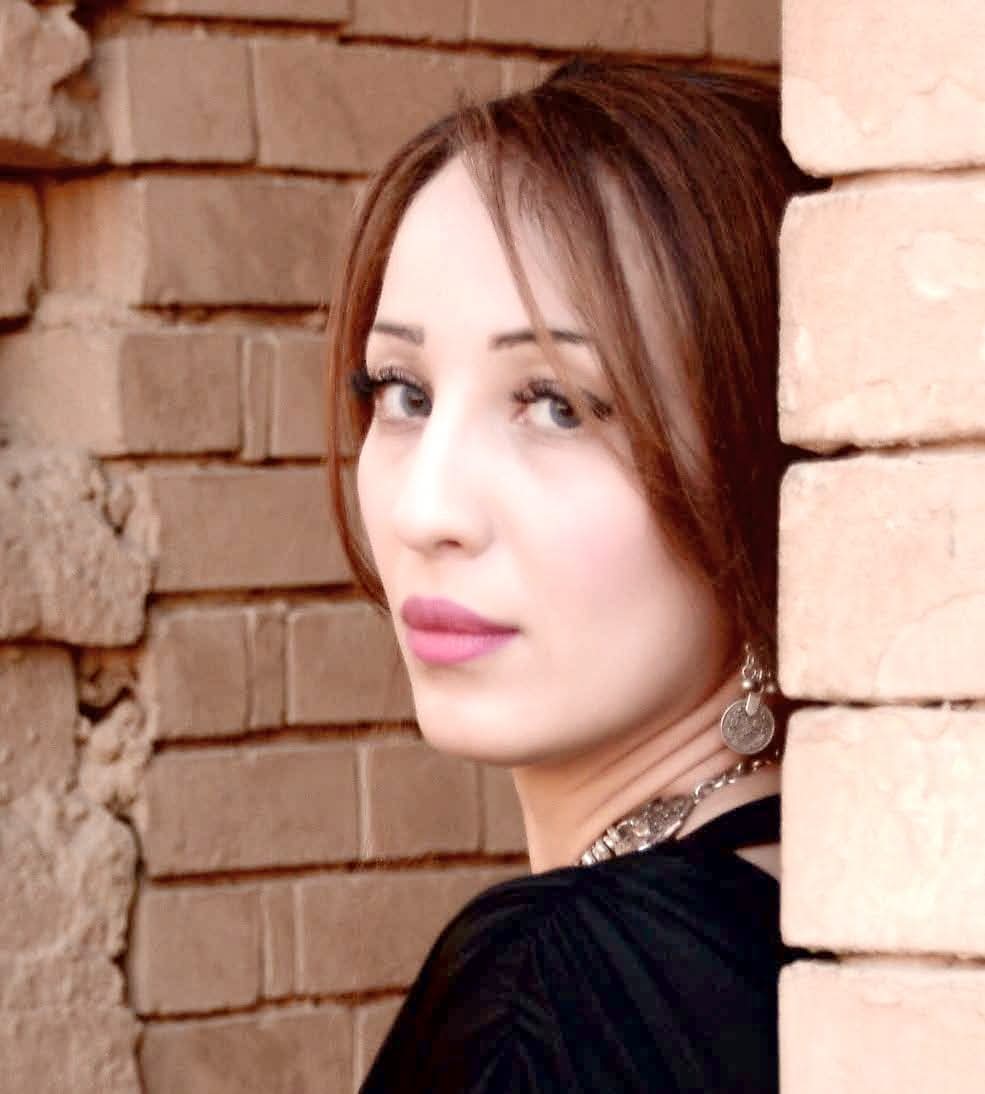
Dr. Hanan Omar

A poet and an Algerian writer.

In addition to the growing tropical forests, those silent questions that are commonly known and unspoken, and whose thorns expand to intersect with the truth and hurt all those who give their hands to them, as if they pose risks of penetration and detection, and the risk of searching for anonymous answers, but only one look at the scene -- when the phenomena are connected with some awareness-raising -- is enough to try to be creative.

Perhaps one of the most critical questions to be avoided is that of a feminist poet, with my reservation to the term and the need to use it. While the monetary code is stirred by many feminine poetry names, many of which are often swollen by comity or sympathy, these readings are often linked to certain experiences of certain causes and to other omissions. What are these phenomena?

I'll be back in memory for years when I was still at the beginning of my experience, when I accidentally took care of the opening of an old cultural magazine, which was occupying a group of great writers and critics, whose images were carefully painted in the first pages, as the most important, the better, and they were.

I'm not sure that the old magazine was rich in women's participation, but that the image I've been looking for wasn't on the regular list.

Then let's go back to the beginnings - quickly - and to the historical data on feminine hair, a term we will agree for logistical reasons to use in the following, to refer to poetry texts written by women - in the civilization of a riverine country, the name of the oldest known poet on the ground - and I'm not less here a poet - to confirm precedence over the sexes - Let's go. The daughter of King Serjun Alkadi, born in 2286 B.C., died after a young woman in 35, but during her short life, she left great traces and wrote immortal texts, which took a religious external form, but imagining her meanings, images and references, which led to her being just a mask, concealing the cravings of the oasis.

At the Arab level, in the ancient times, many names emerged, most of which were vocal and left with scattered fathers, such as the qualification of the Chebaan, the courageous personality, which, for an unknown reason, left many of the scholars of political significance, and whose poetry was simply sculptured. We must point out here the wrong information about the death of her four sons. The Muslim women are not the dead of their children, but the Negro.

We must point out something important here, namely, the phenomenon of maturity in the Galle era, and its specific association with women, which, in my opinion, simply stems from the fact that women at that time, in war, conflict and the cruelty of life, were not reaching the age of poetry, unless they were killed, widowed, damaged or lost a life, thus spreading the philosophy of death, and became the philosophy of life.

But it wasn't enough to mention any poetry in the book of "Princests", like, which was written between 764 and 787 years ago, and it was one of the first bloggers to preserve the throne, which included 67 poets and nearly 130 vocals, with the total absence of a woman's hair.

Entering illiterate, fratricidal and even Andalusian ages, there have been shifts in social life and the moral environment, and women ' s hair has become highly correlated with the surroundings, who used it as freedom of expression and as a means of disinformation.

Finally, in modern times, things have not changed much, since women ' s poetry has been excluded from the front lines of a big hairline that can only recognize the importance of their experiences and earnestly, and in return we can remember only a few names, the most important of which are those of the males, who have tried to open up the power of the young woman.

I am not trying here to condemn the convict scene, which we all know what and what it is, to the extent that I am trying to point to the place of disease to find medicine, to find a solution that requires first recognition of the existence of a great and obvious problem, to grow safely through times, to disrupt the development of Arab poetry, to destroy the experiences, so we must analyse the phenomenon more rationally, beyond the reach of differences and without ignoring it.

Volume of photo cavity, location 1200 x 500

Digital poet: Disappearance or resurrection? | And harmony.

WhatsApp Image 2025 08 29 at 11 25 e1756452718131

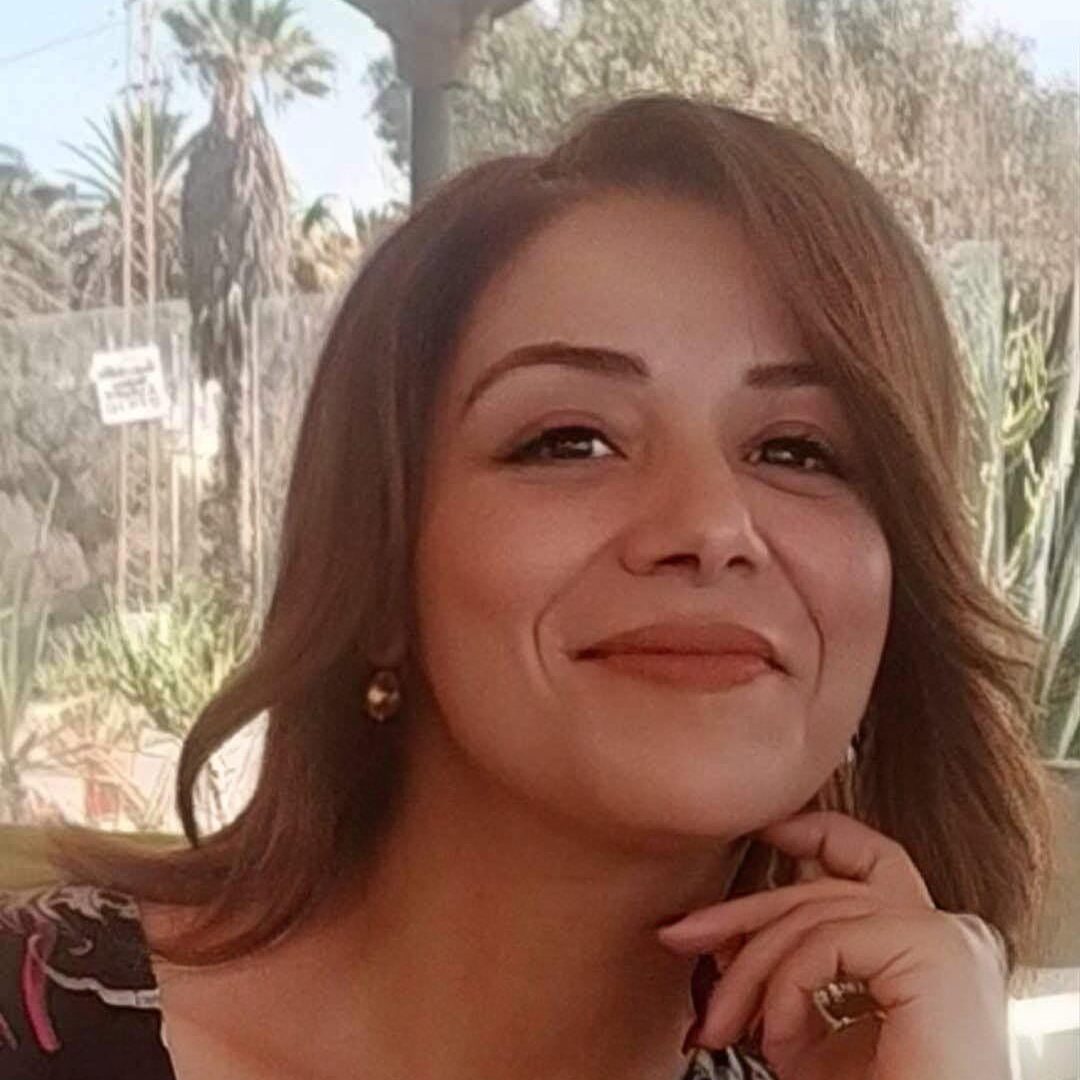
And harmony.

Tunisian writer

I'm one of those who started writing "the poet" on Facebook a decade ago, when the attack on this new phenomenon was seen by poets, critics and educators, and in the shape of the hardest and hardest, I'll never forget the kind of shame that my script was, and it's bound to say, despite pretending to be trustworthy.

You can imagine how a person who is ashamed of what he writes, spreads his script to one of the communicators, and then wishes to disappear from existence or break the earth and swallow it, despite his deep sense that what he wrote is good, I am also not a very small person, who has spent books and literature on a fair and self-determined basis.

But the poet is used to it, relying on it to the extent that a poet or jewellery is spreading, even if it is-- it's terrifying for him, not just that success, fame and high selling ratios are something that is incompatible with the essence and writing of the poet, which is often the way to the eternal rule: this is not a fierce, and it's not a poet.

When the media came, they changed everything, and this change is in fact only part of the nature of life that's always advanced, and if technology and digitality have gone on all aspects of life, then why would you rule out the poet?

That's how the hair exploded, it can't be counted or counted, and the poet came out of ordinary people, unknown or dedicated, just dreamed of writing it. This is a new poet, a police, not a literary culture, but a deep sense of people, things and attitudes, which may be found in a greenstorm on the corner, and no one who studied ten years in college, reads a thousand books, and here brings me what the French poet said. Paul Valerie. A century ago that: "There are poets who didn't write one poem in their lives, murderers who didn't break one drop of blood."

We moved from a time when poets were seen as distinctive artistic or intellectual voices, and part of the cultural elite, unavailable, to poets who were closer to influencers, called the Instapoiters, any instagram poets, who were in contact with their thieves or who were in direct and permanent interaction with their villagers, and who entered the business market (sale books, scripts, texting). Robbie Cor. Canadian poets of Indian origin, which emerged on Instagram by writing short-patterns with simple drawings, whose religion has achieved imaginary milk and honey. Lang Liv. New Zealand poets and artists of Cambodian origin, intensely active on sites such as Anstagram and Facebook, whose meditational and romantic poems were important to many translators around the world, including the Arab world, making them far with their texts, thanks to communicating sites and the unknown poet, the name of which is now visible.Atticus.As a metaphor, which added ambiguity to which the media audience was attracted, Atticus publishes mostly short-patterns in English on Instagram, relying on romance and streamlined presence, a simple, short-size-fixing method, whose texts have been transformed into the quotations of the world, which has succeeded in converting its digital texts into books.

But Instagram is not the only platform. Many Arab and world poets found in Facebook space for live interaction with their villagers, and Twitter is an area to try short poems or digital haeko in only 280 letters.

When the most important existential, philosophical and political issues were poetic, the poet today focused on personal and daily feelings, individual experiences, such as love, depression, anxiety and self-recovery, so the poet became an art very close to people, because he was touching them more.

The complex language of hard hair, deep scriptures, cultural and historical references, written in long or medium texts, is now an easy, simple and straightforward language for anyone, we are in short texts, closer to being quoted, which, despite its flaws, makes poet reading easier, accessible and free of charge.

Yeah, she returned platforms like Facebook, Instagram, Tech Tok, and others, resurrection of hair for a young man who was away from him, but is that all?

And to be objective, I will not deny what seems to be clear, that all these positives have not come without negatives on poets, poets and even readers.

The attraction of every person who makes digital content does not, of course, exclude poets. The image becomes necessary to accompany the script.

In the end, there is an unchanging fact, not time, and no change of reality and its media, that the hair is inherent in life, unleashing its skin, opening the windows of the soul to the world.

Volume of photo cavity, location 2 1200 x 500

"My brother's war" to the student of Abdul Aziz, the knife of the address and the hoodlums. | Abrasion.

WhatsApp Image 2025 08 29 at 11 24 04 e1756452517712

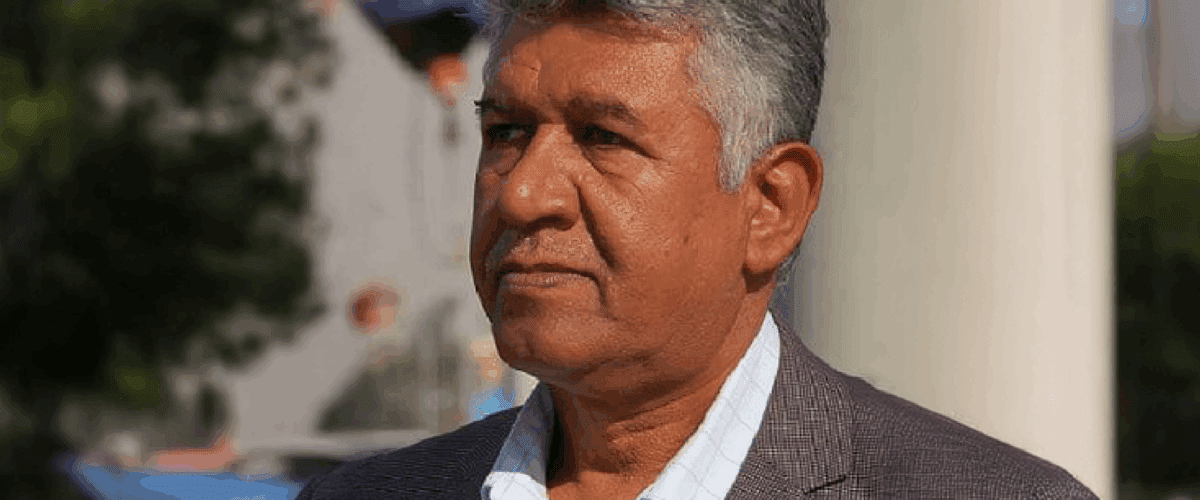
Abrasion.

poet, writer and interpreter

(BROAN WARING)

Brother... The war is over.

They took your tank to the iron smelter.

But your gun is still on the mountain.

And here comes the sand on your salad.

The peasant grows his field where I fell.

Because the trees you planted...

She died, too.

The mountain that you've robotized.

Don't spare him alive.

Enemies flow to the top.

And get off the face.

I saw you.

Every time.

Before your last fall.

The enemy takes your suit and your annulment.

And whatever you are, brother.

They were killing your body with bullets.

Even in your last death.

When the worm was falling out of your quarry,

And your big heart open.

They thought you were lying.

And you're still their nightmare.

Do it, brother. The war is over.

And there's the kids in the park.

And the balls you've been seeing.

From fire and metal,

I'm cold, and they're saving her.

In their feet.

Except the ball that fell near her.

That's the one that sent your body a shelf..

We're here in the village.

No war, no enemies.

A horizon of rare vibrations.

It just forms under our pillows.

We've forgotten some of our surgeons.

And we could feed some of our daggers.

Old.

But all we want.

That our dogs won't bark but a guest.

My mom's still in bed.

Talk about your height and your strong muscle.

It takes her a lot.

They didn't find shoes on your size.

She was asking me.

On which side did you sleep?

Scared me to tell her.

You haven't slept in seven years.

And the fragment that broke your ribs.

It was from a powerful gun.

And you left your whole life.

And I left the sun.

Strange on your names and dreams.

And I've been on my skin.

That's it.

And the distance between your life

And your death is six children.


*I'm sorry.


Student AbdelazizAn Iraqi poet working in hair, hair working for him, they both work hard to offer what's different to eye, hear, and other senses. "A color candy."

In 1993, he published his famous poem. (BROAN WARING)It is a legacy that he wrote when his brother quoted, and it made a sealed fusion in the audiences, that it was a form of polite against the idea of war, but in a roaming way, standing on the threshold of fear of the throne of the ruling regime, and the defamation that the poem was quoted. It is also one tongue of millions of communicators with their sons and brothers, which has made the poem spread as a blessed prayer, while the poem has not received monetary treatment that is commensurate with its importance when it comes out, as the inscription in its linguistic soil can lead the prospectors to find the poet ' s and those who are experimenting with the monetary analysis of the poem.

"It is indeed surprising that the poem has not been rejected by the sergeant that the State was putting in place to prevent the publication of anything that it deems incompatible with, although the poet strongly declares not only his rejection of the war, but his firm affirmation that this war was futile, and the indication of that is the title of the poem, as he wants to say that this war was my brother's war. So he lost his life because of her, while others came back to their normal lives because it wasn't their war, and that's a bitter irony that the poet even passed on the neck of print in that difficult and cruel era of Iraq's life."(1).

A poem. "My brother's war." It's deeply disastrous to carry her reading on a delicate journey through memory halls and the loss of war and the devastating effect on the breath, through a few arduous images, to reflect the deepest sorrow of his brother's departure, and despite the end of the war itself, the emotional effects of the war are the same.

The uniqueness of the poem is due to its excess of political or national affiliations; it is a rampant cry between different walls of cultures, in terms of addressing the trauma caused by violence and the sanctity of memory carried by lives, and the quiet devastation beyond the time of the alleged heroism.

The poem begins with an intel with a certain irony: Brother, the war is over.And that gives the advice of a sarcasm and arrogance to the waves, although the war may be over by definition of the geospace, it is not a time-control, but it's still pulse in memory and the remains of the bodies of the dead.

With the phrase They took your tank to the iron smelter. A deep indication of the dispossession of the tournament from its personal nature, the fact that the soldier's life, despite its appreciation, is ultimately reduced to a mere metal wreck, while the sentence says,But your gun is still on the mountain.With a symbolic reference to the abandonment of the task or duty which has not been completed, and may reflect the mountain ' s rejection of the violence generated by human beings, however, this abandonment itself remains inextricably linked to the devotion of the brother, deepening the meanings associated with sacrifice and human paradox.

Nature in the poem doesn't look negative or renovated; it's hurt and collusive. "And the sand has finally come to your salad, the crocodile is planting his field in which you fell, It suggests burial of the body and ideals by employing sand, which is a classic symbol of time and demise, heroism here swallows itself, and trees do the same. 'Cause the trees you planted, you died too, As a sign of the totality of the war against creatures.

Perhaps the most influential part of the poem lies in the disparity between the past that war and the post-war present, the children are now playing with what was previously death tools:

"and the balls you've been seeing from fire and metal,

I'm cold,

And they're throwing it in their feet."

This shift from weapons to games is both beautiful and terrifying, and it represents peace and steadfastness on the one hand, and on the other, reduces the brutality of war, seizing it to active beauty, breaking its slice in which it says.Except the ball you fell near, the one that turned your body around, In my hair description of death, borrowing the wings' job to describe the spirit's way to the sky.، While the mother represents the death scene, like the rest of the triangles, holding the memories and legends of her son: And it takes her so much that they didn't find shoes on your size..

I am proud of her son ' s uniqueness, and perhaps with the divine exception of being the artisanal and graphic martyr, bigger than the world, while re-importing the adjustment that the mothers who are eager to ask about the martyr as if they were alive: "She was asking me on any side you were sleeping، Scared me to tell her you haven't slept in seven years, This question and its conclusive response reflect the physical absence and an enduring peace that deprives both living and dead.

The poem's tone is lame, thin, bitter, and imaginative, with an earful of Arab poetic heritage, especially in repeating it, bringing it to the dead, blending it between natural images, body and passion, with no stringent rhythm or weight structure, reflecting the discomfortful state of the spokesperson, and sounding a precision.

This poem can be read in the context of any modern conflict - an Eastern European, Eastern European or African - but its strength lies in its universality, it does not call war, enemy or ideology, and this absence allows the poem to serve as a sign of history and trauma.

My brother's war. A deep reflection of the remnants of violence and the value of sacrifices, and what makes this poem exceptional is to merge it between personal, political and rich, it doesn't add up to citation, but it doesn't heal it, it tends to make a human character to lose in a time that's often easier.

___________________

1 d. Bader Hassani's footsteps.

Volume of photocopy.

Synthetic intelligence on the Kess Bin refinery. | Muhammad Nasreddin

WhatsApp Image 2025 08 01 at 15 14 38

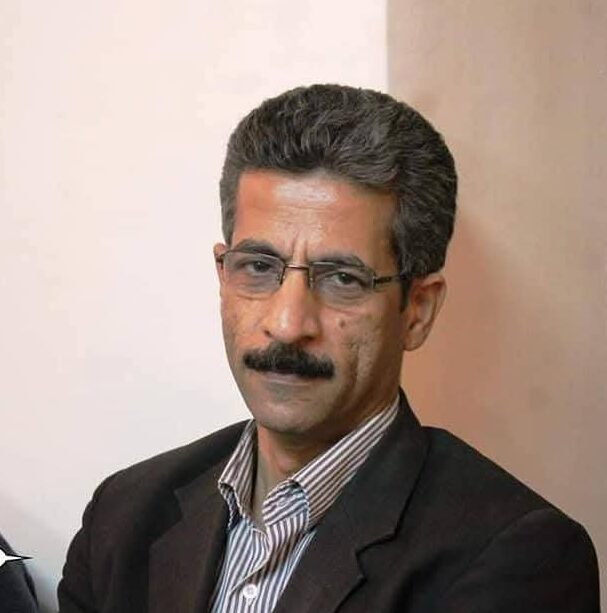
D. Mohammed Nasreddin

Lebanese poet and academics

In the age of artificial intelligence, many of the concepts associated with this massive revolution in the world of digitization, informatics and automation, including the concept of the concept of the world of religion, information and automation, are infiltrated into our daily lives. «Avatar.» Avatar -- this digital representation of the same or the other -- until the front we deal with the world, and sometimes with ourselves in many social networking platforms, allows Facebook users to create a cartoon-like character, used in comments, estory, conversations, and switches to a three-dimensional representation that is used to surf within the virtual 20s.

In Greek myths, Pigmaloans loved a statue that he swept in his hands, and the gods survived, the story that was found in the Book of Transformation, in the statues of a great Cypriot woman named Biggalone, was obsessed with finding unsatisfactory uniforms in the mind of the feminist, and in the eclipse of a woman.

In our time, the user makes representations from hypothetical data and images, programmed to match it or to reflect a dream that it does not find in reality, but in Arab poetry, before humanity knows the digital revolution, camera, computer or virtual reality, Kass bin Mulu invented a unique form of avatar: Leila in his heart, not walking on the ground.

Received in part X of the bookThe songs."My father has a strange story about the news of a priest, quoting her that some of his friends wanted to cure him from his madness, and they came to him with a hidden elephant. «What I need is that Lily in my heart changed this.«And the same story comes in a slightly different version inEnd of the rabbit."for the Norwegian, then. «Tell him, "This is her, my heart is looking at her and says, "God, I'm giving you the evil of these."«I'm sorry.

This wasn't cruel, it was a spectacular poetry about the death of the body in front of the immortality of the image.

With this unique genius sentence, Kass Ben has breached the limits of the traditional concept of love, and founded on the idea that self may not relate directly to the other, but through a symbolic mediator created by fantasy, as if a priest had long before the advent of enhanced reality or techniques of hypothetical reality (Virtual reality), a man does not like the other, but rather as he imagines and wants it to be.

What we have done, and what a great deal of Arab poets have been after and before (in here we remember the story of the valley of genius and poetry demons, and the ability to compare this idea with hypothetical reality), is only an advanced formulation of what we call the avatars, but the fundamental difference is that Arab poetry frees the acets from the cold technical dimension of escaping and making them more irous.

On the other hand, the digital archaeology today, no matter how spectacular it may seem, is a delightful picture of a general night in a crazy fantasy: it is conditional on data, limited by preparation, and is in the user ' s mouth instead of opening up to it as a probability. «I like names like that. Her name's approved or was from him.

I'm counting nights after night, and I've lived a day.»I'm sorry.

Today, as we make smart statues, we talk and talk, and we wear digital faces that interact with symbols and imoys, we should reflect on the experience of a priest.

If we look more closely at the Arab poetic heritage, we will find another spectacular simulation of the story of Qis, the story of the orphan poem, which will be summarized as received by Judge Ali Bin Mohsen al-Tinukh and published by the Egyptian Red Crescent magazine (J3, 14, 1 December 1905, p. 174). «One of the daughters of a great prince named Naddd, was a great poet, with a nose, and her deceit from her father met a large group of princes who would not marry but a man who had a haircut and organized poem. He considered that the poem was the highest layer of his poem, and if it came to support his response to her speech. The Devil had to kill his own man and impersonate his poem, kill him, carry the poem until he came to find it, and he went down to that prince, tell him what he had to come. His accent was conceived that it was not an inspiration, but that during the intransigence of fathers, it had been heard that her organization was an abhorrent. She spelled her father "kill this, he fought Ali" and they arrested him, questioned him, confessed.»The story, my dear reader, may appear from the fabric of popular tales, but it has a deep intellectual glance that brings us back to the middle of the twentieth century, when the British mathematics world has formulated Alan Turing what is known today as »Torring test.«He's one of the most famous concepts in artificial intelligence.

If we look more closely at the Arab poetic heritage, we will find another spectacular simulation of the story of Qis, the story of the orphan poem, which will be summarized as received by Judge Ali Bin Mohsen al-Tinukh and published by the Egyptian Red Crescent magazine (J3, 14, 1 December 1905, p. 174). «One of the daughters of a great prince named Naddd, was a great poet, with a nose, and her deceit from her father met a large group of princes who would not marry but a man who had a haircut and organized poem. He considered that the poem was the highest layer of his poem, and if it came to support his response to her speech. The Devil had to kill his own man and impersonate his poem, kill him, carry the poem until he came to find it, and he went down to that prince, tell him what he had to come. His accent was conceived that it was not an inspiration, but that during the intransigence of fathers, it had been heard that her organization was an abhorrent. She spelled her father "kill this, he fought Ali" and they arrested him, questioned him, confessed.»The story, my dear reader, may appear from the fabric of popular tales, but it has a deep intellectual glance that brings us back to the middle of the twentieth century, when the British mathematics world has formulated Alan Turing what is known today as »Torring test.«He's one of the most famous concepts in artificial intelligence.

Here the genius of the picket shows: in the story of a cortex, we find an impulsive, lethal poet with a hairy voice that does not have. The human machine (fighter) fails to test and the princess shouts in the face of a false poet: " You're a murderer on me " , not because the poem is weak, but because it fails in the true enthusiasm of its owner, and the machine of artificial intelligence today fails to write one text near the spirit of the poetry prophet, or to paint a painting that touches its blue and yellow world.

As a supporter, she performed a primitive and natural version of the Toring test, without needing programming or algorithms, but relying on instinct, taste and precise knowledge of the context, which are the tools of true governance even in today ' s artificial intelligence world.

The great paradox in the story of support is that the machine is not made of silicon, but of lies and envy, a machine that has sounded, but has not improved the role until the end. Telligence: «Robots/when they gave us the land, they give us our old skulls, you idiots, how did you invent love/how did you describe the rose?»I'm sorry.

The size of the photo cavity. Location money.

Walid Munir, the 70s who didn't get close to the drink. | Abdul Rahman Mukd

WhatsApp Image 2025 07 31 at 15 40 09

Abdul Rahman Mukd

An Egyptian poet and writer.

A single, swollen image of a bigger picture, every harvest would be if you used search engines in an attempt to identify the features of the Egyptian poet, Walid Munir, you would find no other one but this picture if the search of the communicators and the others were to be deeper. There is no page with his name, no special account, no identification files, and even artificial intelligence will merely provide an inadequate portable definition based on a handful of articles, news and scattered texts, the follow-up of his death in 2009, as well as the names of some of his books and addresses... that is all we will find on the Internet from a remarkable poet experience of the 1970s, with a unique experience.


Walid Munir left about ten dwights influencing the Egyptian poetry march, starting with,The shepherd who surprised the easy one.To follow his important work, like,And Niles is green in the eyes.” (1985)، و”Long-distance poems (1989)Some time for a little surprise. (1994), andThat's my blood. That's my horn.And...Hand circuit.And..."One guitar and more than a player."And...Old taste of dreamAnd...Like a parachute with a flashlight."End of his last religion "The spirit plays music"A long-distance, quantitatively and qualitatively, poetry and academic career in Denyallah was only 52 years between his birth in 1957 and his death in 2009, after suffering with liver disease.

What if we add to this outstanding poetry balance of Walid Munir, as shown even by his doughnut, his cash balance of books, articles and research, that is an addition to his plays, he is one of the few who have committed theatre art between his generations.

So why didn't Walid Munir get his reputation among his peers?


A poet who's good at curtains.

Walid Munir used to hide, and on his own will, he was not the son of the noise and was not only present in their bodies, so the lens did not take his picture, neither the media and press followers published his name, but rather that a fantasy was needed to protect him from the noise at a time when everything was forced.

Walid bet on his hair, books and research, and that his talent will only guarantee his dignity, spread his hair and his work through magazines and periodicals and go to his condition, write and sickness. Old taste of the dream:

In the last bet on talent,

He'll jump over the dams. My horse.

To land in the good fall.

You'll write about the genius of my soul, the cloud.

And the bottles will explain the relationship between the poem and the experiment.

Tomorrow when the books fall.

When you rewrite her breath and the chance to catch him,

I'm gonna take you for a little time on a trip around a blue bow.

And I tell you what you're talking about spilling my hand into the glass conscience.

And I'm driving you to the farest star behind the ranch.


'70s.

In the '70s, the poetry in Egypt, and the subsequent generations of poetry dispersed with meaning and building, we are only promised Walid Munir. A little time on a rainbow trip."Inflammation, dilemmas, engagements, discontent or humiliation of the hair audience, and wide words, are all things that our poet has, in a time that the writers have ruled, not writers, and the difference between them is great.

Despite Walid Munir Balatar and Hair and the uninhabited new exploration of the lands of Al-Khalidah, he was not as described by his seventy-year term Muhammad Suleiman. "a loud poet who is in love with the traditions or coups that are aimed at excitement and attention, has affected calm, meditation, experience, embrace and crystallization.".

He knew his time wouldn't approve of him and he wouldn't guarantee his seat, so he bet on tomorrow he wouldn't give us any more. "The talk you spilled his hand in the Holy Spirit."Is this tomorrow where Walid Kenz is pleased to open, allows some lights to be given, has set the barricades and has not allowed anyone to approach, which he said:

"No one's right.

To see a treasure room.

I'm opening it.

Whenever I want to.

And give it from the sea sky.

It's a body spirit."

Rather, it did not come tomorrow where newborn hair will be extinguished in our hands, and if the lightning begins, it waves with the birth of a more tolerant hair generation that responds to all poetic forms, the new generation no longer fills with rigour and artificial defence around a form that I think is replaced only by the oldest generations of poets. Mostly my poetic tolerance passes through forms.

The former generations, who took control of the poetry scene in Egypt, Walid Munir, were held accountable for his activist activism, so they didn't exactly read it because he rather did not write the poem, as they had set, most generally. Otherwise, why didn't we see from among the generations of the 1980s and the pharmacies in Egypt who wrote about Walid Munir's hair?


Weird didn't get close.

"Wald Munir is a seven-year-old poet, yes, born among the poets of this generation, but if we come back for their glory, we would see our poet take a long side in this confusing time when two groups have shared."Voices And...Lighting."Blue the poetic light, and they fought their battles, rebels and ideologies, which later retreated from many of them.

My dream, Salem, Abdul Momen Ramadan and the other seventies, led the relentless, different and different experiences of this generation, as it provided for a coup d ' état on what the former had written from the pioneer generation, and they wanted to destroy the temple on the activation poem that they had departed from, in particular, the 60-stage poem and the slave of their own slave.

Against this backdrop, Walid Munir preferred to reintroduce in this text, the committed musical poem to pick up Hebron Ben Ahmed, to mobilize different new energy, to argue shape and to try to adopt its musical power in stimulating the language, seismicity and generating explosive poetry areas, which is not dry or merely a formal proposal or an unaccounted vacuum renewal attempt.

It's true that Walid solved his own dilemma, favoured the musical, even in his last cabinet, which he wrote in the shape of the poem, in which he was not removed from the legacy of music, name or form, but poet.Old taste of the dream." A vast cycle of meaning, the most recent real smooth coup within the operational poem, where it went to new and bright lands, rivers and seas, and perhaps even the furthest hairs of its generation, in ideas, intraction with poems.


I'll read Tagor again.

And I'm gonna love some people's ideas.

And I'll write about my old prophets.

And theories that have changed, and science will come.

That's enough to start now with two roses.

To restore my soul's friendship.

Because I'm imagining a knight, India and the kerosene.

He found out the golden number.

Who can shorten the universe's dialogue in a corn or a time.

And I'll meet Brahma.

And listen to Zoradst's words at sunset.

And eat in one dish with Buddha's...


That's how Walid Munir developed everywhere, lighter than the burdens some might have made of cases hiding behind her, so they might have found in the ambiguity looted and in the unwritten experiment, from accounting and asking, but a poet. "Walk with a flashlight." My father, unless the hair comes clearly and the issues are ripe, and he's got the mind. He didn't come as he says. "from the drunkenness of friends and drunks who wanted to go crazy.""He wanted to listen, shining, sniffing, touching and hearing sincerely the movement of the universe, listening to his soul, and challenging the deep void:


Toy like planets. Twenty-two years.

He threw his slice in the seas all.

And listen.

And a tattoo and a touch.

He didn't get close to it. This drink that friends proved.

The songs saw shrapnel.

And the baby's got masks.

And affection.

He saw them spin like a rose above the tables, completely dead.

But they're claiming they're giving up life.

As a pilot.ِ

The drunks who wanted him to go crazy.َ

And for the drunks who got high.

When they were almost a star.

You didn't still roll in his soul.

All those crap around him.ِ

All that comfort.

All these churches and puzzles?

And they're surprised that the boy wasn't still sane.

He challenges the deep void.َ

And he pays for mad dust...


And he sees us as the ambitions of his fantasies and his glasses about the hairs in which he is so unique, such as the fragmentation, the insanity, the obsession, the obsession, the obsession, and the use of the open text, which is unbelievable or the good engineering text, he has not made the sound of the newborn maner, in a time of reason. The other continent. Published in a magazine. «Creative.» February 1993:


But hail and blood were close to the clouds.

And they used to extort the legends of simple men, wide-lined.

And the dreams of good women, the soul collects flavors or sugar.

Benno Adam didn't know that the fire once came in the hands of the conqueror.

To light in the gods of the sorrows.

And throw their remains into the beach of Spain, slaves and naked.

He's a new god who inherits the world.

His nationals are selected from trade, military and marine avengers.


As much as I wanted to expand, we would like to acknowledge the efforts of Walid Munir al-Shari and fulfil his right as a critic of his great presence in monetary writing, and a balance of important studies at the top of his book on Salah Abdul Sabour: "The dramatic silver of sound."And a book.We criticize the combustion speech, And...The language and event controversy, And...The image of the prophet in the Arab poetry, And..."The exile journey in modern Arab poetry... The isolation of the place and the fallout of memory."and study it, Intersect circles. Research into the intersection of hair art with other arts."

So we'd like to visit the important playoff, with his playbook head. Amazing coronation party."but opportunities go on, and invitations won't stop to equate the experience of this fabulous poet, at least by reprinting or providing its work, so that new generations have the right to see this experience and greet the poet who did not have access but was caught on the same journey.


Stand on the sidewalk.

The sorrow of the station.

No lust for me to reach.

Get on the train.

The long train is like a arrow.

Get down the middle of the road.

Happy.

Happy.

Happy.

I walk in fields I don't know.

And he's fascinating in a door.

I don't promise her.

And talk rocks and legs...


Volume of photo cavity, location 1 scaled

The reality of the Arab poetry in Mali | Abdul Momi Hassan

WhatsApp Image 2025 06 30 at 14 02 21

Abdul Momi Hassan Mohamed

A poet and writer from Mali.

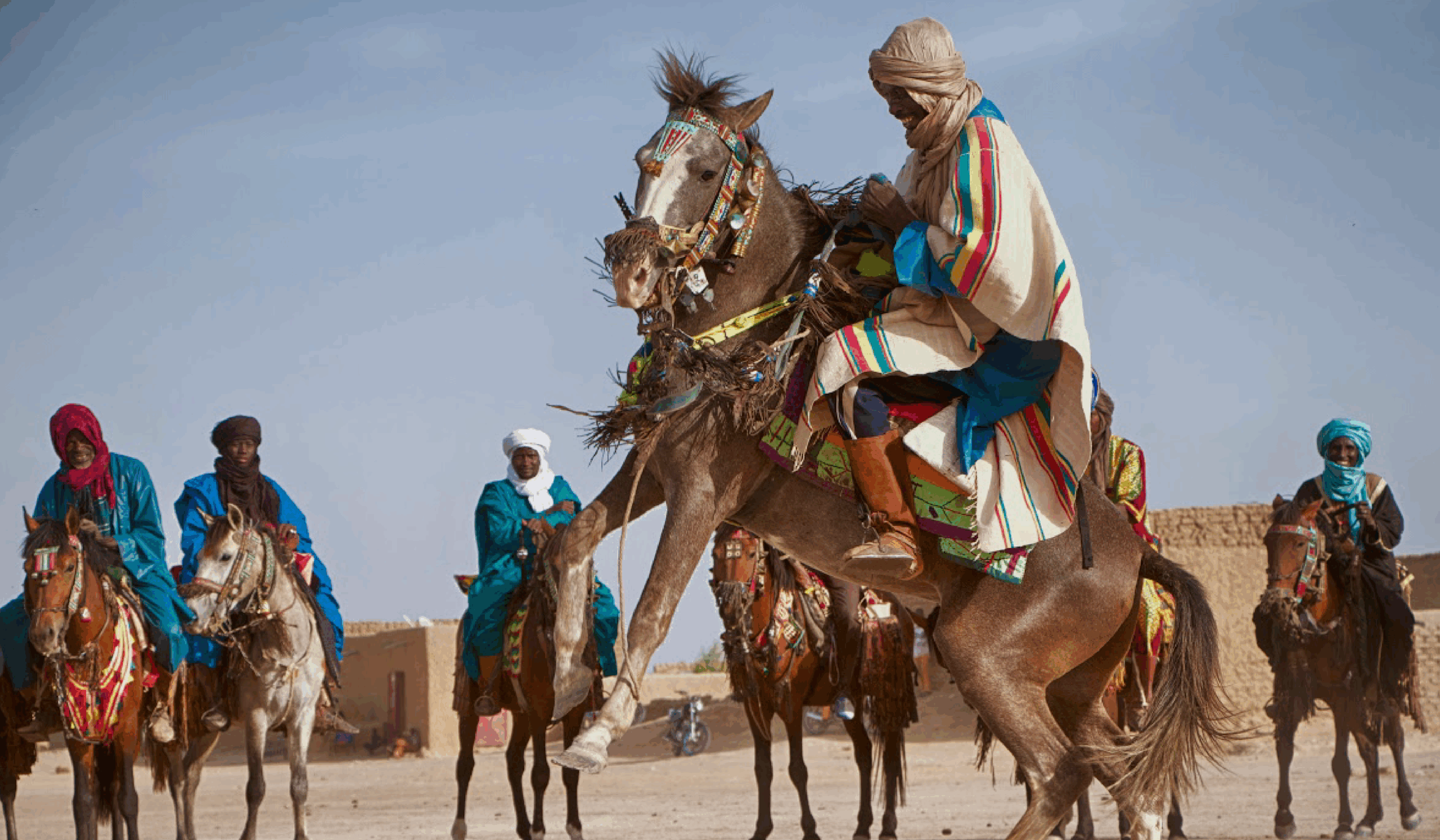
There's poetry where the Arabs are, this language that shakes hearts and pulses with immortal poems, solves with them, automatically grows in the minds of all those who start to sing in the first words of the ocean, rests on the tongues, is signed, and the spirits are rooted in the hair, so they don't give up every seven speakers with their own tongue.

The Republic of Mali is not excluded from the rule above, but I will not be out of the right if it claims that the most Arab poets in Africa, except the Sudan, are financial, and as a matter of fact, we can claim that the best non-Arabic-speaking African poets from Mali, recognizing the primacy of poetry experiments in other continents, and not that this is an unsubstantiated claim of the past century, because the history and the patriarchy of the patriarchy of the patriarchy of the patriarchy.

Before opening a window for the current Arab poetry in Mali, it is imperative that the Arab history and poetry of the region be displayed rapidly, a show that will cost us no more than a return to the French colonization, where the Malian empires and Muslim kings, most notably the Sonjai empire, whose judgment has been extended from 1464m to 1591m, were brought to the Holy Father.

The briefing guy says: «I know that Mensa Musa, who we mentioned, was one of the major kings, as we said, accompanied by Abu Isaac Al-Sharaiya, a Tawiji of the Andalus, who met him in the season with a faculty. He was brought home to his country.»[1]And it says: «His uterus was the only fabric of literature, systems and abundance, in which no dust was found, the words of the pure and abundant negligence of the Mufur Preamble, a very sweet one, combining the molecule and the grace.»[2].

Attests to its loan function in the Kingdom of Mali and sends it to a friend in Andalus, from a poem that picks up a lane and grows on the fire of Al-Hin:

Who are the passengers, lost sand?

Walked, built charges and survived.

She leaves you, she'll settle down after them.

They stole your heartless heart.

In every valley, you're a terrible leader.

And every club, you're calling Gide. 

Oi, his counts are in peace.

I'm going, I'm sheltered, I'm sorry.

I'm afraid to say his shadow is consumed.

I'd rather, where I'd rule.

The coast, as constructed by Timbuktu al-Barez, the large university that exists today, has affected the enormity of its financial elements, spreading its way of saying poetry, inheriting it through generations, and perhaps the origin of Arabic poetry writing in West Africa is rooted in the coastal era in Timbuktu.

Although the general nature of the poetry achievement in Mali is not a classical pattern, it is mostly a tradition of old Arab poetry, today ' s generation is beginning to draw attention to new ways and to the innovation of various content reflecting a particular specificity, translating hopes, fragrances and cultural components of Africa in general and in particular from Mali.

The drunken comfort has been en routed.

My shadow rang to wake up.

Like...

The seas have a sail.

That's literally getting away with it.

The more...

Bless the meanings.

The light theater is satisfying the darkness.  

And I'm a story of her stereotyping.

Abbies to the poet Bakry Cece, from a poem entitled: «A light floating on the hull.»Demonstrates the sensitivity of contemporary enlightenments, the poet seeks his accomplishments and borrowings from the new reality, and transmits its trace to his conscience, to be issued in a poetry that respects the modern reader, as it says and with indirect vigilance: Mali is also present in the present time.

From the north of Mali, a daring song, sent on behalf of the communists and the torturers in the crude and blind trespassing war, is a quiet poet, but in the hearts it is a kin language:

Because touching when it takes before me

I take the horizon forever.

It leads to everything but...

- He's not dating.

Because I'm the last dead.

"Walk to the pastors and no hand..."

I forgot. And I didn't blow a mud.

No way to tomorrow.

Who's gonna give us the dream back?

It's getting drunk on time?

It's me back.

- By me in the end... - To the generator?

May life return to heaven.

- D or an idea yet to be born.

The poet Muhammad Khairi does not want to manufacture other than pain, as he signed a charter with the desert, where he will indulge consolations, without weakness or extortion of emotions, even though those tear poems put the young poet in the position of thirst, the world is crawling with distractions and temptations, and the way to the club calls for another rhythm! «You don't make grapes.»I'm sorry.

And here's a shining spot in the hands of Mali, an activist poem, echoed by Ibrahim Al-Fahri, as if his poems had to light a star on the horizon, saying:

I got her back.

And she waved at me.

Back to the start point.

Where I renew my experience in the ritual of torture.

But...

I'm going to be indifferent this evening.

Go ahead.

Because I'm tired of going after the drink!

For centuries, financial hair has been limited to subjects and purposes, all of which are jurist systems, opposition poems, sandwiches and seals, many of which are poems for the Naples, but in recent years, by the youth of this generation, huge leaps, flew out of a narrow tradition to the cradle of vision and experimentation, and a new philatelic image of man.

Every time a poetry evening is held in Bamako, the hall is filled with a tasting, poeming, unfilled, open and interconnected with the modern poem, the enlargement and ambiguity of its symbols and the sense of the emotional power inherent in its images and collections.

Many of Mali ' s literature critics -- such as Professor Harun Mega and Dr. Mamadou Dembeli -- are also interested in current poetry, addressed in academic studies and discussed at Malian universities -- are best evidence of the special position of Arab poets in Mali.


!

[1] Briefing in Grnata News, Sandin Ben Al-Khib, scientific bookshop, p. 170.

[2] Same source.

The size of the photo cavity. Location money.

Darwish who's in my house! | Dr. Brown is a lover.

WhatsApp Image 2025 06 30 at 14 03 51 e1751283985891

Bryan's boyfriend.

Naval writer and information

At one of my home ' s cultural salon sessions, two large wall-sized paintings hanging on the walls of the room of the poet Mahmoud Darwish looked at one of the attendees. «I thought you were amateur, and I didn't expect to see you in your house instead of two paintings for the one that matches with a brown butcher in poetry and doesn't cross!»I'm sorry.

I answered: «I'd like to add that there's a third painting of him in my office to complete the triple, and if the poetry of my stubborn lovers, the poems of Mahmoud Darwish, my secret garden, were filled in search of a different beauty and a poetic allergies, even though there were many replicated models.»I'm sorry.

This droychi shroud is not an emergency, its roots are at the beginning of my literary formation and I am at the beginning of college, and unlike many, I did not know Darwish ' s hair through his worms, nor from his evening records by giving him the left wizard, my gate was to his hair. «I bow to my mother's bread.» And...«Promises from the storm.» The other magnetic poems that have struck me with the advent of a generation of Bahraini youth, formerly from my generation at the university, were influenced by the idea of the left, through which we learned the committed thought of literature and art.

I recall that my first contact with the hair of Mahmoud Darwish, read indistinctly, was on the night of the mid-1980s in a friend ' s home belonging to a technical family, and that, in that evening, all of our songs were from Marcel and Majda al-Rome, this was a time of national sentiment and national thought, one of the young people present was given a couple of hairs for their praises. «My girlfriend's getting up from her sleep.» And the other. «High Shadow praise»They were the bridge I crossed from the banks of the nascent river to the droid bank, and I kept most poems. «High Shadow praise» Like a lot of guys looking at her high singing, and I ran a lot of her dads, just like the beginning of a song on the tongue we can't change.

You've stabilized this dramatic shift. I've got two consecutive years of band parties. «Bells.» The poems of Drewish were the main part of their singing program, and I kept visiting with a cafeteria of my Drewish garden, once through a controversy with a friend whose hair was shining like a nazaar wax, another via Marcel Khalifa and his poem glory, and a third through a paper with a paper from a college researcher. «Crazy dirt.»He handed me the key to getting into his hair, and I announced my lover to the hair of Mahmoud Darwish after I considered the ad to be a betrayal of my love of Nazar Qabani poetry, a day that I read a dialogue with Mahmoud Darwish on the pages of a magazine. «Journal» It depicts the page's chest. Address by line. «Who didn't benefit from a Spanish butcher, lift his finger.»I'm sorry.

My personal meeting with Sha ' ar Mahmoud Darwish was delayed only a year and a half before he left. In February 2007, the first session of the International Hebrew Forum was held in Cairo, with the name of the Grand poet Salah Abdul Sabour, the star of the meeting was Mahmoud Darwish, and I wanted to be invited to her not as a mediator, but as a poet writing her poem. «We meet with Brewen.» I also wanted to be a resident of the same hotel where Darwish was coming down.

The other day, I had two impressions that the days had made me their senses: first, Drewish had to talk about his revolutionary poems that initially made his fame, like his famous poem. «I'm an Arab.»I recall that in his recent poetic evenings, he refused to read it when the public asked for it. «Woman's poet.» And Drewish doesn't want to be deceived as well. «Revolutionary poet»And the second impression is that he was a self-esteem, and my mind was running a comparison between me and my visitor years ago in his London house. «In your absence.» My bed table goes down and he laughs and says, «Watch out. They'll give you a break.»I'm sorry.

The other day, I had two impressions that the days had made me their senses: first, Drewish had to talk about his revolutionary poems that initially made his fame, like his famous poem. «I'm an Arab.»I recall that in his recent poetic evenings, he refused to read it when the public asked for it. «Woman's poet.» And Drewish doesn't want to be deceived as well. «Revolutionary poet»And the second impression is that he was a self-esteem, and my mind was running a comparison between me and my visitor years ago in his London house. «In your absence.» My bed table goes down and he laughs and says, «Watch out. They'll give you a break.»I'm sorry.

At that meeting, Mahmoud Darwish was scared of being alone, and he was telling us how he was blocking his door without being locked in the key. His friend's death was present in his mind the day he was scheduled to gather them a poetry evening with a ceremonial monstrous in London, and a politico had a heart attack after which he died in the hotel room, and his death was discovered only a day later because he was wearing a sign. «Please don't bother.» On his door.

After this time, Mahmoud Darwish died in Houston, America, on 9 August 2008, following his open-heart operation.

The Palestinian poet Mahmoud Darwish left 17 years, yet his voice remains high. «In your absence.»Young people carry their poems, musicians inspire their hair, not the only tribes in it, and his poem alone still has the components of the magical stroke between the mass spread and the appreciation of the educated elite, without the slightest technical compromise. «The audience needs it.»And not in the mental schizophrenia wrapped in the nausea to which I often slipped the modern poem, it's enough that when we read Darwish's hair, we actually make sure that on this earth what is worth living...

Volume of photo cavity, location 1200 x 500

Spare the rain, the poet is running the prophet! | Muhammad al-Miyam

WhatsApp Image 2025 05 31 at 04 38 49

Muhammad al-Miyam

An Egyptian poet and writer.

Yesterday, the 90th anniversary of the birth of the late Egyptian poet Mohammed Afifi Mutar, and once the name of Afifi Mutar was mentioned in any forum, it took place on the Sunshine as his famous Arab sentence. Is a man and I beat him coming back? Even my waist at the poet became a stark sign of clarity in anger and satisfaction, but our Arab sign that we only know our own culture if they do their idea, as with my elfia, who injected the detainee and his bones!

He lived in an active ingredient, driven by the formal institution ' s ceremony, the prophet -- without a declaration -- from the cultural community ' s bastards, on the back of his elusive glue -- they claimed -- and on the ground that he had an importation of his own ideology -- which he had on his own.

They were killing him, and he knew, and he was honored in his opponents; no pilgrimage is his thing, no reproaching, his passion, his delusion of the old Arabian poet, no depravity, no foul play at the singer.

I'm told by an Egyptian novelist who moved him, that one evening in Paris, she brought me a hearing with a famous Arab poet and three French educators, and the Arab poet mocked the character of Omar Ben Al-Sabah, who was no savage but sprinkled him with the glass before him!

The stalker could easily accus me of violence, but in fact his behaviour was not aggressive against the man or defender of the son of a speech, as much as he was saving the water of the Arab face as he was lying on the Paris tables, glowing to its brightness, not a serious and genuine knowledge debate!

In his group. "People face features.""He writes in 1966:

"The right may be said twice:

Once the Wizard says it.

And once the sword says it!

My uncle, an old prophecy, has been saying it since his group.From the starters.And the sword also has his venomous word, influenced her on the nose of my devastated bloody nose, and Lazagley is a witness to the signatory!

In his book. Tales of good people. The dictator, Said Al-Kafraoi, writes a testament to crying in time of laughter, tells me about his visit to a raincoat in prison, says:

«The sheriff pulled a bell in, and a soldier came in, and the sheriff asked him to bring a rain, and I got caught up in front of me like smoke strings.»I'm sorry.

It was an Arab forebear, and its foresights, even the richness of it, pure Arab, at the level of grain, horses and poetry, a stretch of hairy ancestors, unforgivable to them and untouchable to them, despite his encycloped culture and his ribs on the part of Arab civilization.

The poet paid for every word he said with a comfortable conscience, because his word belongs to him, and the imported words don't need to pay bills, from the uterus bears and even his uncle's stick, a mosquito in the toy, all his words were pure to him, and these are: his poems and paid price, his presence.

By reviewing the Arabic poetry blogger, the use of poets with the prophet does not come out of a pattern of three, either for the elderly and for the young, or for the taunting of the prophecy by the poet, on a bipolar/prophet basis, the poet ' s experiences of the prophet will be shared with the popularity, oppression and speculation:

And the third pattern is confusing the prophet's experience by giving her a new reading, trying to erode visions and produce new expressions of the ancient spiritual experience, consistent with our contemporary concepts without empirical dictations, which we have clearly demonstrated in the delusion of his faith. "You're one of them and your organs are broken."That came like this:

"Pulse of calm."

To a baptism...

Master of the Lungs.

And the vision of divorces of every sex.

All tears.

It's open to the hungry.

And the rhythm of life in the body of the world."

The critic, Dr. Salah, sees in his study, that my forgiveness was going to implicate the reader in the confusion between the poet and the prophet, but I see this as the inclusion of my sanctuary in the second pattern of poetry - wearing masks!

A clear and unambiguous gift, referring to a particular belief nature, is that when the poet believes in the messenger, it is carried out into the essence of the message, and it is translated into the true meaning of the prophecy, meaning that the prophecy came only to get people out of the narrow category to the capacity of mankind, to heal the hungry, and to impress life in the body of the world.

So he took them in schizophrenia and pride, and when they were held to the shadows of the prophet, he reads and lives the experiment, throws them in the sylphilis, doesn't heel, and reads his poem. "Woman not now."Don't come in front of me without cheeks, although there's no direct mention of her, but giving the bold voodoo to Muhammad, the fever of my mind is up to its utmost, especially with words such as:

  • Believe what you're dreaming, time's wider.
  • Forty of the ages were born.
  • They pulled you out of the ground. Their conversations were a language you're not.
  • Don't promise them if they enter the dream or come out.
  • Are your exits from your plans or the Earth?
  • Summer and wool came to me under heaven's space.
  • The family ring is lit, and that's my woman.
  • You're not alone.
  • Are you leaving?
  • What are they and time not us?


Throughout the poem, the evidence is referred to as a veteran role in the experience of the prophecy, without mention of cheeks or prophets.

In his ingenious sword. Book of appeals.As part of his petty work, he speaks in the chapter of "The Greatest Call" of five who made a change in history; they are two men, women, children and slaves, and he says:

"They were five who never met in a place or time before or after, and five like them did not speak a cosmic coup that changed the geography of souls, minds, hearts and history of the earth as they did; a man and a woman, the parents, the thousands of sons in history, their brotherhood, the creativity of the temple, the heart of the souls, the hearts of history.

Did you know the five?

Prophets, Khadijah, Abubakar, Ali and Balal/Abdul Al-Raq al-Ahd al-Ahmar, believed in a cradle of religion, defended against fundamental kidnapping and anti-Anzeki in front of the incoming/emergency idea, and lived a true vigilante, eating out of his hand, and not fighting over the royalty. He has peace!

The size of the photo cavity. Location money.

The rearing of the sternal mountains read in the haircuts in Yemen. | Dr. Abdelaziz Al-Azer

WhatsApp Image 2025 05 30 at 02 09 21

Dr. Abdelaziz Al-Azer

A poet and a right academic.

Yemen is present on the first page of the Arab Culture Code through all its historical fields, even to be sure that it is the one who is the one who is the one who is the one who is the one who is absent from that code so that one may think that it has fallen from it in the face of delusion or intentionality, or that Yemen - for its own geographical, cultural and historical reasons - has made another one of its own.

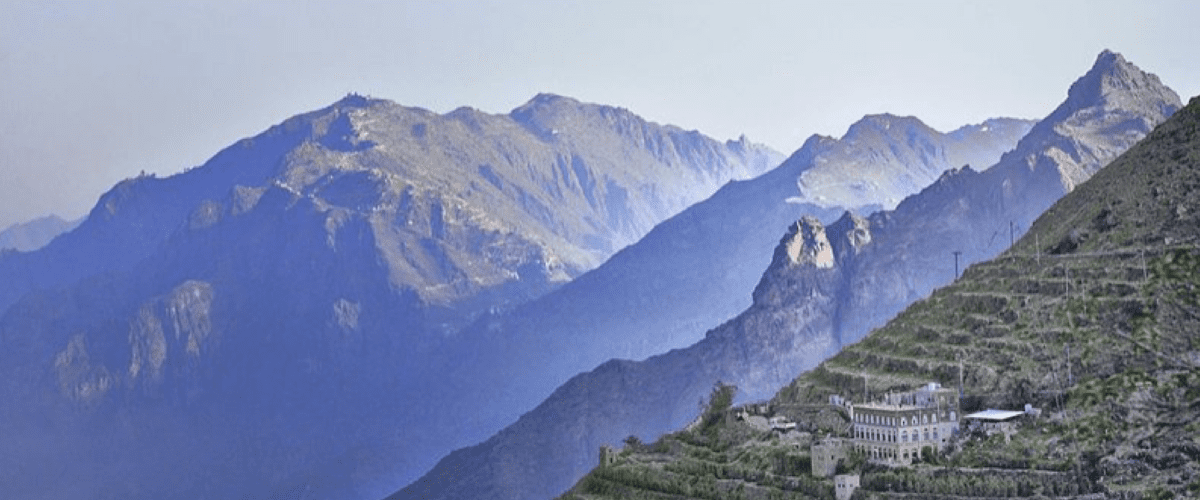
Yemen ' s mountains and difficult terrain have always stopped a barrier to the sound of their human beings and to prevent them from being heard quickly by others. At the same time, these mountains have echoed their owners with a clear distinction not made by the world ' s ramps and no noises from behind sand and sea.

Long mountains. What's wrong with her?

She hid our time and wore an untiring time.

Long mountains.

Are you going now?

About a step in a big day.

How far to fight.

Long mountains.

You go in every wind.

And she blooms in the question.

Mountains.

Mountains.

Mountains.

This difficult, diverse and ambiguous nature has, in turn, adapted to a human being who resembles it; it has challenged the ambitions of invading the Arab; it has made Yemen an ambiguous geography or enclave that is difficult to occupy or annex to any political status, whether from successive Islamic States or European invasions, and, as a consequence, the waves of vulnerability, influence and development in Yemen.

The structural situation of Yemen as a place, a climate and a human being has made it somewhat isolated from the foot, inventing its own and different solutions, developing different ways of civilization, such as bond writing, irrigation tools, agriculture such as dams, stairs, building tools, instruments of war, defence, clothing, food and medicine, all of which are characterized by the development of the human being of this nature, and by the very grey nature of the right.

We'll keep digging in the wall.

Either we find a hole in the light or die on the wall.

And that undoubtedly left its effect on the entire arts of singing, poetry, dance and old and modern folklore.

In modern times, this ecological and demographic terrain of Yemen created a different political reality for the rest of the Arab countries, because of its geography between the mountain, the sea and the plain, the people of Yemen knew at the beginning of the nineteenth century that the revolution of Britain had taken the southern part of the country, which was occupied and exploited until the 1963 revolution of independence, and that of the Romans, the northern part was struck.

A lifetime in a rebound minute.

And flowers are in seconds.

The country chased me down.

Who makes sense and who found me.

The more I get, the more you warn me.

I was scared of my time.

And if I throw a name in my sight,

My country has provoked me and congratulated me.

And this urbanist says he's on the execution yard and his buddies were killed in front of him:

And for God's sake, I didn't hide the pain and this.

She looked at me with vision and hearing.

But really on my conscience for my mother.

I fear if he dies with me.

That's how Yemeni poetry is born as a life or as a death, just as it is.

That's why I'm jealous. I look weird.

On the custom like the improvised generator.

And I know I'm in it.

I'm going through my blood, the worm and the mud.

The Yamani live his life and improvised poem (e.g., squeezed by the blade from the waist, or as a machete, as Ahmad al-Awahid said:

The poem surprised me this morning.

She got up from the legendary mood.

She did it whenever she approached as long as the wind.

And I'm tired.

Like a lot of people.

It's called harm.

And they suffocated in the porn.

The right poet is born more important, wise and old than ever.

What do I like about my boy?

I was born old. How do you like it?

And today's hurt and the art army plays me.

On my cheek, I'm tired.

So if he blacked out the curve on life,

And the literary lights and literature.


1960s and 1970s (revolution adjacent to poetic forms):

An Arab revolution may not have been defined through its poetry and the Yemeni revolution in the 1960s and 1970s has been defined through its great poets, Abdelaziz Al-Maidah and Abdullah Al-Burdoni. After a great and legendary struggle by the free Yemeni people, the northern and southern parts have been liberated and two republican national systems have been established.

The Bardoni ' s youths in the poem of the poem and the gust of the guitar -- the two rebel friends -- represented the concept of school circuits and the friendship of early poetry forms in Sana ' a, meaning that the events in Yemen were born in connection with the revolution and societal change, i.e., with content rather than form.

In addition, another poetic voice is the voice of the poem that was held by their great poet, Abdul Latif al-Sabah, who, because of his young friends, has not become a legendary poet of his own true passion, of his own right, and of the masculinity, of the poetry that he has suffered as a poetry that has not yet been used in the Arab world.

Spring issued its only two deputies in the same year. A pair of them between the poem and the activation.

Spring writing is profound and intensive and the economy of its phrase, reflecting the character of the Yemeni man in intensifying the operative part, consistent with his wiseness and verbal habits:

Because I didn't fight.

I took prisoner of war coming.

On another level, the poetry of the spring reflects his village whining, coming from Cairo and Budapest, as if Yemen always sees the world by its own moon, quotes from the world what can be culturally settled and planted in its fields:

Take it off.

Sit down now.

Listen to her silence.

When you raided, you tried it.

It was the dam.

Extended her terrain.

Then she was poisoned with her sorrows.

Mountain.

We're fortified as bees.

With irrational poetry, it is more than you say that the spring hair clashes with its political and social moment and its acute awareness of the changes in its time, critical of the oil boom that has emerged in Yemen and one of the reasons for the warming of its political components:

The first was the river.

Deplete the river, dig wells.

Light the well and find out the oil.

The oil flowed, digging mass graves.

You flowed cemeteries.

Deplete the country.

This poetry is based on a developmental awareness that monitors daily and private and is modeled for public and total contempt of bureaucracy and human servitude in the public office routine, reminding us of the awareness of the new story at Kafka in the story of the mutant, and Nikolai Google in the coat story, which we touch in the text of Abdellatif (at 7:00):

Whenever you last at 7:00.

Sleeping up from his sleep.

He washes his guts in the morning.

And his dreams razor.

And he'd like me to get out of my ass like a penny.

You wear my tie.

I'm being humiliated by the brightest part.

I'm rolling a street that doesn't lead to...

And Le doesn't lead to...

Now I'm looking for a basket like a job.

Looking for an empty basket!


1980s: Dominance of activism and poem.

At the end of the 1970s, civilization and well-being are small and people are grasping the first fruits of the tribes. Unfortunately, the conflict between the Yemeni fragrances, which is the resonance of the conflicts of the eastern and western camps, with the enlargement and excision of a constellation of the poets of the Al-Shuwayda al-Isim al-Isim al-Ahmah, is the sole and al-Ahmah al-Ahmah al-Ahmah al-Ahmah al-Ahmah al-Sah al-Ahmah al-Ahmah al-Ahmah al-Sah al-Ahwadun al-Ahmah al-Ahmah al-Ahmah al-Ahmah al-Ahmah al-Ahmah al-Ahmah al-Ahmah al-Ahmah al-Ahmah al-Ahmah al-Ahmah al-Ahmah al-A

Here, we can refer to some prominent features in this stage ' s poetry speech, the most important of which is the symbolic and the mask that was carefully guarded by the ideological conflict between the strata of society and the security apparatus of the authorities, as well as the spectacles of certain party leaders, as we speak in this section of the script of Muhammad Hussein Hitham:

That's the head.

A fruit.

Or a bird.

Or a metal plate.

Or a poem.

That's the head.

I don't know how to use it.

Except that every day

I develop ways to keep it.

That's the head.

My head.

And I earned it hard.

Nobody told me why.

But I really deserve it.

Because it's my head.

And I have to cut it as far as I can.

Go away before she falls on her own!


The poet of the 1980s may resort to the occasional use of the Sofi compound, repeating the word of khat as an objective equation for trying to forget and search for sophilis, as an attempt to convict the inter-fraternal war, as in the texts of Ahmad al-Awaiyat:

I said, buddy.

I'm not a sea.

But this new time.

Salt in my mouth.

Every day on the khat paper, I bow.

In the east of my grief.

This time takes my blood!


The 1990s/time of Yemeni unity: (The Anthrax: Great Hair Bang).

In the 1990s, as Yemen has been proposing its solutions and improvisation, the socialist political systems of the South and the hybrid liberal regime of the forces of the left and the right-wing forces have once decided to enter into a merging unit and to begin a new and paradoxical phase of multipartyism, in the moment of history, not only one of the biggest fanatics of the historical inevitable.

Despite the reversal of the two regimes and the beginning of the 1994 separation war, everything in the waters of culture had changed and replaced, at the time, the wave of the nine-year-old hair had flowed in a way that Yemen had never seen before, either in its number or in which its high talent, vast culture and excessively poetic sensitivity, Muhammad al-Ambani, Ahmad al-Harrahimi, Abd al-Hasourhid al-Sabi, Abd al-Ahiyad al-Ahiyad al-Sawi, Abd al-Ahiyad al-Ahiyad al-Ah.

What happened to the dreams and aspirations of the poets to the great homeland and the national project after the separation war and the defeat of the left was like what happened after the June setback at the Arab level.

I saw my house in range dust.

A story written from my blood.

My mountain was bowing down.

My voice was dead in my mouth.

The Yemeni poetry at this moment has been characterized by intensity and redefinition of things, as in the poetry of Muhiddin, a crime:

Hands don't pick the rose garden.

Hands don't clap.

But the hall is empty only from applause!

Some of its experiments have been marked by sarcasm, hamish codification and friends as a continuation of unfinished conversations in the union cafe, tea cafes, or encrypting of comrades, or a speech of others known to all and concomitantly not to mention as in the soldier's cook experience:

Put me on a path leading to the rich.

My children see me capable of their demands.

And jump them into heaven.

They won't regret it.

I'm good and poor.

We are all bad enough.

Don't make us right.

We're friends of vice sometimes.

You and her spoiled kids!

Some experiments appeared to be a philosophical speech in a language closer to class and custom, distilling the entire human civilization, inheriting the planet and feeling it, as in the experience of Ahmed Agrarian:

With shining veins at the height of a shining mountain.

And a poet pulling the mountain into his eyes.

Leave his papers white.

An air rolls into it.

Leave his only pen.

In the void of the world.

Some of them are the experiments of Ventazian, which reflect the concern of the civilized organism that we have become, as in the experience of Ahmad al-Salami:

No bed for my suspended soul, no matter what I need.

Grams are dying and our skin is raging.

Like a farmland.

Parents neglected her.

They let her drive cabs.

On a way to sell wine to the regretts.

And without paying attention, we ate half the city's chicken.

And we're foxed in glasses!

The 1990s were the moment of great and accelerated events, political, intellectual and social in Yemen, and the poem was a technical and objective expression of what happened in Yemen. Their battle was not as deep as in other countries.

My orbit of grief on the horizons is open.

About a planet that embezzles me looking for the soul.

I'm meant in space order for who.

She missed her nets in the heart open.

This ninety-nine column, which is very vocal and highly enriched, and the sophibian mine, along with the Faisal Brihei columns, the Pan-Shimri, Jamil Farah and others, together with other factors, will be established to prosper the new column in the post-alphan generation of Yemen, which we will dedicate with a special pause reflecting its technical and substantive characteristics, names and factors.


 

V 1200x500

Tourism in «Lightning.» Taji Yusuf Bashir

WhatsApp Image 2025 04 29 at 4 02 20 PM

Dr. Osama Taj Al-Sar

A poet and an academic Sudanese.

In the night, deep, in the woods, hypocritical.

If it's time, I'll swallow it.

If the thunder tears up, hear me out.

In that deep, why did he hear it?

If the rat with the sides is released,

Minimal than he has.

Stay in his chest as his cup.

My drowning, the mother of the stars is frustrated.

Life diminishes her world.

As the stranger misplaces him.


The Sudanese poet only mentions the presence of Tajis Yusuf Bashir (1912-1937m) in its entirety, at a young age of 25 years.

If Mohamed Saeed Al-Abbassi (1880m-1963) is the renaissance of the Sudanese hair, and he is moved away from the blind tradition, scattering and sewing the hair into a live hair and its ignorant identity, with Sudanese richness, culture, environment and civilization, the characters of the Sudan are made to refresh the hair.


General overview of the Diwan and its impact:

Starting from this angle, with the biggest influence on the Yusuf Bashir Tajian project, where the offer did not have an external framework of hair, it was his spirit and his face, it was the one that controlled the meanings, imagination and language. When the tyre was broadened, the tyre would erode hair and wax, and when the poet was lost to engage with his meanings. It surrounds the poet ' s idea to brief the fence with the wrist, if the swordsman were torn up and lost their value.

If the Arab poet is the most self-sufficient, it drives the poet to choose the fine weights that are clear to the tune, and is reserved for the lakes: (flue, simple, complete, empty, sand, converging). They are more circumcised in Arab hair than others, if we add them light, which at the same time consecrates and discrepancies, only collects two weeks of the sex of these weights (reactors and excision), not as in the arrogant.

In its late editions, the Shadows and the Shadows, together with the Smurfs, will add two strings, one of the smelters, and one of them will be caught in the open.

The suspect ' s circle has accounted for a large number of natural hairs, through four seafarers: light (three poems), speed (five poems), massage (five poems) and brothels (four poems), which is more than half the number of poems, with 62% of the total poems in the circuit.


Tajini language and mineral wealth:

When we look at Efraqa, we find the language of the trade accurate and concise, if we we weigh it with the nature of the lake, it is the oxygen with the light tone, which explains the smallest poems with the bell, which appear through the sea of the simpler, the whole, the blooms, the closest, the longest, and the lighter, and the brush. This leads us to say: offers are intellectually linguistically significant, not just weight, rhythm and an external framework, which is the example of nude meanings before they scatter.

Language and mine:

And the brightest glance of the past, is the craving of knowledge, through many of the vocal vocabularys of its time, so that you feel that it belonged to this very recent era, and that his vocabulary, my father, my father, and my own father, were more modern than his adorable glory.

Whenever he came to go, the bloomed blossom in his hands, his apartment.

It is a great deal of rhythm in curiosity, repetitively and shamefully in the face of beauty.

He says in a poem entitled (God):

I fell out of my hands, and I opened up a start for the first things.

He combined two descriptions of the desert by saying:

I empty it, and despite me, it slipped as white as the soul in a black trap.

And how I've been sleeping with him, and I've changed the shadow of a trap.

The description of Niles follows:

Filling your valleys is fun with the flooding walls of yours.

In the description of Nile speed, he says:

Maybe life slides on the valley, and it's in the canal.

It's like he introduced sound effects like the the theater, when he wanted to describe the Mahdi of the Revolution, by keeping the letters and repeating them in the vocabulary, so you could hear the wind in the Shatty nights, when he said at the beginning of the poem:

In an applicable tidy day and a round-up night.

You may have noticed that the most recent evidence came from poems of the light sea, and the recycling was all colonizing them, one of the most important features of the way that the poet was able to think.

Exchange and derivative boldness:

The poet ' s language is complete only on a purely spontaneous basis, and most particularly its image comes from derivatives. It is on its soil, and it is free from its contemporary circles, but it is true, it comes to meanings that may not be performed by other formulas. We often change the suspicious character to the name of the perpetrator, finding in his hair derivatives such as:

And agree, Neil, of you, to sing a tea from your goddess.

He said:

I'd like to be in childhood, like, 200 if I'd ever heard of young people.

So you hear him say:

They said, "burn him, crucify him, but slide to the wind with his bone obsessiveness and flame."

And we conclude all by saying:

Do your monsters in the row between a dean and a sacrament.


From his wounds in this direction to God, Alhi says, to make the exact difference between the ratios to one God, the multiple gods, especially when the Romantic curriculum overwhelmed his hair, and every Alhey in his hair is of beauty, and for so much he came in his hair, to think he'd say, "This is so sweet!"


Intellectualism: between philosophy and characterization

Tajini Yusuf Bashir took part in philosophy and description, the two most important intellectual features of the religion, both of which confirmed their minds of meditation and reluctance, far from rushing and speeding, which, in addition, coincides with the nature of the spinal tranquillity in his hair, and makes him obliviously oblivious to the sorms.

The most common sense of humiliation in the secret of this existence, between pure faith and the doubt that enthusiasses the sense of the bird from the water of the ash! To further this aspect, we are referred to his poems (God, I bid my yesterday, my complaint hurts, Hair, the tortured Sophie).

It says:

And he's going to collect port ruins.

A stripper from whom his kindness is.


Until the Stone Mountain came in with him.

I'm sorry.


And between the twins, the egg rolled.

Screaming in the ground from the depths of his debt:


In the secret place of my debts, I'm glad.

For real, I'm looking out for him.


Here's the truth on my side, here's a quote.

From heaven in my heart, here is God.