The size of the photo cavity, the location's money.

What makes a poem more singing?

WhatsApp Image 2025 04 29 at 4 02 19 PM

Long Abdul Rahman

An Egyptian poet and researcher

What makes a poem more singable than others?

We don't need my father's courtesy or my poem-rapist to say that it's from the eyes of the love poems in the Arab heritage, and it adds the ostracism to the family with the same fierce poet in the rum jails to make us a beautiful, beautiful, poetry in which his feelings are so admirable.

For similar reasons, some heritage poems had the same status as singing, which certainly did not have the mix and mood of the Araqi wands, but they enjoyed a similar blend in some elements, the most important of which was the strength of her presence in the door of the Occidental and the uniqueness of her expression, as a slogan (fine night). The divine lover ' s hair has entered this field strongly, such as paternity attributed to the fourth infection and the son of a bitch, so that it can be read on both sides, and because the state of the Soviet court has given the horizon of the lover an unlimited eternal breadth of loss or pain.

Araqi ' s wand of tears was one of the most famous heritage poems she had ever sang, and was first recorded in 1926 by the patriarchal tune attributed to his bereaved slave, and it seems that the synagogue of the poem has been forced to submit it again during subsequent decades, in which the shape of the song and the shape of the written poetry has evolved.

But Arak Etzel did not stop pushing on the silence, for the third time at the end of 1964, she lost it with this time, and despite the Sunbae genius in representing the feelings of the poem and the embodiment of the left Prince, she came from the least successful or mass action during the 1960s.

It seemed obvious that the whole long sea on which Arkham had been written was strange to singing patterns in the 1960s, and heavy to its rhythms, so that from among ten sisters chosen by Om Clthum to sing, only three had been forced to rhythm, seven had come unrealized and seven had also come unrealized.

In the following season, the Sunbatai and Umm Kalthum al-Atlane came to Ibrahim Naji, the most successful or famous songs and eyes on the throne of immortality.

The regular structure of the Ramal Sea, which consists of the recurrence of two reactors three times, seems to have given him a greater ability to fit in with the beard rhythms, from those complex sailors, with different spectacles, and the stunt of his activation, which intersects between the two causes that made him the luck of his brother-in-law, the three-century.

Besides, the dysfunctions have had another advantage, namely, the diversification of flats, where they were built on the four blocks of different patriots, this structure has made it easier for the Sinbatai to convert each piece into Koblé, distinct from before and after, and the diversification of the particles is a phenomenon that has been commonly felt in different forms in romantic poetry, and the enriching of a great number of horses.

When we highlighted my father ' s vision of Faras and Naji ' s parents, we were about the reasons why a poem should be singing and a candidate for success on the voices of singers, a research that would require a broad survey of a large number of old and modern poems, documenting their successes and failures, so that we can reach a reassurance of their health and inclusiveness, but we consider them to be close to the other 20s.

In the light of the reasons for poetry, the power to attend the poems is on its own door (the purpose and meaning), the eyes of the poems of love and mystery have always been a candidate for singing, invited to the ancient and modern savages of singers, so many texts of the voices that have been enriched and founded on by the writing of songs that are irreversible.

The second reason for poetry is the occasion of the poem ' s weight and culture for the prevailing patterns of salinity and singing, so the long sea has been embedded with the weights of poetry in the prey because of its suitability to the puppet, with the prosperous and fragrances of the illusion and the evolution of its patterns on the gallants, which began with the end of the era.

In the modern era, the Ramal Sea has had greater luck than other lakes, because of its regular rhythm based on the replication of one activism, which is intermediated and mutually reinforcing, and the poems with diversified rhetoric have been much happier with the choices of accelers and dissidents, because their partition in the tender structure is easier.

The third reason is that in many Arab countries, the ease and irreversibility of quality, for that reason, the poems of a piñata have been strongly attended by many singers and singers, as they have achieved an equation that is not easy for all, ensuring that the public receives undiminished language and culturally, making them a culturally and commercially rational choice.

The reasons that are unrelated to poets may be attributed to their rich parents, and the poets who have made strong friends with the sperms and singers have always been more than happy, and it has been natural for his projects to sing dozens of poems of barbecue that he adopted and housed in a time when he adopted his sunglasses and books for his own sake.

These are also the culture of the singer and his acceptance of poems that may not be popular or popular in the public, and the form of singing that he performs. The singers who perform forms of transponder (which is not accompanied by rhythm), whether with promises only, or in the form of money at the beginning or in the middle of the lyrics, are the most capable of slaughter.

Finally, the political and social context that may impose poems on specific occasions comes, and its luck is as good as its manufacturers.

Volume of photo cavity, location 2 1200 x 500

Hair against crime. How do world poetry festivals wash city spirits? | Good Tariq

The size of the photocopy.

Good Tariq

A poet and writer - Austria

In 2002, when I was decided in Vienna 18 years ago, I received a literary invitation to attend a hair festival called the Struga International Hair Festival.


I will present here some of the features of this festival and two others, the most outstanding, without resorting to comparisons between us in the Arab world and without drawing a compendium of experience; only the story can reflect and think, and perhaps change if we wish.


I knew that Struga was a city located in northern Macedonia, that it had one of the oldest world poetry festivals, and that the original name of the festival was the Orchestra, founded in Struga in 1961, with the participation of only Macedonian poets, would be extended to poets from all over the former Socialist Federal Republic of Yugoslavia, and by 1966 the event would turn into an international cultural festival.


The International Golden Crystal Award was established the same year, and Robert Rosestensky was the first to win it. In 2003, in close cooperation with UNESCO, the Festival created another international award called the Struga Bridges, for the best poetry book of a young author.

The festival hosted approximately 4,000 poets, translators, writers and literary critics from about 95 countries around the world.

The festival has also been honoured by some of the world ' s leading literary figures, including many Nobel Prize laureates, such as Joseph Brodsky, Pablo Nyroda, Shimos Heni, Leopold Sedar Singhor, Weston Huo Oden, Alan Jenspeerj and Thomas Transtromer, who have been with him in a close copy of the festival in Macedonia.


I said I'll try and answer the invitation and see how these poetry festivals are, to also know that this international literary festival stays annually, lasts six days and is one of the oldest or largest festivals in the world if not the oldest.


I arrived at Macedonian airport, and some poets arrived before me, and I had to wait for some of the other poets and poets coming from different countries to pick us up with a little bus with about ten poets heading towards an old hotel on the Dren River, to be greeted by the director of the festival, then by the holy poets of Gomel Gosel, who are familiar with the French, and by the very youngest of poets.


This was my first festival outside Austria to celebrate poetry above fantasy.

On opening day, the main bridge in the city is shut down, so it's got a big fun wood on which the poets stand to read in the evening, and the hair translation reads by representatives and professional representatives in the delivery. People go out hundreds to the river banks to celebrate this beautiful week, fill the lake with coloured boats, and the television goes on the air, and the flags of the participating countries entertain.


In the following days, readings are multiplied in many places and the special ceremonial weather of the poet is created by the guest of honour to grow by himself a tree block to grow in the poetry park in his name. There is a tree in the name of Adonis and another in the name of Mahmoud Darwish.


One of the parties that happened to me in my first visit in 2002, was the discovery of a great science for the Sudan on the edge of the Drin River, asking from the organized poet Bujumel Goselle if the city had a political conference in which the Sudan participated, because I saw a great flag for the Sudan on the bank.


From their annual tradition of this festival, they also publish seven colored doughnuts translated into Macedonian; a poet book from every continent of the seven continents, and I was lucky in 2005 that I had a Dwan carrying the title "Arger Stone of Heaven" from the translation of the great poet "Gosel."

The President of the Republic hosted the seven poets and gave us a celebratory drink to celebrate our celebration in a nice, gentle, unfavourable chat and exaggerations.


* * * * *

Last October 2024, for the second time, I was invited to Costa Rica ' s International Hair Festival, the first invitation in 2014.


I remember one of the most beautiful students in my first invitation ten years ago, that I was received at San José Airport by the director of the festival himself, Norberto Salina, who asked him before travelling to the airport, who wrote to me, "Who would come to you, send a picture of your book to come up."

Funny, too, I didn't realize that the one who lifted the dough at the airport was the director of the festival himself, and I didn't know his picture.


The opening usually begins in the great theatre and in the following days to the university, and then is distributed in small groups to several regions, such as the programme, to visit schools in a large number of governorates in most parts of the country.

In 2014, I was lucky to visit a great high forest area called Monteverde. I was with a lady artist and an English-speaking escort with a professional photographer, and I visited three schools a day, and I met two evenings with the big book in the area, and a literary and artistic woman volunteered to stay there for three days in a separate beautiful house in the middle of forests.


Last year, 2024, the director of the Norberto Salina festival ran competitions in all State schools before the festival, selecting more than 70 poets and poets under the age of 18 and spreading to them large poetry physiology with their images and logo.

The programme includes a three-day visit to the largest areas of Costa Rica in the Great Tortucero region of the Caribbean Sea, at the constant invitation of the producer, to young poets and poets and young people who are winners of the Ancientology with their mothers. Days go through readings, debates, trips and the most beautiful landscape ever.


Also, one of the most beautiful things I saw in my first invitation to Costa Rica ' s World Hair Festival in 2014 is the distribution of book slogans in large posters to the city ' s public bus stations with paintings for artists, and who is waiting for the bus will read some of the slogans to one of us in his name, which is at the same time a smart announcement about the festival in the country.


* * * * *


He's one of the most sweaty and big world festivals, headed by the great poet Fernando Rendon and the coordination of Luis Eduardo Rendon.

In the city of Medeen, Colombia, a living example of the triumph of hair and the tampering of a society that has lived decades of violence and crime until today, 35 years after the founding of the International Hair Festival, the same city has acquired another spirit and its stereotyping has changed in mind.


The international poetry festival in Medeen, the second largest city in Colombia after the capital, Bujuta, was founded in 1991 in that city, which was known for long years of violence and the high crime rate, and the world ' s most dangerous drug cartels were found in 1976 by Pablo Escobar, known as the late-town cartels and politicians.

The death of Pablo Escobar in 1993 was the end of the Medine cartel, which has had side effects for years of displacement, asylum and instability, so the Meddhi Hair Festival has come with an alternative idea of this disturbance, chaos and violence; those features that have abused the reputation of the city for a long time, the founding poet Fernando Reyndon of this festival, which has become one of the most important clowns.

The festival was awarded the " Right to Live " award 15 years after its founding, which is designed to honour and support those who offer practical and perfect solutions to the most pressing challenges facing us today, asserting that through art, poetry and freedom of expression, society can change positively, remove a lot of fear and violence deeply rooted in society, and gradually transform the name of the Mountains, as beautiful as the city of eternity.


At the thirty-third festival, two subsequent festivals came across Zoom during the period of the Korona, and for the second time at an official invitation, 90 poets and poets from 54 States participated.

In these festivals, the world's dye is already applicable to it and the mass presence is already very imaginative, and in addition to reading there on great tracks, poets are distributed across the country to read also in the poetry of the areas they reach.

The Medine poetry festival in Colombia lasts for a week, to which the public comes in thousands to listen to poets in the security park, a place where the opening starts and the closing ends.

The Colombian public loves poetry, nurtured, tasted and interacted with him and with all the voices and languages coming from all over the Earth, sitting for long hours listening and then waiting for poets to sign on the bleak annual physiology printed on some 340 pages of colored stereotyping paper, processed by the festival with self-word and poems in Spanish and English.


There is no privacy for the hair of a State or region in this festival, the hair there is the voice of all the world, but, on the contrary, the hair here solves any boundary, geographical or ethnic differences.


(North Austria, 2025-03-27)


The size of the photocopy.

Charge. «Disgusting Adonis.»! | Good fort.

WhatsApp Image 2025 03 26 at 07 14 34

Good fort.

Writer and interpreter

For a while, a poet criticized Adonis's experiment on a culture-wide critical platform, dictating his traditional heritage orientation.

The angry fanaticism of Adonis's poets and intellectuals -- let them be called Indonesians -- when one of the people opposes one of their own opinions or hair -- is a phenomenon that deserves to be meditated, a phenomenon that we can find on the basis of which we can find ourselves unsatisfactory, perhaps the answer in 2021 to a question about the value of his hair in the Arab world: “…This [Arabic] culture remains at its core, as I see it as a religion (indigenous, legitimate, in particular), vision and practice. This [...] makes it against knowledge, against man and against life itself. Thus, I splinter Arabs into two parts, some of them, together with me in this view, the few, from which they see that my hair and diabetes are the culmination of poetry and thought in Arabic, and not the same in the history of Arab creativity, especially modernity.


Thus, according to the vision of Adonis and the Indonesians, we find ourselves in front of the old/new king's clothes:The peak of hair and thought."She's at Adonis's, that peak."Unlikely.One has the right to belong toCreative little. Beginning."and enter into her vows, and whoever craved his taste for that."The peak."So it's the most inspiring of the above, that's, that's the one."Against knowledge, against man, against life itself.“.


We don't need to be alerted to this imperfection, as well as to make any human being admired for his work in person the standard in creative vision.

Certainly, in this short article, I would not try to engage with the whole idea of Adonis, but I would like to refer to a few outstanding examples of his ideas, examples that made me put the book aside and ask: why would I read this? What good would it be?Against knowledge, against man, against life itself."


The first, and perhaps fundamentally, forms of transmission of complex poetic phenomena, all of them to historical cultural diversity, ignoring the fact that part of them is due to the nature of the human being, I hope to say, in the context of diminishing the importance of Hebron weights.Weight/recovery is a later cleaning job to shape my previous hair.“.

In fact, weight/responsibility is not an original hypothetical work, so that it's later for a pre-fecture, but vice versa: the weight obligation is preceded by two different sides, equally important:


The first is historical: strict adherence to the weights and strengths of the lakes has been preceded by all the theoretical efforts that have come after it, the obligations of ignorance in weight and extreme rhetoric, such as their commitment to the integrity of the plaintiff ' s exhibits, and its third activation in each part, from the edges, if you look for the parents in which they have departed if they are at least 1%.


The second is natural: some part of the weight has arisen not only on theory, but on culture as a whole, because the rhythm is so biologically constant, it's so unspeakable.


If we put an end to all the violence and demise that we carry within us towards Arab poets, in order not to be accused of having a religious, horizon-legitimist anti-life and human personality, and to have put aside, as well, the objections that we have just made, we will not at least ask what benefit we have from referring nature and culture to a clean-up action, and what good is it to say?

"The tongue, no reality, is the direct substance of the poet's work, in the tongue and in it, the world sees and shapes, this physical practice of the tongue requires it to be knowledgeable of its superior knowledge, perfected the greater prestige of the history of poetic speech, and how to write poetically.

This piece represents a good representation of what is impeccable in the idea of Adonis, if Adonis imposes on the poet to know the highest knowledge of the tongue he writes, but our Arab world, and the Western world too!Higher knowledgeNo.The greatest mastery of the history of poetic speech."but they say from the hair I torture and his purity.

The misery of this idea is reflected in the recent reporting logic that makes the most knowledgeable of the tongue the most human being, on the pretext that a man is defined as a talking animal.

If I look at this statement in its logical form, I mean, without looking at its meaning, it makes sense, because if wine is alcoholic, the most alcoholic wine is not more "proper" than otherwise, it turns into a craving of hands at best, if it goes beyond the same distortion of reasoning and looks at it.

To say thatThe most common knowledge of the tongue is the most human."It requires, for example, that our people in Syria who have spent a decade in the camps, no schools or any human life phenomenon, are less humane than their most fortunate peers who have looted."Higher knowledge"and perfect."The history of poetic speech.It also requires that African slaves in the states have been less human than their worshippers, how not and how the generations of slaves have quickly lost most of their connection to their native tongue, because their slaves have not left those who speak a single African language to meet in a single business group, for fear of insurgency, and then they have not yet learned from English enough.Higher knowledge"in tongue.


It's obvious that this is all corrupt, and that poet Adonis or otherwise does not humanize a hair on a mother who sings for her son to sleep in the tent, and is more likely to lose it.


This idea and what it's like in Adonis is his contempt for readers who are immortal and popular. «Disgusting Adonis.»!

The size of the photocopy.

Sage lover... He poisoned his face searched the world! | The Pudding People.

The size of a photocopy.

The Pudding People.

An Egyptian poet and writer.

The writer and famous Argentine poet Jorge Luis Burgess wonders:

It's the river that gets away from me, but I'm the river! But I am the tiger! But I'm the fire, the world, unfortunately, is me, the world is Burgess.

After all this long and deep experience Burgess finds his shock, and shocks all of us with him, that the world he tried to monitor and interpret is just Burgess himself, and he states in his book that: "In the last pages of the book, I spoke of a man trying to paint a picture of the universe. But he discovered at the moment of his death that he painted his face!"

This fact, which seemed to him and shocked him after all this trouble; the great Arab poet, Habib al-Saigh, since he began with poetry, when he realized that individual self and understanding were the most valuable way of poetic creation and the formulation of the world to be self-inflicted and embedded out, where the uniqueness of the whole is to find that his own poetic experience is self-made and philosophical.

It was perhaps the most objective reason for his philosophers and critics when they called him obsessive and vague.

It confirms its first view and philosophy of its second religion, published in 1981 with the title of a "final statement of the spokesman himself", and here it confirms that it is not possible for them to express the poetry from the very point of view, where it is unique that it is unique to carry the poetry and descend the human being, leaving the alien behind to express and simulate it. «I'm busy at the height of the wise unit.» I found that this sentence was the beginning of the poem and that what I wrote in the last two years should be thrown in the trash can.[i])

It is my understanding that the culmination of the unit is the real way of understanding the human person, so that all that has been done in the trash can begin the journey of capture of the real understanding of man and poetry.

That philosophy, and the fact that the Sage realizes, has made us look at a leading poet, capable of modernizing in the Arab poetry, and here I don't want to say just the U.S.A., it could be given the pride of the great home, but it could be taken away by the Arab poem that was one of its own glorious and insurgent knights.

For example, he wrote the vertical and operational poem and the poem, stating that he did not reject a particular form and did not win a particular committee, saying: «Game.»So I'm trying to be new, to say what nobody said before me, and no one else can say, and there's a permanent experiment, a new form and a new content, so I write the three vertical poems, an activation poem, a boob poem, and that's important.[ii]).

This understanding made a young lover not tyres, but he seeks to enforce the essence of the hair, which he himself cannot accept to be flawed in swallowing others, he asks himself with her questions, lakes, sorrows, and her own hopes to go from inside to shape his world.

"I base my questions in the void,

I'm falling into love monsters.

I bury my questions in my garden,

My guys got a tree.

There's nothing but the end.

Let me at least.

Once, when I was inspired by death,

I see what's not seen.

Alone.

Lost like evil chapters.

The legacy is the end of civilizations.

Bring me to the grave witness to what I sing!

Alone.

Hand is trying to poison me again.

And running towards the coast.»I'm sorry.

The Sage lover believed that uniqueness was the only way for the universe to be crowned with poetry, when he said, "Not to feel, but to be certain, that I was alone; I would not have published hair and I said I was a poet, in poets, no middle area. Either be a single poet or not.[iii]).

The control of the poetry of the Sage Habib was not like the Narcissist, but it was the mirror that the universe and the hair must look at to find itself; rather, the death of the Sage lover was weaker than human and artistic literacy, he realized, reconciled with, challenged and saw it. Before he takes a boyfriend in his long absence, which says, "writing an exercise on death, I expect to die suddenly one day, and that's an exercise on death, writing is just like love."[iv]).

 “I don't get anything.

I don't win the mystery this evening.

And I don't pretend to be in love.

He knows lovers.

In their names, one.

And I don't fit anything.

And not me, but I waited for your quiet.

Ever since your lightning slipped.

Since my blood was finished.

In my mirrors.

Or in my cells.

I'm far away.

And I don't meet you because you're closer to me.[v]).

There is no evidence of his death-consistency, made clearer than his immortal religion, my name, my son, who, as if he was his father and the one who brought him to the universe, showed that he was his son, because his place was bigger than that of immortality.

He also said nothing.

I've beennd to the immortal. I have to sit in it.

And sleep or reading or regret.

Or by inventing pants.

Or the lion pack in the woods.

Or by confusing a woman who dragged me into the clouds and the air, shouting and spreading.

In the face of eternity.

And by dying...

Even to the immortal, my first.

I wanted to say, "And even to the horse you deserve me, boy?"

The young lover was not far from his nation, civilization and home, but the nation and places are subject to self-laws, attachment, understanding from the inside and self-absorbed; not to monitor and express them as traces and routes before others touch or paint and emulate them; it creates them in the eyes and instils them from their dark spirits.

When the question of Palestine is dealt with, for example, we found how the Assembly and the national were self-sustaining, and how personal sadness and illusion were the engines of each major issue.

"What the recent wars have produced

Say it. !

What have the recent wars produced?

Let's call you my light grasp.

I'll leave it side.

And I fight for all Palestine.

And beautiful signs.

And I love all the tribe girls.

I will fight for all Palestine.[vi]).

Identity is creative -- as the poet and great thinker Adonis sees -- to live, think and express as you yourself and others at the same time, to look like everyone at one moment. In creativity, human beings are an unfinished project, poetry is not a foreigner, and it is a dimension and characteristic dimension, and the other is not necessarily national affiliation, heritage, collective identity or human identity.[vii]

And that's a big meaning that a young lover is quoting:

In his life, since he was born,

He only sees his death.

Springs. And window glass and trains...

And when he finally died,

He found out what he's been seeing for as long as his life is not.

Death!

Remember and laugh. ..

He gets his hands on his face.

"Word paralysis and laughing."

A young lover refused to diarrhea in poetry, so I must say: there's a fact that might destroy the spread of what we shouldn't publish. If we look at his poetic achievement, he will be found by the spokesperson for himself, the protagonist, the victor of the human being, the so-called patriot, and the demarcator and guide him to form the world. Peace to his soul on the high.


[i](Saig lover: special meeting with Gate News, Cairo, Egypt, Wednesday, 21 August/2019 – 10:00 M

[ii] Same.

[iii] I'm alone.··· Union newspaper, Emirates, 24 July

[iv] Habib, al-Saigh: dialogue with poet in Nzuye magazine, Amman: 1 October 1997

[v] Hair work – Habib al-Saigh – Part I – Union of Books and Literature of the United Arab Emirates – 2012m – 1 – p. 58

[vi] Habib al-Saigh: poetry work, part one, United Arab Emirates Book and Literature Federation – 2012m – 1 – p. 43

[vii] Adonis: Hair Policy, Studies in Contemporary Arab Poetry, Arts House, 1, 1985M, p. 69 and 70

The size of a photocopy.

It's immortality when I'm trying to disgrace me. | Ahmed Ayid

The size of a photocopy.

Ahmed Ayid

A poet and writer from Egypt.

It's immortality when I'm trying to disgrace me.

Ahmed Ayid

A poet and writer from Egypt.


There are many opinions about arts growing up and why humans invented it, and perhaps their months claim that humans invented the arts to protect the yard; artists don't want to die like others, like they're the ones they found.[1]He wants to get his name back, like they all are.

What's so interesting about my poems? * If I say poetry, it's getting hot.[2].

This is due to the artists ' belief that they have a hallmark, as creative and creative, and that they are entitled not to die as other people. Even if they shared the body's death with them.

Since Homeros wrote his mentors, and poets are immortal, they do not want to waste their poems from time and effort, and do not want to pass through the transit world. It's these allegations that T. 246e.

He was born to a poet ' s family. He was found by a poet, his father Ali Shari, his brother, Razzin Bin Ali Shaer, his son Shaer, and his cousin Mohammed bin Abdullah Bin Razin, known as Abu Shayr.

Despite this, one of the great Arab poets may be tampered by a young boy, known as the Gwanni Ridge, who tells me to do the same:

Where are the guys? * No, where does he ask?

When I called him this poem, he said, "Go now, show your hair how you want."[3].

It's his poem that says:

Don't like it, Salem. * He cried his head.

Don't take my shadow. * My heart and my blood broke.[4]

It's the paternity that one of the singers singed between my great successor's hands, one of them, and asked the owner, so I'm told that she's trying to bring him in.[5]Perhaps this great celebration of the first open poem to let him think he's qualified for the immortality of poets.

It seems to us that he has not left him to the inheritance of his poetry family, and to whom Muslims are preaching that he is well aware that poetry is made that needs to be mastered; because such proficiency is one of the secrets of the immortality of the poet, which his following sisters refer to:

We call me, and when it means nothing. * And no enemy has been infected.

They say, if the grey tastes, his hair dies. * And the poet's ages have longed.

If he dies, where is he? * Ronon loaded it, the line is his carrier.

I'm going to spend a house with people baptizing. * And a lot of novels are his carrier.

Bad poet die by his parents. * And his goodness stays and if he dies,[6]

And it was called from the famous celebrities, and his league in the house was from the best hair and the stench.[7]So the Shia cared about his poet, and he was brought together by Sheikh Muhammad al-Samawi.[8]And also the slave of the owner Amran Djili.[9]And the light of Hussein Al-Ari, too.[10].

The above-mentioned poem, as is truely described by Yagot, has been taken care of by Shi ' a, until it has been diagnosed and explained by the Mirza Mohamed Kamaldin bin Mohamed, a State designated by the 12th Higarian flag.[11]And Mohammed Lottzadeh.[12]And Admiral Muhammad Baqer bin Mohammed, my council.[13]It says:

Schools of Ayatt have been replaced. * And the house and neighborhood of the stripper.

God's messengers are afraid of me. * And the compound, the definition, and the corridors.

Home for me and the sorrows and the sanctuary. * And Hamza and the feminine cigar.

These include:

Your contact with the Prophet's parents. * They loved what they lived and gave my trust.

I picked them up for me, because they... * Anyway, the good ones.

As I finish it, Father Ali, son of Moussa Ben, gave him ten thousand dirhams and took him out of his clothes, gave him 30 grand in his mouth, he didn't sell it, he said he had to take it.[14].

It was an act of an immoral spell that no one from the successors, their ministers, their children, no better or no better, and no one gets away with it.[15]He even said that he was the one who gave him his soul, his woman, his professors, and even the sprinklers that he died, that he didn't think he was the first to give him his hair and his fame among the people, and Ahmed Ben Duad, who spent on a glorious tear. People's faults are more than theirs, not everyone you've honored, not everyone you've described as good, glory and courage.[16].

He even told him that he wrote a spell without a particular name, and that Ahmad Bin Abu Kamel said, "I had a great deal of hybrids to say, "What a particular person deserved, and no one had a mate, and if a man found a man, he made that poet and mentioned his name in it."[17].

But the sign is that we don't know the name of a true act for certainty, and some claimed that his name was Muhammad, and he was a father to me, and they disagreed on what he called a "float," and they disagreed on the meaning of his title: the elegantness with which her son was born, the lucky fur, etc.[18]The son of the Ndem has stated that the soli worked the Duane of Dual in about 300 papers.[19]The hairstorm says that his son had six huge volumes of his father's hair, every magazine, three hundred leaf.[20].

And he realized that in his life, Abu Najay told him that he was with him in a month of visitor, that he had been invited by a man to his home, and that he had an improved vial, that she had a haircut:[21].

Which is also worth reading to make a note on Amr bin Naser al-Shaqafi, saying: "The poetic slopes say 60 years, only a home has been known to him."[22].

And then we can ask: did he realize a true act of immortality?

If I said home, he died. * Who says it, and the house isn't dead.[23]


[1] House chess for Ahmad Shaqi, Diwaneh, c-3 p. 63.

[2] Diwan al-Mutibiya, p. 361.

[3] Abu Al-Asafhani, Al-Aghani, Al-Ghani, G20, p. 157.

[4] Diwan Nabel Al-Khazai, Sana ' a, Dr. Mohamed Yusuf Najm, p. 117, 118.

[5] The songs, G20 p. 125.

[6] Diwana, p. 123, 124.

[7] Diet, literary, c11, p. 102, 103.

[8] He's still a manuscript, referred to by Dr. Mohamed Yusuf as a star in his publication at the Dubl Diwan.

[9] Published by the Lebanese-Perot House.

[10] Published by Al-Nour Foundation for Publications - Beirut-Lebanon.

[11] Published by the author.

[12] It was published by the house of the unsub.

[13] Available on YouTube.

[14] Literature mines, c11 p. 103.

[15] The songs, G20 p. 120.

[16] The songs, G20 p. 125.

[17] The songs, the G20 is 129.

[18] Songs, G20 p. 151.

[19] Index, p. 161.

[20] Dr. Mohamed Yusuf Najm, Introduction, Dwan Nabel, p. 6.

[21] For my songs, 20 p. 127.

[22] Mercury, poetry, p. 34.

[23] Diwan Double, p. 48.

15 1200 x 500

Hair libraries at the Mojid Society Center for Culture and Heritage | Flying chip.

The size of the photocopy.

Flying chip.

A poet and writer from the Emirates.

Hairworms did not feel strange in the library. They are those who believe that they have a private and warm voice that is quiet or loud in the spirit of poets. They collect symbols based on indexing and classification criteria. When we enter the Library we are naturally aware that they belong to certain shelves, they are consistent with their geography and history.

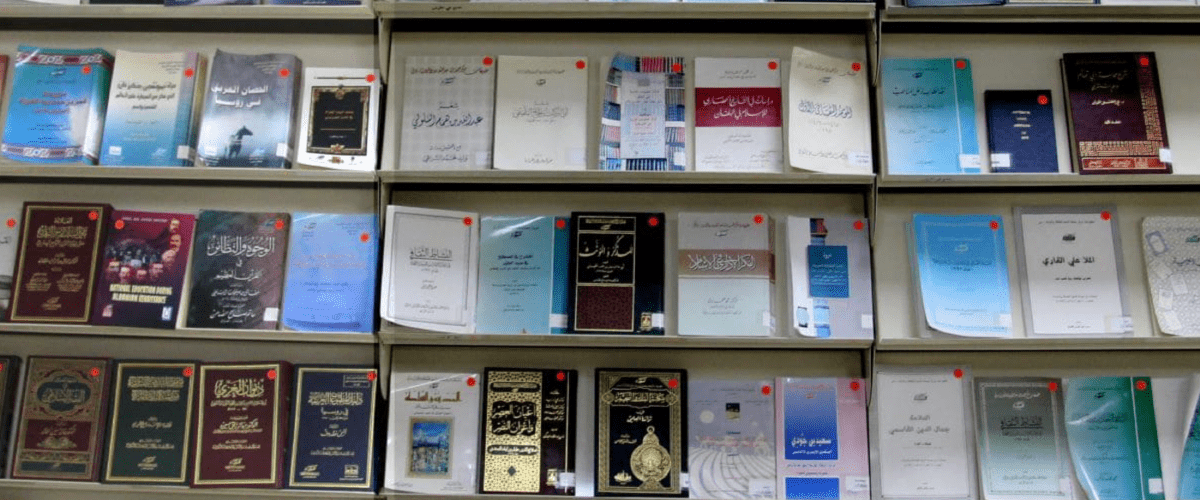
This is what we see in public libraries, but we also find other models of poetry book incubators - books and studies - such as the library being fully designed for poetry, as is the case in the Baptist Library of the sister State of Kuwait. A special approach has been taken by the Majidah Centre for Culture and Heritage, providing poetry to a number of libraries, the Arab Hair Library, the Hair Library of the United Arab Emirates, the poet ' s library of Nazar Qabani, and the poet ' s library of Hamid Khalifa Bouhab, which is a library of personal books, which has been set up by scientists.

The poetry libraries have emerged from the interest of His Excellency Al-Majad, who, since the founding of the great cultural vocabulary, has sought to take care of the creative literary product, because of the voice of poetry and the fact and depth of his message.

These libraries are very important in research and reading. Many studies are based on the idea of poetry, the study of topics addressed by Arab and Arab Emirates poems. A number of university messages have been discussed between masters and doctorates on the basis of those libraries, and the Centre also plays an active role in strengthening the Library through the poetic events it has held, poetic evenings and dialogue sessions with poets, as well. «Prospects of culture and heritage» It is the Centre ' s authoritative scientific journal, which carries among its numbers research on poetry and monetary issues, as well as investigations of old poetry logo, and it will now come from poetic libraries at the Centre.


Hamad Khalifa Bo Shahab Library

He is the poet and representative of the United Arab Emirates, known as Hazar al-Shadi, born in 1932m in Ajman, and learned in her books and schools. He was the first to submit poetry boards through Kuwait Television from Dubai in 1971, the first to publish popular poetry in the daily press through the Journal since 1981, the most notable of which was written. «Our heritage of popular hair.»I'm sorry.

The Centre included a part of our poet ' s library, with about 727 titles, whose concerns were reflected in most literature, religion and history.

The work of this library has been one of the most interesting experiences I have had, with the opportunity to look closely at the contents of the Library, accompanied by the professors of the researcher and historian Ali Al-Mamroshi and the researcher, Ms. Abdullah al-Mahiri, who had written books and a collection of poetic books, writing his daily life notes and putting his comments on books.


Nazar Qaban Library

The Library has a story that was preserved by the memory of His Excellency the Majidah and the staff of the Centre at the time. The poet Nazar Qabani visited the Mojadah al-Majdah centre on 6 December 1994, when he received the Cultural and Scientific Achievement Award at the Sultan Bin Ali Al-Awes Cultural Foundation, and was a building in the guest of the Shari Sultan al-Aouis who told him about the Centre and asked him to visit him. Nazar was impressed by the location, the library, the services of researchers, and, according to His Excellency the Majidah, Nazar Kabbani asked him if his books were in the centre. He was very pleased when he saw a collection of his books, then travelled to Beirut and shipped the Library for the rest of his publications. It was then developed by the people on the premises, and each new book from a Spanish butcher is now being added to this library. «Wartimes: a poetic veteran inspired by the fire of the present war and the euphoria of the arrogant, arrogant humanity.»It was published in 1941m. «She told me the brown one.»- Hair, published in 1944.


Chibani Library

The Centre ' s library also includes a library of another poet, Mohamed Sharif al-Shibani, a poet and a date of death in 1998, serving as Secretary of a public library in Abu Dhabi, who has turbines in 20 books. The Library ' s acquisitions varied between printed books, documents, correspondence, audio recordings and poet photographs. In the library, we found audio recordings in the poet ' s voice reading pawns for mosque collectors, documents of which are related to its work in the Library, and the Centre will now use these documents for issuance in a special book on poetic librarians.


Arab Hair Library

In general, Arab poetry has a library called the Arab Hair Library, a specialized library of all poetry and poetry, with approximately 13,000 titles of which more than 500 books of printers, such as a book. «Eyes, preachers, statues and preachers.»The library provided extensive research services to researchers from within and outside the State and some interested in issuing poetry.


Other specialized libraries

In 2011, H.E. Al-Majdah raised another group of specialized libraries at the Centre, including: the palm library, the diving library, the U.S. poetry library (the poeming house), which was opened the same year with the generous sponsorship of Ma ' ajda al-Majad and with the presence of a number of directors of cultural institutions, poets and interested persons. The library was established to serve Arab poetry researchers.

The Library includes both poetry and public, poetry studies and poetry in the United Arab Emirates, as well as a list of poetry names and works to facilitate researchers, and the Library works on enhanced poetry events for the research role of sources and references, including at its opening ceremony the hosting of the two great poets, Rabib Bin Yagot, Rahmah Allah, Rashid Shaharar, and the honour of the United Arab Emirates.

These are the libraries that have been clearly depicted or possessed by poets, and it is not limited to these libraries; because the Centre also includes books on the slogans of other cultures and diverse languages, and includes a special section on poetry-related university messages, and this interest will not cease, so God will keep the place in keeping with the creativity of the ocean.


Size of photo cavity. Location money.

Clothe poems, scissors, deletions and buildings! | Hani Nadem

WhatsApp Image 2025 01 30 at 13 52 15 abc62e36

Hani Nadem

A poet and a Syrian writer.

I was supposed to be at the Paris National Library looking for a manuscript. othèque nationale de France."
The presentation was for a map designer named Cissy Lupé, which inspired the technical partnership between the Ukrainian artist Sonia Dillonai and the famous Roman poet Tristan Tazara, and even stepped on their path, with the development of tools, where the elements were merged, produced dresses from paper, tower, poems, drawings and fabrics from crying napkins and hairs thrown under the windows.

Screenshot 2025 01 30 151028

Sonia Dilloni design dress with Tazara texts.

In modern times, this relationship between Daloni and Tazara may be the first obvious and systematicly explained beauty engagement between fashion and poetry, and the most representative situation in the employment of inter-science and close science in the service of poetry, or in the service of each other.
Dilloni identified to Tazara at the Paris Patriarchal Centre between the two world wars and became friends, bringing together the great ambition to move away from their generation technically and to produce progressive forms of art outside the language boundary. They introduced theatre, costumes, formation and hair even by borrowing from nearby arts, at a time of intellectual revolutions and gifted names.
The horror of his broad and seasonal songs, classified as one of the great linguas in modern European poetry, his mastery of many languages, his research and his constant obesity in a new language and chorus, making his hair out of logic and language, as well as his role as a singer and architects, in partnership with the prosperous and theatres.

Lead and crazy Sonya.

Screenshot 2025 01 30 151055

Sonia Dilloni (14 November 1885 - 5 December 1979) was a French artist born in the Russian Empire, Ukraine, who learned art in Russia and Germany before she moved to France and expanded its practice to include the design of textiles, costumes and decorations, when she arrived in Paris, she joined the art academy in Monbarnas, but she didn ' t turn around with the hard work of teaching. She was also the first living artist to set up a regular exhibition at the Louvre Museum in 1964.
Sonia developed new fabric formulations and translated non-substantive surface paintings into three-dimensional uniforms driven by subjects, and its dresses, hats and shoes earned special huge sales from the wives of the professors of the Bauhuahos school, raising the value of their work and placing them on the fashion map, but poetry.

Screenshot 2025 01 30 151119
Screenshot 2025 01 30 151145

The friend of Delunai, the poet and the famous artistic critic, Giom Apolliner, drafted the Orphenian term to describe the Dilloni version of the metaphor in 1913. The famous Cinders poem La prose du Transsibérien et de la Petite Jehanne de France, which revolved around a road trip across Siberia, made the text in an admirable book of two-metre hordes.
In 1923, Estonia invented 50 designs of fabric using engineering forms and bold colours, commissioned by a manufacturer in Lyon; shortly thereafter, it began its own work and became simultané with its registered brand name, and its name (obligation) briefly explains its project, after which Bhutik opened up the name of the mark that became for the great intellectuals and their wives, La Poutique Pincigard.

Tazara... Vision and course partnership

Screenshot 2025 01 30 151218

In the same year, 1923, Paris was preparing for the show of the terrifying poet Tristan Tazara Le Cayur à Gaz. Sonia has designed the Sinogravia and the costumes of representatives.
He began to write short poems that appeared to be liberated on dresses and crews designed and coloured by Sonya, and created shock and glow in literary and artistic circles together, so Le Figaro wrote, "It's a costume that worships its wool, because it's the whole textual, colour and meaning, who would wear it?"
A gas heart or a gas heart, a play written by a French tuzaar in the form of a series of unconnected events and a stereotypical simulation of classical drama, in which I felt in Paleh, scripts and formation, one of the most popular plays inspired by the anti-determinational trend, was first presented in Paris, as part of the Artist Sullon Dazzar in 1921.

Screen shot 2025 01 30 151252

A dress from the play show - the design of Sonia Delunai

The United States literary, David Graver, described the text as the greatest trick of three chapters in the century, crushing the elements of the traditional theatre that he uses so precisely that a few gestures or observations cohesive in any order that can be identified, these manifestations of dada at best reduce the stage to some kind of white voice.
It's the play of her body actresses, eye, mouth, ear, hand, chaotic but hairy.
"No one knows me."
I'm alone here in my closet and the mirror is empty when I look at myself.
The void drinks the vacuum and the air is born with blue eyes, which is why the aspirin swallows endlessly."
Tristan Tazara gave himself a glorious view of the sarcastic and subversive intent, and after the presentation, he said, "I beg critics and writers to treat this play as if they were treating a masterpiece like Macbeth, but treating the unabsolved author with no respect."

Like arts, hair's out of paper.
With the emergence of dictatorships, the world was flaunting with the destruction of barns, cooperation between the great poet, Andre Bowen and Tazara began in the late 20s and then turned into a conflict after 1921. It was reported that the Brighton objected to the Tazara style of performance, the Dada journey to San Julian Lou Buffer and other views and positions.
The first collision took place in March 1922, when the Bretton called for a conference to renew and defend the spirit of modernity and to mobilize eminent personalities associated with modern movements, then visiting the Conference to be proud of it while the Bretton used the conference as a platform to attack Tazara.
In response, Tazara issued the technical statement "the crooked heart", which was also signed by, among others, Marcel Duchamp, Jean Kukoto, Paul Elwar, Hans Arp, Cecil Suvaj, and others.

Screenshot 2025 01 30 151324

Paris educators who broke up between Syrialia and Duadiah and beyond appear in the back row of the left: Paul Elwar, Jean Abb, Ivanguy, René Karville, and in the left front: Tristan Tazara, André Proton, Salvador Dale, Max Arnt, Man Ray, Paris, 1933.
The statement was a mixture of predatory and anti-Belgian movement. The play show for the first time included music, formation, poetry, theatre and dance, together. The films were displayed inside the show and theatre in the theatre. The music was for George Oric, Darius Milhaod and Igor Stravinsky, and films were shown in addition to Ryan, Charles Schiller and Hansbonnez.
Maybe it's from here, from this experimental work, you're starting to pick up costumes and explain poetry, and talking the rest.

Screenshot 2025 01 30 151348
The size of the photo cavity. Location money.

Baby hair. | Dr. Al-Dawy Muhammad al-Dawwi

WhatsApp Image 2025 01 30 at 13 52 15 0e2e2c86

Dr. Al-Dawy Muhammad al-Dawwi

Egyptian poet and academic

The first thing we think about is the songs that we sing for children in our different Arab environments (only the song comes out of hair) we sing for them and they forget about it, and if they don't know what it means, they forget about it, and so we can find all the sound we want for them when they're old, the popular songs, or the fantasies.
In response to this question, we must point out that poetry derives from what it is, according to the French architecture, John Quinn - from the fact that he crosses the daily words, at two levels: voice and meaning, on the one hand, poetry includes a certain rhythm system (the poetic weights) which does not have this system for daily concussions (which represent the initial or standard level of language), and from the point of view of poetry. These are also not available for daily talk.
This makes the core function of the poetry language a beauty function that focuses first on the structure of the text itself, rather than on its cognitive performance, which is the purpose of the language at its initial level (day dialogues).
If we move into a special form of poetry, which is presented to children, the recipient (child) of the recipient (the adult human) must redefine what hair and its role.
On the one hand, children ' s hair is not kept in the same sense, so there is no difference between adult hair and child hair at the sound level, with the child ' s rhythms being glorified if it is presented to children (with the frequency of the use of child hair and the simple and emotional patterns that are fit for children, such as rhythm.
On the one hand, poetry: while hair generally plays a beautiful role, children ' s hair has to play a dual role, both beautiful and cognitive, because adult hair is directed at a person who does not change knowledge in poetic texts, to the extent that it does not want to be aesthetic, but the child is begging to transfer knowledge to him with a variety of haircuts.
Children ' s poetry, as well as aesthetic construction, must go from its content towards a knowledgeable purpose, and the knowledge content may override the aesthetic performance, bearing in mind that poetic formulation does not fall to the news level of the daily word language, and is not merely to complete with the aesthetic function in a way that ignores the knowledge and educational dimension of child-oriented hair.
Thus, the knowledge or educational content of children ' s hair, including the definition of the world in its various affairs and components, is unknown to the child and its knowledge adds to new information and awareness dimensions, such as the definition of the surrounding nature, emotions and others, and the details of simple and spectacular life, but all of this must be a masculine beauty that transforms all of these knowledge into abularities.
The poet, writing children ' s hair, must, according to that cognitive purpose, summon a set of goals to be achieved -- some or all -- by the child ' s depth of the child ' s relationship to the artifact of 80, which is the language of his or her vocabulary, and the creation of new language skills, which, in addition to his or her general mental and psychological abilities, as the child ' s guardian ' s imagination.

If we come to talk about the history of children ' s poetry in Arab literature, the children are relatively modern in our literature, the Arab poets of the nineteenth century are drawn from their pursuit of European morals, particularly the book of Lafotine, which was written by the French poet Jean de Lavontin.
Among the first tribes of Arab children in Egypt, Mohamed Osman Jalal (1828-1898), Ibrahim al-Arab (1863-1927), Ahmed Shoqi (1868-1932), Mohamed Al Harawi (1885-1939) and in other Arab countries, the Iraqi poet known as Rasafah (1877-1945), the Lebanese poet Jibrán Al-Nahas (1882-1954) and others.
Hamid Othman Jalal was published in 1989. The first book of "The Eyes of the Yellows" was published in 1894, and the knowledge glasses of the Lafontine tale were issued in '98.
It's like Muhammad Al-Harawai, and it's their finest and mature children's hair. «Sameer the baby.» Children and girls from the publications of the Comité de l ' Entrepreneurship, Translation and Publishing of Egypt, which include the child ' s Sameer for boys in three parts and the child ' s Sameer for girls in three parts, in 1923. «The sun of sacrifice.» In 1938, the Abulu al-Adiba group in Egypt was published in its literary magazine (which was issued between 1932 and 1934) under the " Children ' s poetry " door, including the Suai Muhammad Sabah, Barakat Muhammad, Ali Abd al-Amir ' and Kamal Kilani (Hadi Yan al-Haiti: former, S212).
In 1970, Arab poets who wrote poets of Iraqi children were known as Razabi (1877–1945), whose office was issued in 1910, including a number of poems directed at children, and the Lebanese poet Jibraan al-Nahassahs (1882—1954), who issued a Diwan al-Basr al-Sa`idiyah al-Sharqabah and theat al-Sulayun.
As we follow from the pioneers ' attempts, the stories of Lavontin, which were folders of poetry on the tongue of animals, have had a great impact on the formation of children ' s hair in modern Arab literature, as the poetry began to be treated with the stories of Lavontin, from which the beauty came after them in writing this hair, so that would add to the haircut.
In addition to these other types of hair for children, children ' s hair may be a song, an anthem, an orbreet, a musical, a poetry story, and other different forms of poetry (Ahmed Najib: children ' s literature, science and art, Arab think tank, Cairo, 1991, p. 150).
Children ' s poetry in our modern Arab literature has not stopped at the radar, and many generations have followed up on our Arab poets, who write this poetry, such as Ahmed Swilm, Ahmed Fazul, Ahmed Bakhit (Egypt), Jamal Ali (Palestine), Al-Naslam (Iraq) and others. In addition, these generations have been motivated by the publication of children ' s poetry, which has been published as well as well as well as child writing.
In conclusion, children ' s hair must be more marked by basic features: children ' s hair must be shaped and guaranteed with the levels of moral, mental, emotional and social development of children, because every stage of childhood is the appropriate hair, the poetry language is simple, and the gravity of children ' s passion and sense of humour is available, and the images of children ' s hearts and passions.

Volume of photo cavity, site money, 04 2,200x500

Mauritania, a million poet country. | David Jah.

WhatsApp Image 2025 01 30 at 13 52 14 1adbe407 150x150

David Jah.

poet and writer Morettany.

«And we're a regular supervisory ride.
Yeah, the perfume is fate without us.
We may have taken the afternoon of the poor to school.
It has the prophecy of God's religion to show us.»I'm sorry.

This regular portal is not just an individual enlargement of poetry, its emotional repercussions that may sometimes go behind a collective formula in trying to hide, kill, wear lustious language masks and engage in traffic, as far as it is publicized with the community ' s desire and self-interest;
Moritaini, of course, is not satisfied to be less vibrant than his treacherous deserts on her face, that extends further as he speaks of her, or summons her as an alien in one of his winter nights, and this is the secret of our armour and its frostbite cloth, it's not just a cloth of glory and a rash.
Even the tables we're offering to the guests, they have to be a steamer with everything that's delicious and redundant, not only to eat, but to keep food forever. «You're alive.»I'm sorry.
The only thing we've failed to deal with is time.
I once thought I'd say to Nikos' wife as Zantzakis when she made a shocking language - in his report to Greco - about his desire to go down to the street to beg half an hour of transit, to keep his business. To tell her, we would have given him our half-lives and killed the rest with friends, or rather to say it to my tastes, which have once been broken, and she's enthusiasming the shrines of the Zoraba novel writer's widow through his wonders.
Suddenly, I felt a linguistic impulse and a trophy that guides me to another time we borrowed from the fourth dimension, which is poetry.
"I promise you the ugly
"You have Ahmad Muttar."
Oh, my God, grave. Tonight Ahmed comes down with his brother's perfume!
She wasn't allowed to say any more, and the woman we had, especially at that time, has no right to more than two lines, and this poetic pattern is called "bearing," which is only for women, and it was not fit to say the name of her disabled, but she did a habitual exit, and she went out of customs and what she was dictated to trust women.
But when did we start saying poetry?
This question is surprising, no one knows when the poet arrived, where the first poet was born, or how he died. «Kuwait» The country writes a report on the national situation that arises at that time, seven years after our independence and from hanging to an Islamic Republic with various ethnicities and diverse cultures, from the river to the desert.
The motive for the launching of this stereotypical title is that the magazine ' s delegation, from this vocal influx of bananas and this mass inspiration of poets, even the noble pastoralists give their lives the meaning of the time, the touching of trees in their crucible friendships, their only improvised flavors, the flavored flares, and here.
Moritanics still deal with the activation with extreme ridicule, and they're just mental schizophrenia and exaggerated laughter.
«If the poet didn't shake you when he heard it,
It's not free to say:»I'm sorry.
That doesn't mean that sudden exceptions did not take the hairy scene there. At the beginning of the nineteenth century, a poetic voice emerged from the mainstream and the public, blocking a path away from the ancestors, but it's the voice of an eternal cheek that never lasted, cried once and then erased.
«You idiot!
Threatening to a point where he didn't cry.
I'm done saying poem.
I'm early. I'm aware of the view.»I'm sorry.
This classical voice is Sidi Mohamed Ben Sheikh Sidia, who is the first call to remove the austered language clothing, and to fake a new, soft spot, not crying, and not vomiting on the bodies of the previous texts, after which the appeal that has not lasted long has been interrupted, because it is not based on a radical attitude of calcification, and editor.
The situation then continued, until poetic voices emerged in the twentieth century, in different moods, incessant harbours and a new language on space there, among these poets Ahmed Ould Abdelkader, born in 1941, whose ship was splintered by the flames of that raging poetic sea, with the applause of art and its enlargement.
"We left as our parents were leaving.
And here we go,
As our grandparents were liberating...
The sand bat tells us:
- Wow.
Your ship has lifted all the halls...
In particular, it has not been revealed in depth, but has been floating on the surface, preoccupied with national issues, alienism outside Mauritanian geography, and it is abhorrent to the ancient artifacts of Mauritanism, which has been crafted by the Sunshine, and whose al-Sharaq al-Sharbiyah al-Murbiyah al-Sharqah al-Sharbiyah al-Ayyadah al-Mahbiyah al-Qudah al-Mah al-Mah al-Mah al-Qudahbiyah al-Mah al-Mah al-Mah al-Mah al-Mah al-Qudah, who was born in the al-Mu`idah al-Aqah al-Mah al-Mah al-Mah al-Aqah al-Mah al-Mah al-Mah al-Mah al-Mu`idah al-Mah al-Mah al-Mah al-Mah al-Mah al-Mah al-Mah al-Mah al-
It's not just a spectacular world, despite its great contributions, other voices have been infiltrating the scene, and the fact that, in spite of the few years, there's been some kind of vocal musical, which, in spite of the greatness of the greatness of the young people, has lost their lives and distributed them to their flimsy clubs.
Indeed, the clubs are no longer present in the scene, but members of the founders continue to be deeply rooted in their poetry and creative projects, including Sheikh Noah, Mulay Ali al-Hassan, Jakiti Sheikh Suk, Mohammed Al-Mumu, Osman Bonn Omar Lee and Khalil Mohamed.
In spite of the women ' s voices, much remains to be remembered, since the 1990s, Dr. Mubarak Bint Al-Bara, the throne has been steep in the throne, and it can be said that there are whispering voices, the scripture of the woman ' s vocal vocabulary, and then, for social reasons, the presence of the woman ' s culture, the poetry, the poetry has disappeared.
With regard to criticism, he was unable to keep up with the Mauritanian poem for purely social reasons, basket fears that emanate from the misery of the incubator and the destination. Every poet there represents his side, his social incubator, every criticism directed at a poet, an arrow that penetrates the body of the incubator, a tribe or a destination.
And this is the secret of enthusiasm and intense vote in TV contests.
Because the title is not for poets, not for Mauritania, but for the history of ancestors and their hilly grandparents: "The Earth is a people, the people of Earth, the poets..."

Volume of photo cavity, location 12 2 1200 x 500

Poetry trophies... between the bulb and the alien studios. | Imad Babker.

WhatsApp Image 2024 12 28 at 12 48 45 PM

Imad Babker.

A poet and a Sudanese writer.

The Arab Hair House organized a literary session entitled " Animal values in the Arabs ' notices " at the philosophy house in the Principality.

The meeting was hosted by Dr. Faisal Al-Sharani, a researcher and academic from Saudi Arabia, and Dr. Maryem Al-Hashimi, a critic and academic from the United Arab Emirates, where the meeting highlighted the values and morals of Arabs and reflected in the most beautiful poetry poems across the ages.

The session reviewed the stories of the Arab heritage and the Arab Dowain on the inherent values and generosity that constituted an important manifestation of daily social life and were linked to poets and Arab stories.

The session was attended by a collection of poets, literature and interested persons.

You can imagine as a council of a prince or successor who has given up to poetry, but this scene has been preceded by a lot of experiments that have stirred the poet's return and removed his talent, and it may be confused by a display of his hair on the lanterns, and then by a long way, he'll be removed from his family's business like he's been waiting.

Award

The literary awards have been a remarkable feature of this era, and only a city of culturally interested vegetables has a prize or prize, whose work mechanisms and interest are different, their financial and literary values are different, poetic awards in the Arab world have the attention, care and follow-up to their news, races and end-of-the-families are understandable.

Says son of a perspective. «Arab tongue.» In the first place, "The Prize: The Attah" was given by a number of words, and he wanted to speak for more than one, and in our present he was not far from the naked, and if the paint had evolved and changed, many literary people would go to being a natural development called by the movement of the days to give away the hair.


Different roses.

Our master Omar, in his article to the daughter of Harm Bennan, gave a word and a poet's destiny, and his satisfaction was in front of a poet in poetry, and Zahir Harem was praised by a grandson, gave a hierarchy to a moron, each one to the other, and they were both worthy of the Budd, and then one token of the honour.

And I didn't want to spend the debt that was kidnapped.
He doesn't know what he's doing.

My broser wants to wear his poem at the end, as stated in the house, the memory of what has been given to you by the gifts of the Flora of the Floor, the broser sees a false eye, and our Lord Omar says, "but what he has given you is not forgotten," and he has taken this, and he has given us a certain exchange of experience, and he has given us a certain message.

Flowers are not only money taken by the recipients, but the literary addition and the driving force of the poet in the sky of fame and starvation. Winning a prize of value that shines light on the poet and opens the door to the bank to participate in the great festivals, quickly makes it necessary in the evenings of poetry, draws the eyes of critics and those interested in it, and the very good hairs.


Entry instrument

One of the most important terms of professional trust is that the headmaster in the poem, the specialty and the insight, and the value of the prize rises only with those.

I appeal to report:

All of them, Mother of Prophets... and nights I'm measured by the slowness of the universe.

Hasan said he went halfway.

Then he said a mountain to hang:

You had a heart in Al-Husan, arrogance... with the young man's promise being flawed.

So Hassan said he went to my other half, said to me:

Hossan stepped up and appealed, and he was given three hundred dinars, and he was... and the news is long.

And for you, the boards of princes and successors were councils of the parents of the language, science and poets, in which only those tested were found, and only those who had hair and ears were sitting there.


A compass.

With the nature of the boards with scientists and language parents, they have begun to determine the transit routes for gaining the (wass) data that pass through the language and literature portal and the preponderance of a society that includes the Mummator, which has created a new pressure on the poet, or whether you're as close as a machete who makes the others in the mall. «Arab literature history» The sign speaks. And I'm going to say, "Languans have become hairy in this afternoon, who's got his name on it, and then you're going to have to hear it again."

Then why the princes grabbed the hair, barred the hair, left each other's hair, went some other stuff, said the good sign of Abdullah in his good book. «Guide» Speaking of the crocodile poem, "why did you take poets in systems like gamblings, puzzles and steams, until the prophet poem got up, she was a poetry lady."

Take and give.

While the prizes have been determined by the dominant hair link in the majority of times, and have made the flow of certain channels with which they are more dependent than insurgents, the hair is required, the poets and their news are of interest, so that the technical value of the hair is significantly linked to the end of the poetry, as well as the trophies now.