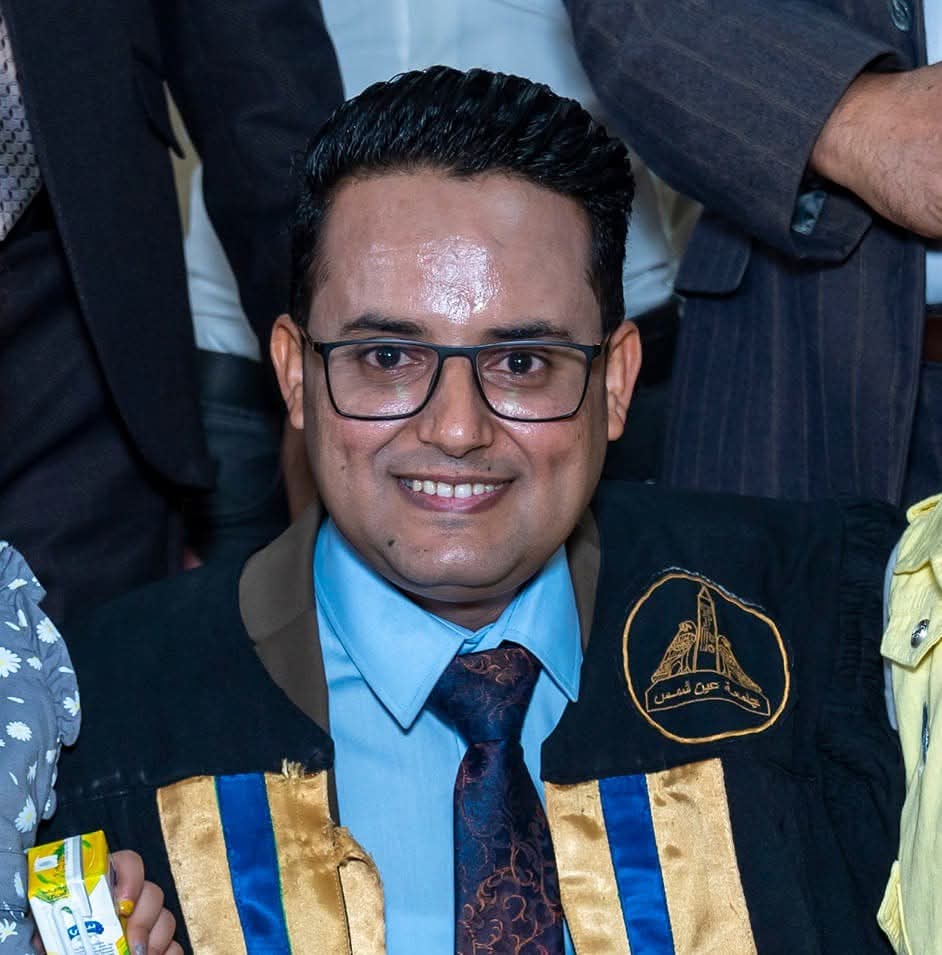
Dr. Abdelaziz Al-Azer
A poet and a right academic.
Yemen is present on the first page of the Arab Culture Code through all its historical fields, even to be sure that it is the one who is the one who is the one who is the one who is the one who is absent from that code so that one may think that it has fallen from it in the face of delusion or intentionality, or that Yemen - for its own geographical, cultural and historical reasons - has made another one of its own.
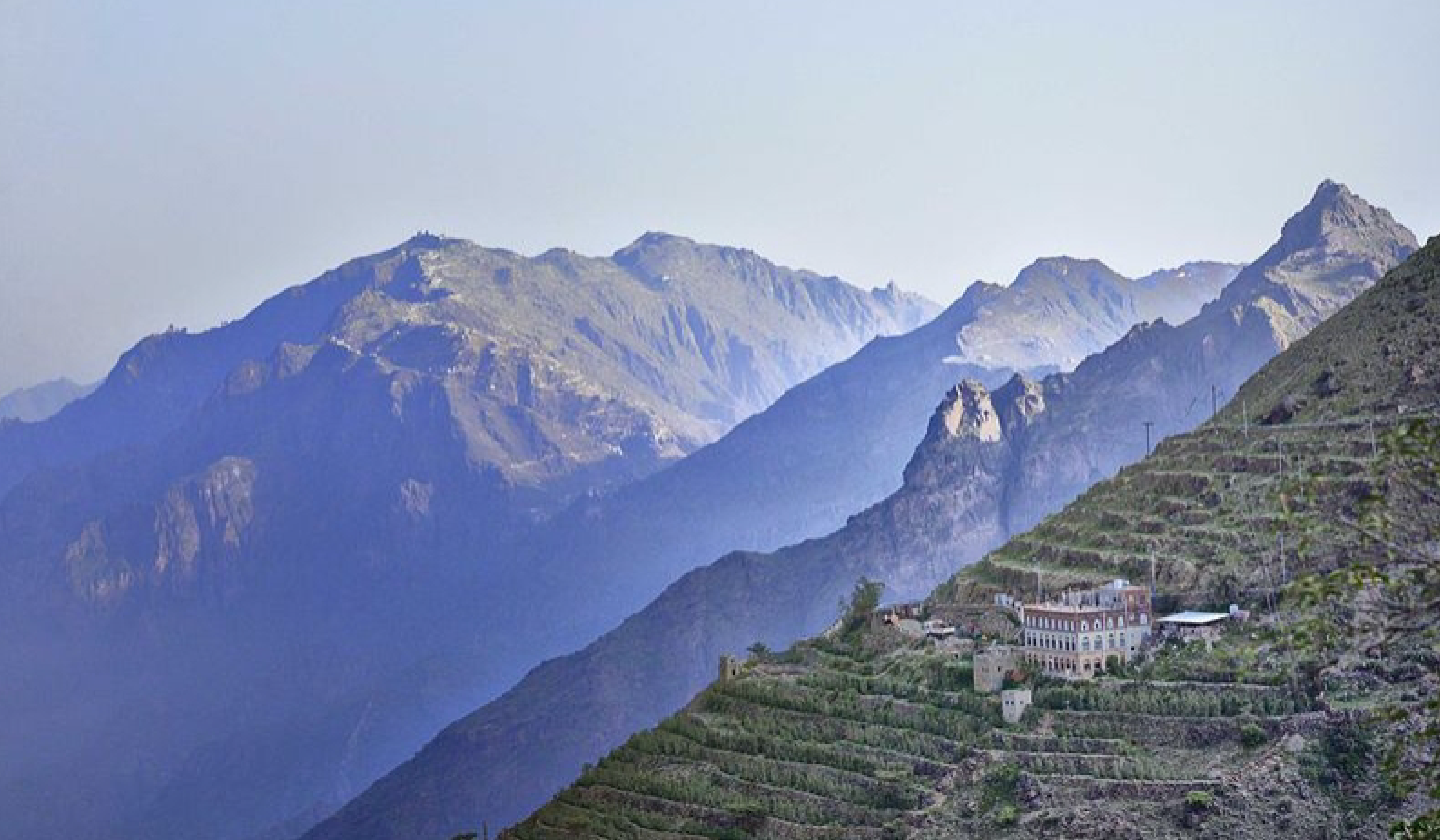
Yemen ' s mountains and difficult terrain have always stopped a barrier to the sound of their human beings and to prevent them from being heard quickly by others. At the same time, these mountains have echoed their owners with a clear distinction not made by the world ' s ramps and no noises from behind sand and sea.
Long mountains. What's wrong with her?
She hid our time and wore an untiring time.
Long mountains.
Are you going now?
About a step in a big day.
How far to fight.
Long mountains.
You go in every wind.
And she blooms in the question.
Mountains.
Mountains.
Mountains.
This difficult, diverse and ambiguous nature has, in turn, adapted to a human being who resembles it; it has challenged the ambitions of invading the Arab; it has made Yemen an ambiguous geography or enclave that is difficult to occupy or annex to any political status, whether from successive Islamic States or European invasions, and, as a consequence, the waves of vulnerability, influence and development in Yemen.
The structural situation of Yemen as a place, a climate and a human being has made it somewhat isolated from the foot, inventing its own and different solutions, developing different ways of civilization, such as bond writing, irrigation tools, agriculture such as dams, stairs, building tools, instruments of war, defence, clothing, food and medicine, all of which are characterized by the development of the human being of this nature, and by the very grey nature of the right.
We'll keep digging in the wall.
Either we find a hole in the light or die on the wall.
And that undoubtedly left its effect on the entire arts of singing, poetry, dance and old and modern folklore.
In modern times, this ecological and demographic terrain of Yemen created a different political reality for the rest of the Arab countries, because of its geography between the mountain, the sea and the plain, the people of Yemen knew at the beginning of the nineteenth century that the revolution of Britain had taken the southern part of the country, which was occupied and exploited until the 1963 revolution of independence, and that of the Romans, the northern part was struck.
A lifetime in a rebound minute.
And flowers are in seconds.
The country chased me down.
Who makes sense and who found me.
The more I get, the more you warn me.
I was scared of my time.
And if I throw a name in my sight,
My country has provoked me and congratulated me.
And this urbanist says he's on the execution yard and his buddies were killed in front of him:
And for God's sake, I didn't hide the pain and this.
She looked at me with vision and hearing.
But really on my conscience for my mother.
I fear if he dies with me.
That's how Yemeni poetry is born as a life or as a death, just as it is.
That's why I'm jealous. I look weird.
On the custom like the improvised generator.
And I know I'm in it.
I'm going through my blood, the worm and the mud.
The Yamani live his life and improvised poem (e.g., squeezed by the blade from the waist, or as a machete, as Ahmad al-Awahid said:
The poem surprised me this morning.
She got up from the legendary mood.
She did it whenever she approached as long as the wind.
And I'm tired.
Like a lot of people.
It's called harm.
And they suffocated in the porn.
The right poet is born more important, wise and old than ever.
What do I like about my boy?
I was born old. How do you like it?
And today's hurt and the art army plays me.
On my cheek, I'm tired.
So if he blacked out the curve on life,
And the literary lights and literature.
1960s and 1970s (revolution adjacent to poetic forms):
An Arab revolution may not have been defined through its poetry and the Yemeni revolution in the 1960s and 1970s has been defined through its great poets, Abdelaziz Al-Maidah and Abdullah Al-Burdoni. After a great and legendary struggle by the free Yemeni people, the northern and southern parts have been liberated and two republican national systems have been established.
The Bardoni ' s youths in the poem of the poem and the gust of the guitar -- the two rebel friends -- represented the concept of school circuits and the friendship of early poetry forms in Sana ' a, meaning that the events in Yemen were born in connection with the revolution and societal change, i.e., with content rather than form.
In addition, another poetic voice is the voice of the poem that was held by their great poet, Abdul Latif al-Sabah, who, because of his young friends, has not become a legendary poet of his own true passion, of his own right, and of the masculinity, of the poetry that he has suffered as a poetry that has not yet been used in the Arab world.
Spring issued its only two deputies in the same year. A pair of them between the poem and the activation.
Spring writing is profound and intensive and the economy of its phrase, reflecting the character of the Yemeni man in intensifying the operative part, consistent with his wiseness and verbal habits:
Because I didn't fight.
I took prisoner of war coming.
On another level, the poetry of the spring reflects his village whining, coming from Cairo and Budapest, as if Yemen always sees the world by its own moon, quotes from the world what can be culturally settled and planted in its fields:
Take it off.
Sit down now.
Listen to her silence.
When you raided, you tried it.
It was the dam.
Extended her terrain.
Then she was poisoned with her sorrows.
Mountain.
We're fortified as bees.
With irrational poetry, it is more than you say that the spring hair clashes with its political and social moment and its acute awareness of the changes in its time, critical of the oil boom that has emerged in Yemen and one of the reasons for the warming of its political components:
The first was the river.
Deplete the river, dig wells.
Light the well and find out the oil.
The oil flowed, digging mass graves.
You flowed cemeteries.
Deplete the country.
This poetry is based on a developmental awareness that monitors daily and private and is modeled for public and total contempt of bureaucracy and human servitude in the public office routine, reminding us of the awareness of the new story at Kafka in the story of the mutant, and Nikolai Google in the coat story, which we touch in the text of Abdellatif (at 7:00):
Whenever you last at 7:00.
Sleeping up from his sleep.
He washes his guts in the morning.
And his dreams razor.
And he'd like me to get out of my ass like a penny.
You wear my tie.
I'm being humiliated by the brightest part.
I'm rolling a street that doesn't lead to...
And Le doesn't lead to...
Now I'm looking for a basket like a job.
Looking for an empty basket!
1980s: Dominance of activism and poem.
At the end of the 1970s, civilization and well-being are small and people are grasping the first fruits of the tribes. Unfortunately, the conflict between the Yemeni fragrances, which is the resonance of the conflicts of the eastern and western camps, with the enlargement and excision of a constellation of the poets of the Al-Shuwayda al-Isim al-Isim al-Ahmah, is the sole and al-Ahmah al-Ahmah al-Ahmah al-Ahmah al-Ahmah al-Sah al-Ahmah al-Ahmah al-Ahmah al-Sah al-Ahwadun al-Ahmah al-Ahmah al-Ahmah al-Ahmah al-Ahmah al-Ahmah al-Ahmah al-Ahmah al-Ahmah al-Ahmah al-Ahmah al-Ahmah al-Ahmah al-A
Here, we can refer to some prominent features in this stage ' s poetry speech, the most important of which is the symbolic and the mask that was carefully guarded by the ideological conflict between the strata of society and the security apparatus of the authorities, as well as the spectacles of certain party leaders, as we speak in this section of the script of Muhammad Hussein Hitham:
That's the head.
A fruit.
Or a bird.
Or a metal plate.
Or a poem.
That's the head.
I don't know how to use it.
Except that every day
I develop ways to keep it.
That's the head.
My head.
And I earned it hard.
Nobody told me why.
But I really deserve it.
Because it's my head.
And I have to cut it as far as I can.
Go away before she falls on her own!
The poet of the 1980s may resort to the occasional use of the Sofi compound, repeating the word of khat as an objective equation for trying to forget and search for sophilis, as an attempt to convict the inter-fraternal war, as in the texts of Ahmad al-Awaiyat:
I said, buddy.
I'm not a sea.
But this new time.
Salt in my mouth.
Every day on the khat paper, I bow.
In the east of my grief.
This time takes my blood!
The 1990s/time of Yemeni unity: (The Anthrax: Great Hair Bang).
In the 1990s, as Yemen has been proposing its solutions and improvisation, the socialist political systems of the South and the hybrid liberal regime of the forces of the left and the right-wing forces have once decided to enter into a merging unit and to begin a new and paradoxical phase of multipartyism, in the moment of history, not only one of the biggest fanatics of the historical inevitable.
Despite the reversal of the two regimes and the beginning of the 1994 separation war, everything in the waters of culture had changed and replaced, at the time, the wave of the nine-year-old hair had flowed in a way that Yemen had never seen before, either in its number or in which its high talent, vast culture and excessively poetic sensitivity, Muhammad al-Ambani, Ahmad al-Harrahimi, Abd al-Hasourhid al-Sabi, Abd al-Ahiyad al-Ahiyad al-Sawi, Abd al-Ahiyad al-Ahiyad al-Ah.
What happened to the dreams and aspirations of the poets to the great homeland and the national project after the separation war and the defeat of the left was like what happened after the June setback at the Arab level.
I saw my house in range dust.
A story written from my blood.
My mountain was bowing down.
My voice was dead in my mouth.
The Yemeni poetry at this moment has been characterized by intensity and redefinition of things, as in the poetry of Muhiddin, a crime:
Hands don't pick the rose garden.
Hands don't clap.
But the hall is empty only from applause!
Some of its experiments have been marked by sarcasm, hamish codification and friends as a continuation of unfinished conversations in the union cafe, tea cafes, or encrypting of comrades, or a speech of others known to all and concomitantly not to mention as in the soldier's cook experience:
Put me on a path leading to the rich.
My children see me capable of their demands.
And jump them into heaven.
They won't regret it.
I'm good and poor.
We are all bad enough.
Don't make us right.
We're friends of vice sometimes.
You and her spoiled kids!
Some experiments appeared to be a philosophical speech in a language closer to class and custom, distilling the entire human civilization, inheriting the planet and feeling it, as in the experience of Ahmed Agrarian:
With shining veins at the height of a shining mountain.
And a poet pulling the mountain into his eyes.
Leave his papers white.
An air rolls into it.
Leave his only pen.
In the void of the world.
Some of them are the experiments of Ventazian, which reflect the concern of the civilized organism that we have become, as in the experience of Ahmad al-Salami:
No bed for my suspended soul, no matter what I need.
Grams are dying and our skin is raging.
Like a farmland.
Parents neglected her.
They let her drive cabs.
On a way to sell wine to the regretts.
And without paying attention, we ate half the city's chicken.
And we're foxed in glasses!
The 1990s were the moment of great and accelerated events, political, intellectual and social in Yemen, and the poem was a technical and objective expression of what happened in Yemen. Their battle was not as deep as in other countries.
My orbit of grief on the horizons is open.
About a planet that embezzles me looking for the soul.
I'm meant in space order for who.
She missed her nets in the heart open.
This ninety-nine column, which is very vocal and highly enriched, and the sophibian mine, along with the Faisal Brihei columns, the Pan-Shimri, Jamil Farah and others, together with other factors, will be established to prosper the new column in the post-alphan generation of Yemen, which we will dedicate with a special pause reflecting its technical and substantive characteristics, names and factors.