
Trust Yonis.
A poet and a Sudanese critic.
It's New York, the brightest girl in the art of temptation, the call for reckless progress, the modern world order of its high-rises and its streets, which reach the horizon, as Abdul Bari says, when it's still a theme for a hot hair dialogue from the early 20th century to the hour.
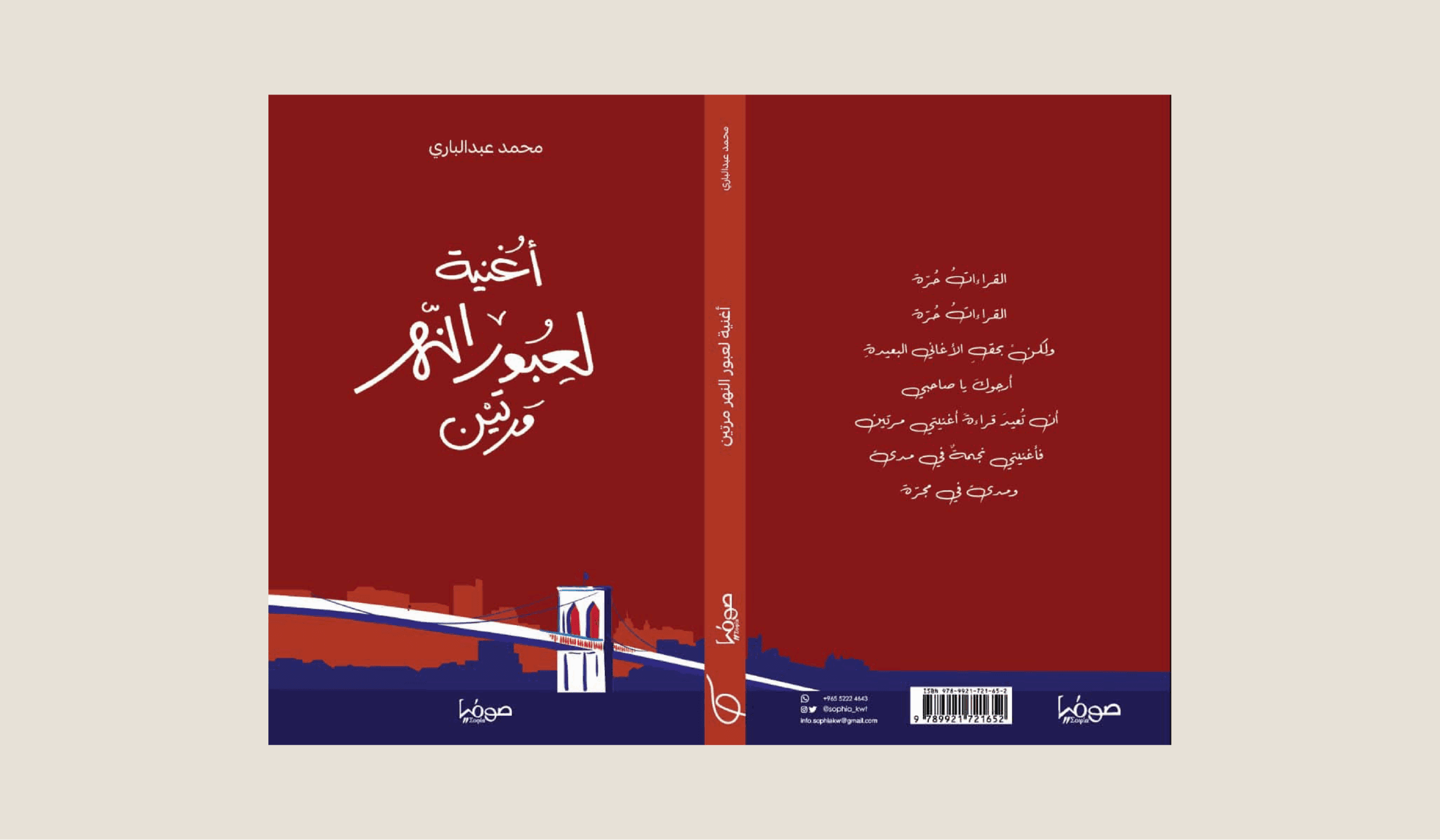
This article tries to meditate in New York in one of these experiments, in the light of the above-mentioned great poetry experiment. A song to cross the river twice For the Sudanese poet, Mohamed Abd al-Bari, the lengthy poem he wrote during his stay in New York, and because the city, as we have said, inspired a great group of poets, this poem must be approached as a dialogue and a clash with previous writings, especially the writing of an African poet, as in the experience of Lopold Singer, the Greater Senegalese poet, Yusuf, or the Arab poet, and Muslimsah, as well as the Greenhouse.
The poet Muhammad Abd al-Bari opened his long-distance poem by leaving and searching, as if the whole poem was a discovery of the other side of the poet, considering that the other one is the mirror. New York is the mirror here where the poet rediscovers himself and writes his own.
Yay, New York.
Leaving with the scholar may end with you!
It's the bay on your south.
Opens the blue gate for me.
I'm begging no faces.
From the new horizon to the new horizon.
The spirit is Christmas.
And I'm making the lightning work progress towards the city of the world.
And my Wright intervened in the leak of flags coming under the glory of God.
This town.
My taste in the hot mix of you.
To try the meaning unit.
And I've got the white fireworks orbit in you.
To spare the ashes!
This is where the poet enters as part of a nation's panorama, flags, colours and souls, into the city of the world, United Nations Headquarters, the globalization of trade and the huge economy, but it makes its entry under the flags of the glory of God, in the city of the world and the dark metal tower in his dnoyote and material, but it quickly meets his African predecessor, Sengur, saying: To New York,He's the nigger inside a city that he sees needs, needs to embrace his element and warm blood to complement the humanitarian model that he was unable to represent the Western civilization that produced. But Abd al-Bari is inextricably demanding, saying:
In my brave city.
Free me from my first legacy faces.
If it's new, drink masks.
*******
I want the Goa'uld to remove the sophie curtain from my body.
And in the mirror of my hope, which cannot be stared twice:
I want you to blow the nail out of my veins.
Thus, as many of those who wrote about New York, with their giant robotic face and extreme events, the text of Abdel Bari moves between the spelling and the advent, between the desire and the nun. The poet wants her to take away from it, the sofie to drown in her world of the world, to blow up, and to wear it with new faces, even if it is a new one. Infantry as my fear/invitational signs as my face, I see them in front of me lying / yellow brunch, like the odds of dying I see them through the place.
It's New York, the gallery gate, it's going to the cages from the body and the Earth.
- Harlem.
Like New York was an example of shocking globalization, and the attendant meanings of the collapse of cultural privacy, even before these features and terminology were reflected in our modern reality, and as Luka was blessed nine decades ago and his famous New York poet, whose title was replaced to speak of the experience of Abdul Bari, she also opened the window of Harlem ' s fingers in front of his eyes.
I saw Harlem with voices and ritual colors.
And the scandal. —
In the evening tea hour, at the delivery worker's house, I saw the night festival starting to break the day..
And I declare the night to be believed in the day..
It's a good hour. God sends home life on the streets.
******
Harlem, Harlem!!
A green corn rising from the top.
She wasted by Dan's bare feet,
Rads crooked like a silk, and stained like a high spear.
Nellover ballet,
And the wonderful imaginary masks,
Mango's fruit of love is falling out of low houses.
Singor saw in Harlem the potential of the idea of a life-stricken and people-like event, a world that half-blacked black niggers and washed away the history of servitude, and he decided that black night was more secure than day and that it was a holy moment in which God blessed life on the streets.
- Laurca.
Stop Lorka calling:
Oh, Harlem.
There's no misery equivalent to your two-time eyes!
However, in his clandestine courtesy, Lorca was singing repeatedly and ironically together, and in the hope that he was engaged with disability in a composite image of magic and psychological impact, he was singing to the Zaneji Renaissance Harlem, the emancipation and the opportunity of the white conscience to embrace and respect the blacks.
Harlem.
Impossible gold.
I'm like the Crescent praying.
And I hold only the heavens.
So you don't tend!
As usual, he brought her back to the Arab-Islam al-Hamalah al-Samat, from the very beginning he entered the city under Majdallah, who did not forget that he was representing another horizon.
I'm in town lying history.
He lies in the Atlantic, absence of Mediterranean water.
Traces lie in museums.
So he says: ...and lie in Jesus his blue eyes!
Jesus coming from the east, who turned in church photos into European with blue eyes, did not get far from Muhammad Abdul Bari in his trial, the city, who was formerly poets, but was eager to remember the roots, in his return and in his journey back from the city of the lowest city, as he called it to the city of Mobile in the Sudan, where: In the half of Grampa's tower business, I came to the human savage of the people who came in/the earth, the water felt at the crossroads my idea of transparency... To the Riyadh dialogue, where he was young and older, it was like he was dragging New York from making it to his eastern world to read on the poet's biography, his old research and his life in the face of the world.