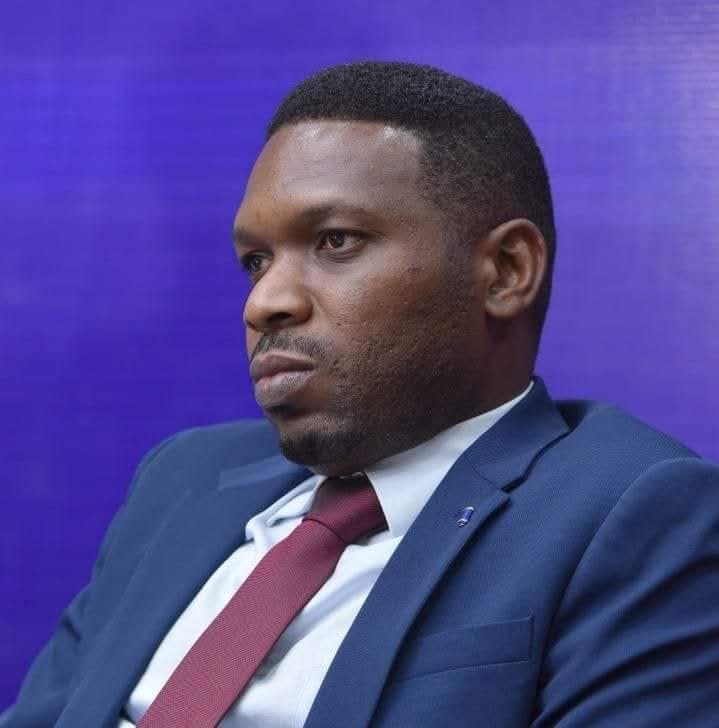
Abdul Momi Hassan Mohamed
A poet and writer from Mali.
There's poetry where the Arabs are, this language that shakes hearts and pulses with immortal poems, solves with them, automatically grows in the minds of all those who start to sing in the first words of the ocean, rests on the tongues, is signed, and the spirits are rooted in the hair, so they don't give up every seven speakers with their own tongue.
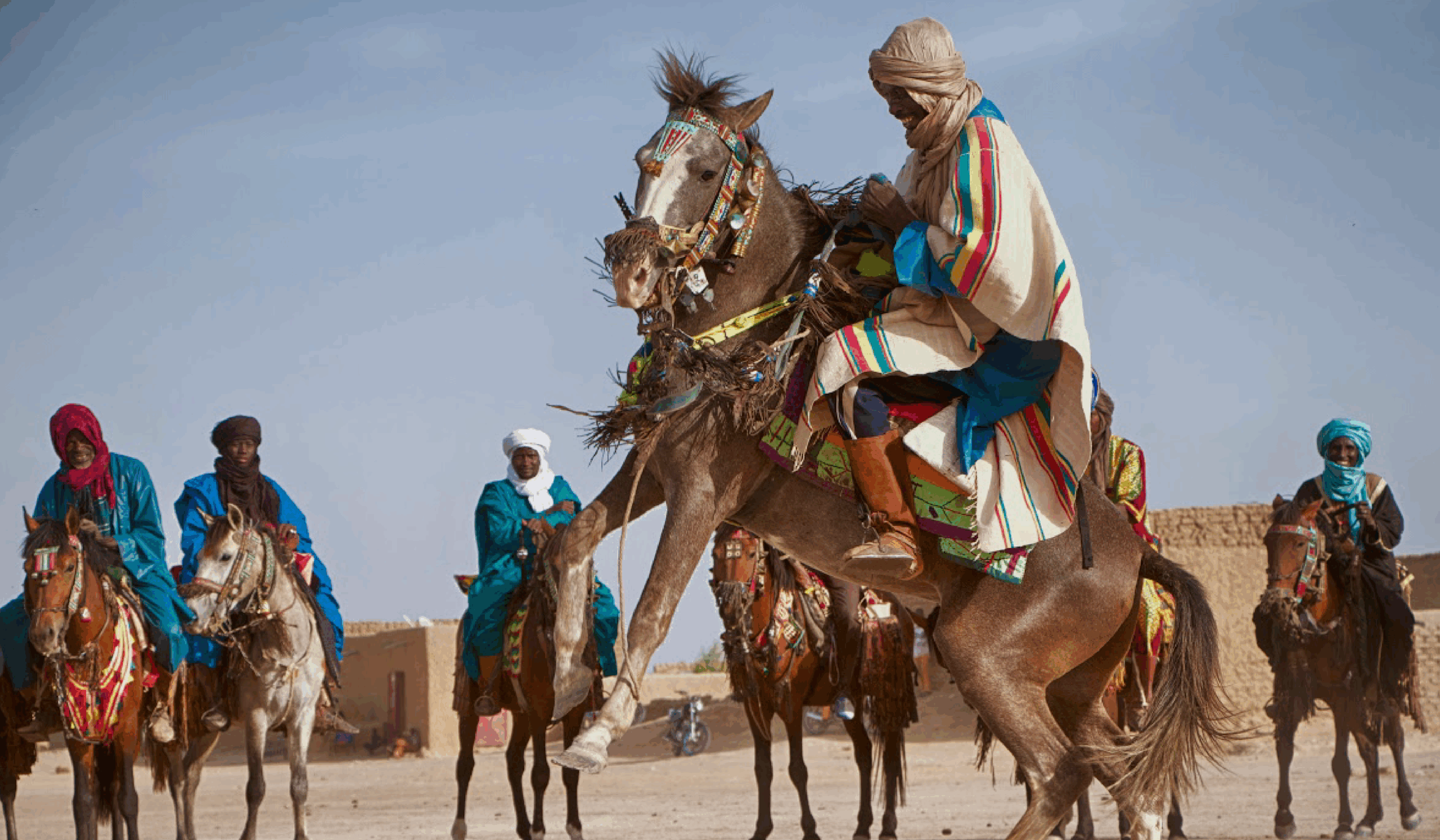
The Republic of Mali is not excluded from the rule above, but I will not be out of the right if it claims that the most Arab poets in Africa, except the Sudan, are financial, and as a matter of fact, we can claim that the best non-Arabic-speaking African poets from Mali, recognizing the primacy of poetry experiments in other continents, and not that this is an unsubstantiated claim of the past century, because the history and the patriarchy of the patriarchy of the patriarchy of the patriarchy.
Before opening a window for the current Arab poetry in Mali, it is imperative that the Arab history and poetry of the region be displayed rapidly, a show that will cost us no more than a return to the French colonization, where the Malian empires and Muslim kings, most notably the Sonjai empire, whose judgment has been extended from 1464m to 1591m, were brought to the Holy Father.
The briefing guy says: «I know that Mensa Musa, who we mentioned, was one of the major kings, as we said, accompanied by Abu Isaac Al-Sharaiya, a Tawiji of the Andalus, who met him in the season with a faculty. He was brought home to his country.»[1]And it says: «His uterus was the only fabric of literature, systems and abundance, in which no dust was found, the words of the pure and abundant negligence of the Mufur Preamble, a very sweet one, combining the molecule and the grace.»[2].
Attests to its loan function in the Kingdom of Mali and sends it to a friend in Andalus, from a poem that picks up a lane and grows on the fire of Al-Hin:
Who are the passengers, lost sand?
Walked, built charges and survived.
She leaves you, she'll settle down after them.
They stole your heartless heart.
In every valley, you're a terrible leader.
And every club, you're calling Gide.
Oi, his counts are in peace.
I'm going, I'm sheltered, I'm sorry.
I'm afraid to say his shadow is consumed.
I'd rather, where I'd rule.
The coast, as constructed by Timbuktu al-Barez, the large university that exists today, has affected the enormity of its financial elements, spreading its way of saying poetry, inheriting it through generations, and perhaps the origin of Arabic poetry writing in West Africa is rooted in the coastal era in Timbuktu.
Although the general nature of the poetry achievement in Mali is not a classical pattern, it is mostly a tradition of old Arab poetry, today ' s generation is beginning to draw attention to new ways and to the innovation of various content reflecting a particular specificity, translating hopes, fragrances and cultural components of Africa in general and in particular from Mali.
The drunken comfort has been en routed.
My shadow rang to wake up.
Like...
The seas have a sail.
That's literally getting away with it.
The more...
Bless the meanings.
The light theater is satisfying the darkness.
And I'm a story of her stereotyping.
Abbies to the poet Bakry Cece, from a poem entitled: «A light floating on the hull.»Demonstrates the sensitivity of contemporary enlightenments, the poet seeks his accomplishments and borrowings from the new reality, and transmits its trace to his conscience, to be issued in a poetry that respects the modern reader, as it says and with indirect vigilance: Mali is also present in the present time.
From the north of Mali, a daring song, sent on behalf of the communists and the torturers in the crude and blind trespassing war, is a quiet poet, but in the hearts it is a kin language:
Because touching when it takes before me
I take the horizon forever.
It leads to everything but...
- He's not dating.
Because I'm the last dead.
"Walk to the pastors and no hand..."
I forgot. And I didn't blow a mud.
No way to tomorrow.
Who's gonna give us the dream back?
It's getting drunk on time?
It's me back.
- By me in the end... - To the generator?
May life return to heaven.
- D or an idea yet to be born.
The poet Muhammad Khairi does not want to manufacture other than pain, as he signed a charter with the desert, where he will indulge consolations, without weakness or extortion of emotions, even though those tear poems put the young poet in the position of thirst, the world is crawling with distractions and temptations, and the way to the club calls for another rhythm! «You don't make grapes.»I'm sorry.
And here's a shining spot in the hands of Mali, an activist poem, echoed by Ibrahim Al-Fahri, as if his poems had to light a star on the horizon, saying:
I got her back.
And she waved at me.
Back to the start point.
Where I renew my experience in the ritual of torture.
But...
I'm going to be indifferent this evening.
Go ahead.
Because I'm tired of going after the drink!
For centuries, financial hair has been limited to subjects and purposes, all of which are jurist systems, opposition poems, sandwiches and seals, many of which are poems for the Naples, but in recent years, by the youth of this generation, huge leaps, flew out of a narrow tradition to the cradle of vision and experimentation, and a new philatelic image of man.
Every time a poetry evening is held in Bamako, the hall is filled with a tasting, poeming, unfilled, open and interconnected with the modern poem, the enlargement and ambiguity of its symbols and the sense of the emotional power inherent in its images and collections.
Many of Mali ' s literature critics -- such as Professor Harun Mega and Dr. Mamadou Dembeli -- are also interested in current poetry, addressed in academic studies and discussed at Malian universities -- are best evidence of the special position of Arab poets in Mali.
!
[1] Briefing in Grnata News, Sandin Ben Al-Khib, scientific bookshop, p. 170.
[2] Same source.